Gravitational Waves: The Universe's Subtle Soundtrack, with Janna Levin | Big Think
TL;DR
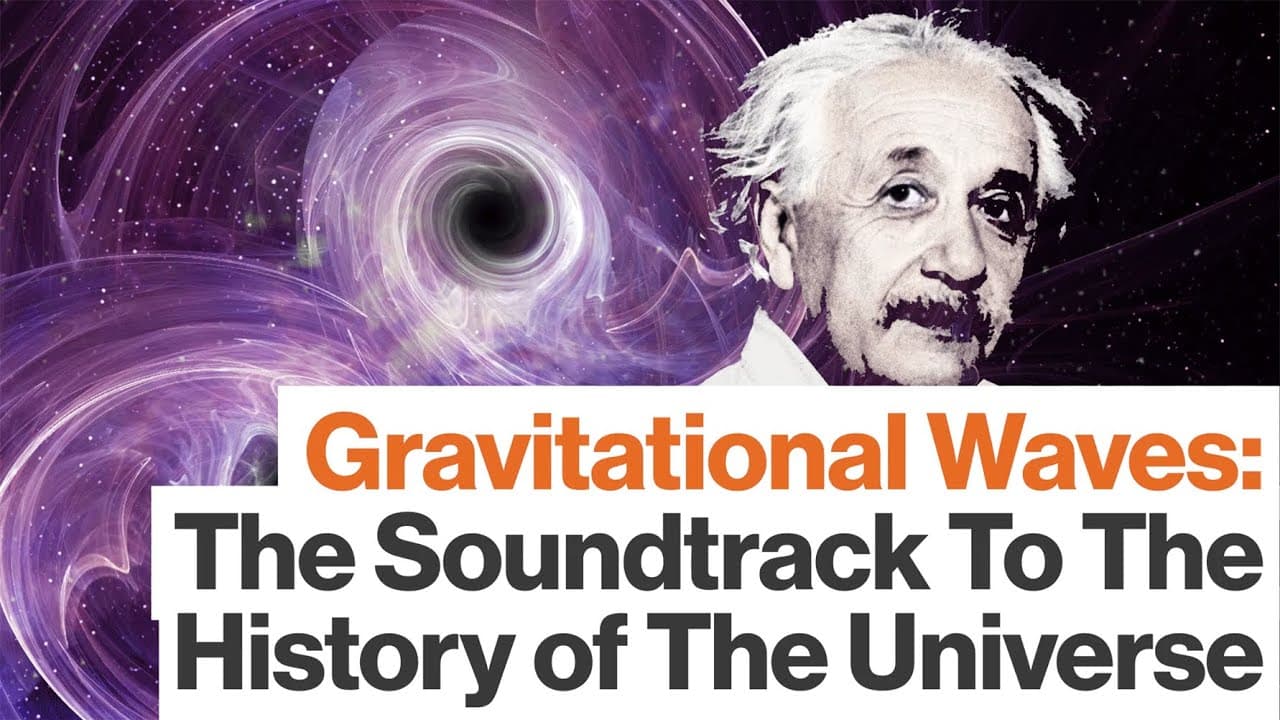
Gravitational waves, like a cosmic soundtrack, reveal unseen events and could unlock mysteries of dark matter and energy.
Transcript
Gravitational waves are such a difficult concept. When Einstein first wrote down his theory of curved space time he said the most important question that he needed to look at next was the question of whether or not there were waves in the shape of space-time. If space-time can curve, so let's say you imagine around the earth or around a black hole ... Read More
Key Insights
- 👾 Gravitational waves are disturbances in the curvature of space-time caused by the motion of massive objects.
- 🖤 LIGO's detection of gravitational waves from the merger of two black holes was a monumental scientific achievement.
- 👋 Gravitational waves could unveil dark matter and energy, offering insights into the mysterious components of the universe.
- 🙂 Listening to gravitational waves reveals a new dimension of the cosmos beyond what traditional light-based observations provide.
- 👋 Capturing the "sound" of celestial events through gravitational waves offers a novel perspective on the universe's history.
- 👋 Despite being weak, gravitational waves carry immense energy and information about cosmic events.
- 🤗 Gravitational waves provide a means to explore the universe's dark, non-visible aspects, opening up new avenues of discovery.
Install to Summarize YouTube Videos and Get Transcripts
Explore YouTube Video Summarizer or Get YouTube Transcript Extractor
Questions & Answers
Q: What are gravitational waves, and how do they originate?
Gravitational waves are disturbances in the fabric of space-time, created by the movement of massive objects such as black holes or colliding stars.
Q: How does LIGO detect gravitational waves, and why is it challenging?
LIGO, using laser interferometry, measures minuscule variations in the shape of space-time over vast distances, requiring extreme sensitivity to capture faint signals.
Q: What was significant about the event detected by LIGO?
The merger of the two black holes detected by LIGO released more energy than all the stars in the universe combined, showcasing the immense power of such cosmic events.
Q: Why are gravitational waves referred to as the "soundtrack to the universe"?
Gravitational waves offer a unique opportunity to listen to astronomical events that do not emit light, providing a potential soundtrack to the unseen cosmic phenomena.
Summary & Key Takeaways
-
Gravitational waves are ripples in space-time caused by moving massive celestial bodies.
-
LIGO detected the most powerful event since the Big Bang: the merger of two black holes.
-
Gravitational waves open a new window into the cosmos, potentially unveiling dark phenomena.
Read in Other Languages (beta)
Share This Summary 📚
Summarize YouTube Videos and Get Video Transcripts with 1-Click
Try YouTube Summary with ChatGPT & Claude or YouTube Transcript Generator
Explore More Summaries from Big Think 📚




Summarize YouTube Videos and Get Video Transcripts with 1-Click
Try YouTube Summary with ChatGPT & Claude or YouTube Transcript Generator