Student Roy Lee Hacks Amazon, SBF's Jailhouse Chat + more! | E2095
TL;DR
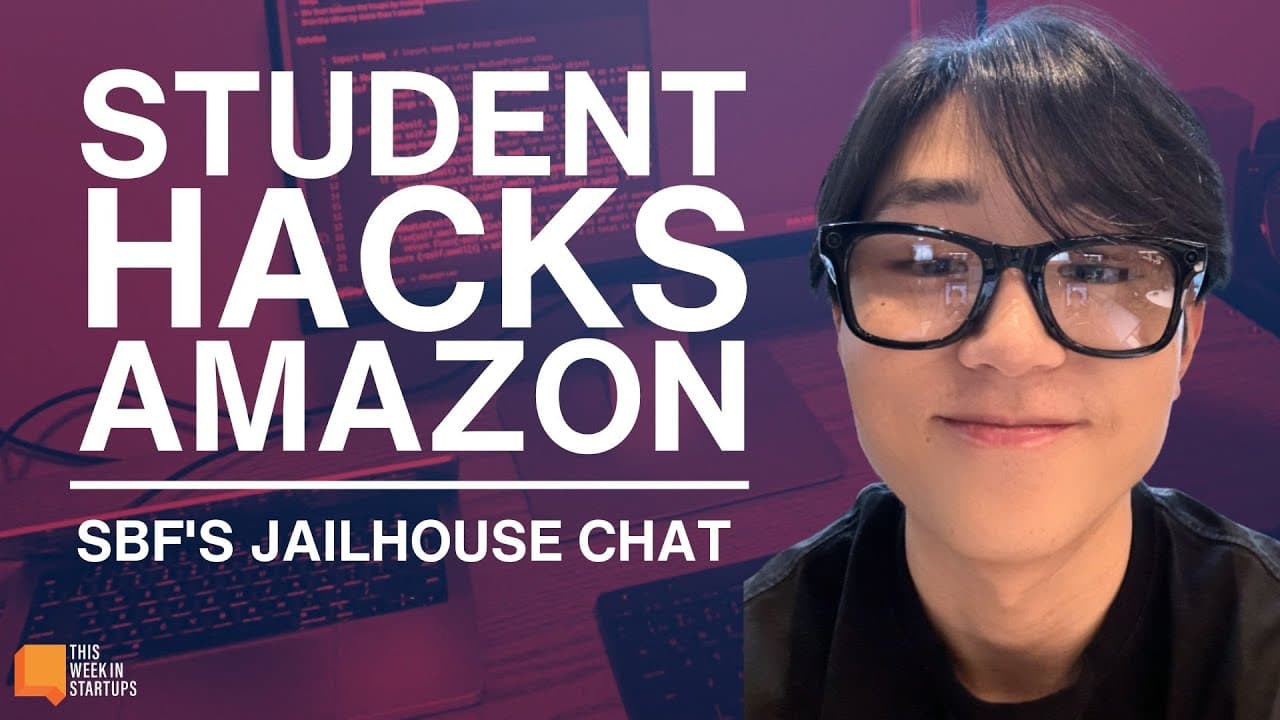
A student created a tool for acing tech interviews but faced backlash from Amazon and Columbia.
Transcript
I have all the offers from Capital One Tik Tok meta but those are all like like practice for the big one which I knew was going to be Amazon because that's like the the thing that everybody knows the technology it's really not rocket science here like I'm putting together two two concepts that uh have existed before in the past it's just lom's kind... Read More
Key Insights
- 🙂 The creation of Interview Coder sheds light on the frustrations many candidates face during technical interviews, highlighting the disconnect between interviewing styles and actual programming skills.
- 🫥 The incident illustrates the fine line between innovation and ethical considerations within academic settings, as traditional institutions react to new technologies.
- 🔨 The rapid adoption of tools like Interview Coder indicates a shift in how candidates seek to prepare for interviews, favoring efficiency over traditional methods.
- 🧑💻 The backlash from established companies like Amazon serves as a cautionary tale for developers seeking to challenge traditional norms within tech recruiting.
- ✳️ The story rallies around the concept of leveraging controversy for startup visibility, emphasizing the interplay between creativity and risk in entrepreneurship.
- 🤨 Interview Coder has raised questions about the future of technical hiring practices and the evaluation of candidates, pushing the industry to reconsider its methods.
- 🧑🎓 The student's eventual financial success with the tool highlights the potential for revenue generation even in the wake of scandal, suggesting a changing landscape for entrepreneurship.
Install to Summarize YouTube Videos and Get Transcripts
Explore YouTube Video Summarizer or Get YouTube Transcript Extractor
Questions & Answers
Q: What inspired the student to create Interview Coder?
The student was frustrated with traditional technical interviews, which often focus on memorizing obscure programming patterns rather than practical skills. He aimed to simplify the process by creating a tool that could provide real-time assistance during these interviews.
Q: How did Interview Coder work during interviews?
The application would overlay answers on top of the coding interface, allowing the user to glance at solutions while appearing to work independently. This approach aimed to navigate around the pressures of interview performance.
Q: What was the reaction from stakeholders like Amazon and Columbia University?
Amazon's executives were unhappy when they discovered the tool was being used to gain an unfair advantage, leading to a report to Columbia. The university subsequently initiated disciplinary measures against the student for violating academic integrity policies.
Q: How has the startup fared financially since its inception?
Despite the controversy, Interview Coder reached a remarkable revenue milestone, achieving a million-dollar run rate shortly after its launch. This demonstrates strong demand for tools that simplify the technical interview process.
Q: What are the broader implications of tools like Interview Coder in recruitment?
Tools like Interview Coder may disrupt traditional hiring practices, which often emphasize memorization over practical skills. This could lead to companies re-evaluating how they assess candidates, focusing on real-world abilities rather than theoretical knowledge.
Q: What did the student hope to achieve moving forward with Interview Coder?
The student aimed to expand Interview Coder's capabilities and reach as many developers as possible, leveraging the initial interest generated by the controversy to build a scalable product that could reshape the technical recruitment landscape.
Q: Did the student express any regrets about the situation?
While facing disciplinary action from Columbia, the student seemed to embrace the punk rock nature of his actions, indicating a desire to capitalize on the attention and momentum generated by the backlash against him.
Q: What lessons can other startup founders learn from this student's experience?
Founders can learn the importance of capturing attention and building an audience first, utilizing controversies or unique value propositions to fuel growth. They should also be aware of the ethical implications of their products and the potential consequences of their actions.
Summary & Key Takeaways
-
A Columbia student developed Interview Coder, a tool designed to help users succeed in technical interviews by providing answers in real-time during the process. The tool gained notoriety when the student showcased how it works in a video.
-
After the video gained traction, an Amazon executive reported the student to Columbia, resulting in disciplinary action. Despite this, the tool became popular and generated significant revenue.
-
The discussion touches on broader themes of startup culture, the changing landscape of recruitment, and the impact of technology on traditional interview processes.
Read in Other Languages (beta)
Share This Summary 📚
Summarize YouTube Videos and Get Video Transcripts with 1-Click
Try YouTube Summary with ChatGPT & Claude or YouTube Transcript Generator
Explore More Summaries from This Week in Startups 📚





Summarize YouTube Videos and Get Video Transcripts with 1-Click
Try YouTube Summary with ChatGPT & Claude or YouTube Transcript Generator