Kleptopredation: Natural Turduckens
TL;DR
Some animals practice kleptopredation, which is when they eat both an animal and whatever it just ate, allowing them to save resources and reap the rewards.
Transcript
Every year as fall slides into winter, we’re reminded of the masterpiece that is the turducken. The meal that asks “how would it taste if I ate a turkey that had just eaten a duck that had just eaten a chicken?” The idea sounds absurd. But there are animals that eat other animals to also eat their undigested meals. It’s a feeding strategy called kl... Read More
Key Insights
- ❓ Kleptopredation is a specialized version of kleptoparasitism, where animals steal meals caught or prepared by other animals.
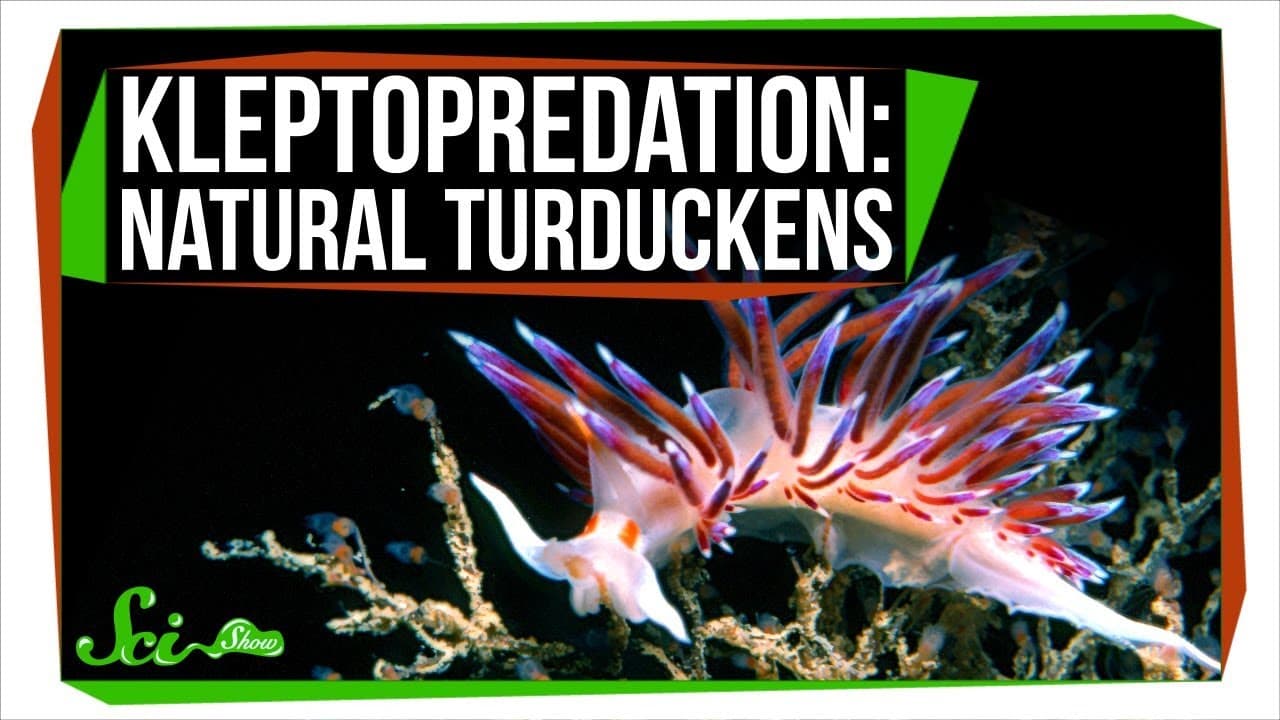
- 🪆 Sea slugs, specifically nudibranchs, are known for stealing from their meals, including stealing stinging cells and chloroplasts.
- 🕵️♀️ The East African jumping spider's preference for blood-filled female mosquitoes may be an honest signal of quality to attract mates.
- ⛔ The behavior of kleptopredation is not limited to these two species and may exist in other animals.
Install to Summarize YouTube Videos and Get Transcripts
Explore YouTube Video Summarizer or Get YouTube Transcript Extractor
Questions & Answers
Q: What is kleptopredation?
Kleptopredation is a feeding strategy where animals eat both an animal and its undigested meal, allowing them to save resources and obtain high-quality food.
Q: How do kleptopredators like sea slugs benefit from eating their prey's undigested meals?
Sea slugs, like the one described in the content, eat hydroids for their stomachs full of plankton. By consuming the hydroids, they also obtain the plankton, which becomes an additional food source.
Q: Why do the East African jumping spiders prefer female mosquitoes that have just consumed blood?
The East African jumping spiders may prefer blood-filled female mosquitoes as an honest signal of quality to attract mates. The blood scent may indicate that they have the ability to find and capture rare prey, making them more attractive to potential mates.
Q: Are there other animals that practice kleptopredation?
Although kleptopredation is not widely studied, there are likely other animals that practice this feeding strategy. So far, sea slugs and the East African jumping spider are the only known kleptopredators.
Summary & Key Takeaways
-
Kleptopredators are animals that eat both an animal and its undigested meal, using a feeding strategy called kleptopredation.
-
The term "kleptopredator" was coined to describe a sea slug that eats coral-like animals called hydroids, mostly for their stomachs full of plankton.
-
Some spiders, like the East African jumping spider, specifically target prey that has just consumed blood, possibly as an honest signal of quality to attract mates.
Read in Other Languages (beta)
Share This Summary 📚
Summarize YouTube Videos and Get Video Transcripts with 1-Click
Try YouTube Summary with ChatGPT & Claude or YouTube Transcript Generator
Explore More Summaries from SciShow 📚


Summarize YouTube Videos and Get Video Transcripts with 1-Click
Try YouTube Summary with ChatGPT & Claude or YouTube Transcript Generator