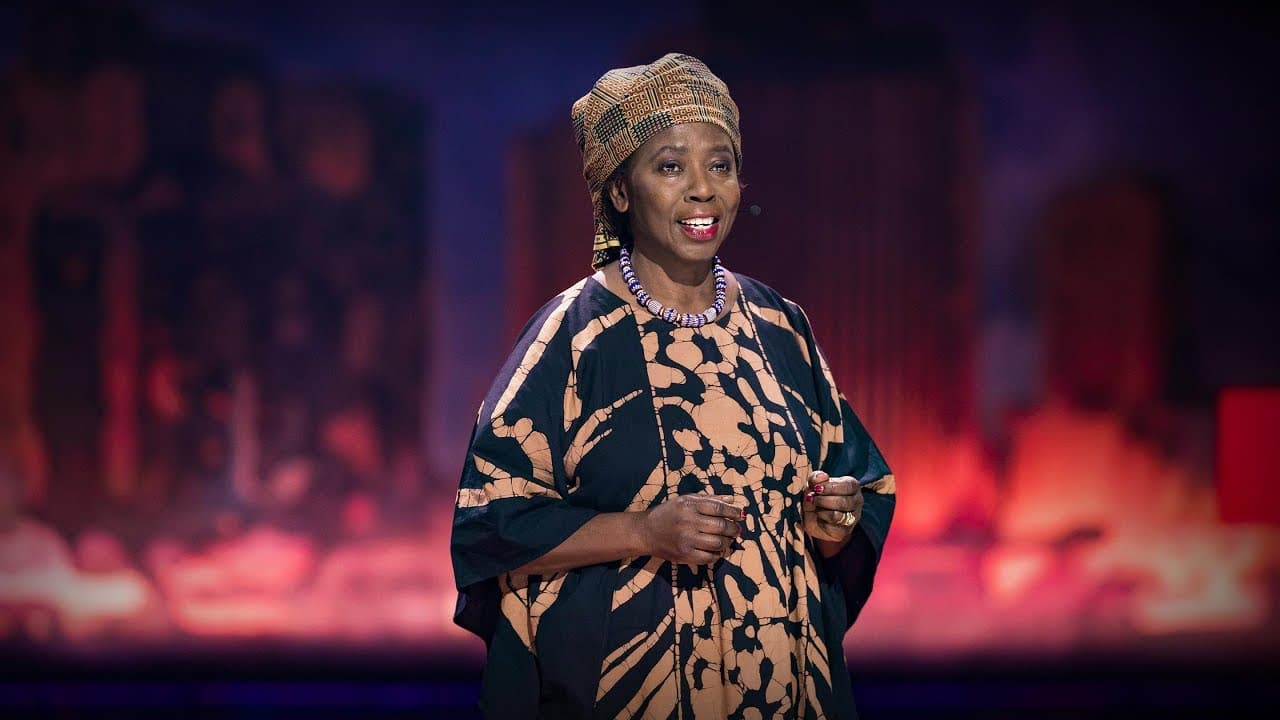
To solve the world's biggest problems, invest in women and girls | Musimbi Kanyoro
TL;DR
In this TED talk, Musimbi Kanyoro shares the concept of "isirika" and explains how embracing this way of living can lead to positive change and empowerment for women and communities.
Transcript
My mother was a philanthropist. And now I know you're asking -- let me give you the answer: yes, a little bit like Melinda Gates -- (Laughter) but with a lot less money. (Laughter) She carried out her philanthropy in our community through a practice we call, "isirika." She supported the education of scores of children and invited many to live with ... Read More
Key Insights
- 🏥 The speaker's mother practiced philanthropy in their community through a concept called isirika, supporting education, healthcare, and community organization.
- 💡 Isirika emphasizes mutual responsibility and caring for one another, with a focus on equal generosity.
- 🌍 Isirika promotes inclusivity and community participation, with everyone, including children, contributing and being recognized.
- 🤝 Isirika encourages seeing each other as humans first, valuing everyone's ideas and contributions.
- 🏗️ Isirika affirms that every idea counts, regardless of its size, and emphasizes the privilege of giving more to those who have more.
- 💪 Investing in women and girls is key to solving the world's problems, as they expand investment and care for their entire community.
- 💰 By 2030, over 350 trillion dollars should be in the hands of women, making investing in them a smart choice.
- 🌟 Isirika is a pragmatic and meaningful way of living that can be embraced by individuals, families, and communities.
Install to Summarize YouTube Videos and Get Transcripts
Explore YouTube Video Summarizer or Get YouTube Transcript Extractor
Questions & Answers
Q: What is the practice of "isirika" and how did the speaker's mother carry out her philanthropy through it?
Isirika is a practice of philanthropy and community organizing in the Maragoli language of western Kenya. The speaker's mother supported education for children, even inviting some to live with her family to access schools. She also mobilized resources for building a local health clinic, and her organizing skills were highly regarded by the community.
Q: How did the speaker describe the inclusive nature of isirika?
The speaker described isirika as a way of life that affirms common humanity and emphasizes the idea of being your sister's and brother's keeper. In isirika, all individuals, regardless of their background or circumstances, are seen as equal and deserving of care and support.
Q: How did the speaker's experiences outside of her farming community impact her understanding of philanthropy?
When the speaker left her farming community and entered the world of development, humanitarian work, and philanthropy, she noticed a shift in terminology and attitudes. Her childhood community, which practiced isirika, became labeled as "poor, vulnerable populations" and the focus shifted towards projects, programs, and measuring impact. Isirika began to disappear in these new contexts.
Q: What challenges did the speaker highlight in regards to addressing poverty and other global issues?
While the speaker acknowledged the importance of finding solutions to poverty and other global challenges, she believed that a better job could be done by embracing isirika. This would involve affirming common humanity, valuing every idea regardless of size, and recognizing the privilege of giving more. The speaker emphasized the need to pass on this wisdom of isirika to future generations.
Q: How has the speaker observed isirika in action through her work with women's organizations?
Through her work with women's organizations, the speaker has witnessed the power of isirika in action. Investing in women and girls, she discovered that they not only expand the investment but also care for the entire community, including their own needs, the needs of children, the elderly, and others. The speaker also highlighted the importance of financial resources being in the hands of women in order to make a significant impact on the world's biggest problems.
Q: What is the speaker's hope for the audience in regards to embracing isirika?
The speaker's hope is that the audience will embrace isirika as a way of living and share it with their families, friends, and communities. She believes that by investing in women and girls and adopting isirika as a pragmatic way of life, we can collectively make a difference in addressing global challenges and creating a more inclusive and caring world.
Summary & Key Takeaways
-
The speaker's mother was a philanthropist who practiced "isirika" in their community, supporting education, healthcare, and organizing solutions to community needs.
-
Isirika is a way of life that embraces charity, service, and philanthropy, emphasizing mutual responsibility and caring for one another.
-
The speaker calls for embracing isirika and investing in women and girls, as they expand investment, care for the community, and have the potential to make a significant impact.
Read in Other Languages (beta)
Share This Summary 📚
Summarize YouTube Videos and Get Video Transcripts with 1-Click
Try YouTube Summary with ChatGPT & Claude or YouTube Transcript Generator
Explore More Summaries from TED 📚


Summarize YouTube Videos and Get Video Transcripts with 1-Click
Try YouTube Summary with ChatGPT & Claude or YouTube Transcript Generator