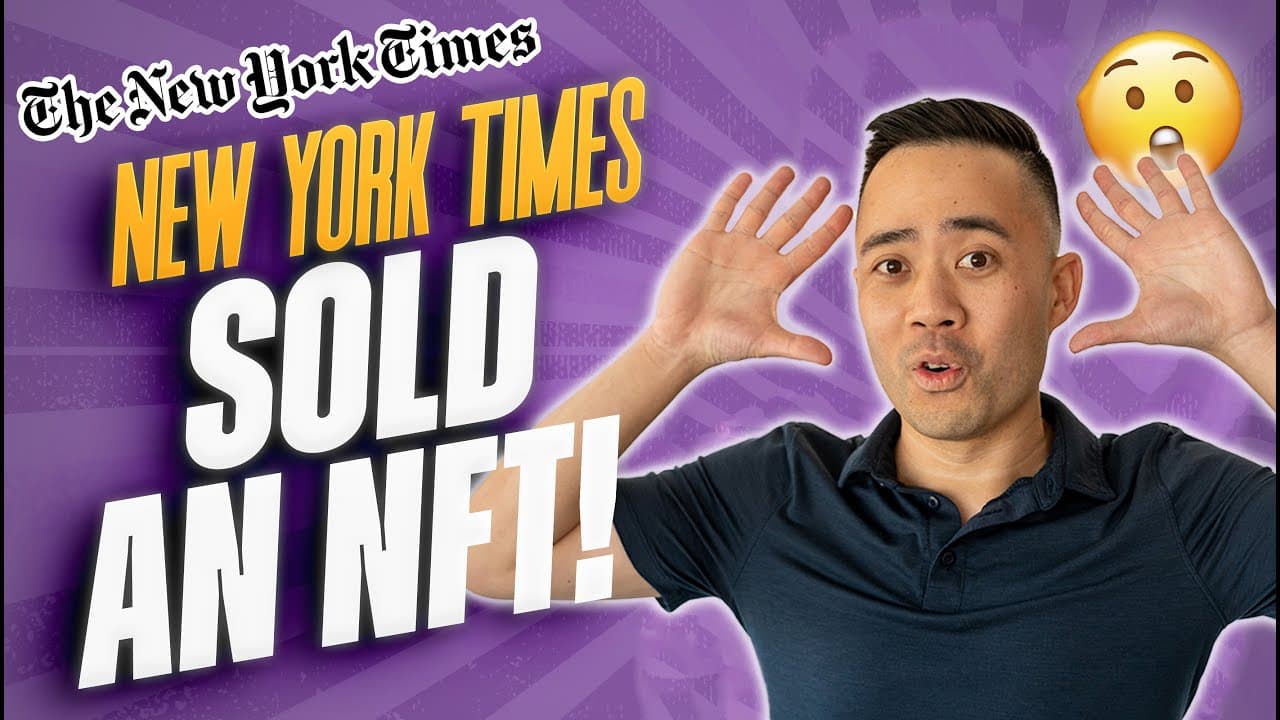
The New York Times Sold An NFT For $560,000!
TL;DR
NFTs are booming but may face a bubble soon.
Transcript
the new york times recently sold a column in their paper for 560 000 not only that time magazine recently did an nft drop on clubhouse for about thirty thousand dollars this whole nft craze right now non-fungible tokens you know what is my reaction as a marketer overall i think there's a lot of damage to be done in a good way and also in a bad way ... Read More
Key Insights
- The New York Times sold an NFT for $560,000, highlighting the current NFT craze and its potential in media.
- NFTs provide a way to ensure scarcity and authenticity through blockchain technology, which was previously challenging with physical items.
- The NFT market is experiencing rapid growth, but there are concerns about a potential bubble, with the market possibly cooling off in a few years.
- Marketers can leverage NFTs by creating unique offerings that combine digital assets with exclusive access or experiences.
- NFTs can be used creatively in marketing strategies, such as bundling them with physical products to increase perceived value and engagement.
- The popularity of NFTs is driven by their collectability and the ability to track ownership history, adding value to digital collectibles.
- Collaborations between brands and influencers in NFT drops can enhance brand visibility and generate additional revenue streams.
- Caution is advised in the NFT market, with a focus on purchasing items that are personally interesting and affordable, even if they lose value.
Install to Summarize YouTube Videos and Get Transcripts
Explore YouTube Video Summarizer or Get YouTube Transcript Extractor
Questions & Answers
Q: What is the significance of The New York Times selling an NFT?
The New York Times selling an NFT for $560,000 highlights the mainstream adoption and financial potential of NFTs in traditional media. It demonstrates how established institutions can leverage digital assets to create new revenue streams and engage with a tech-savvy audience interested in digital collectibles.
Q: How do NFTs ensure scarcity and authenticity?
NFTs ensure scarcity and authenticity through blockchain technology, which allows for transparent tracking of ownership and origin. Each NFT is unique and can be verified as the original, unlike traditional physical items where authenticity can be harder to prove. This digital certification adds value to the asset.
Q: Why is there concern about a potential NFT market bubble?
There is concern about a potential NFT market bubble due to the rapid increase in value and attention the market is receiving, reminiscent of past speculative bubbles. The fear is that prices may be unsustainable, leading to a market correction where values drop significantly, impacting investors and creators.
Q: How can marketers utilize NFTs effectively?
Marketers can utilize NFTs effectively by creating unique digital assets that offer more than just ownership. By bundling NFTs with exclusive experiences, access, or content, marketers can increase their product's perceived value, enhance customer engagement, and tap into the growing interest in digital collectibles.
Q: What role do collaborations play in NFT marketing strategies?
Collaborations play a significant role in NFT marketing strategies by enhancing visibility and credibility. Partnering with influencers or other brands can amplify the reach of an NFT drop, attract diverse audiences, and generate media buzz, ultimately driving sales and increasing brand awareness.
Q: What advice is given regarding investing in NFTs?
The advice given regarding investing in NFTs is to approach the market with caution, focusing on items that are personally interesting and affordable. Investors should be prepared for the possibility that their NFTs could lose value, treating purchases as collectibles rather than guaranteed financial investments.
Q: How does the concept of digital collectibles change with NFTs?
The concept of digital collectibles changes with NFTs by introducing verifiable ownership and scarcity. Unlike traditional digital files that can be easily copied, NFTs are unique and tracked on the blockchain, providing collectors with confidence in the authenticity and value of their digital assets.
Q: What potential does the NFT market hold for the future?
The NFT market holds significant potential for the future in terms of creating new revenue models, engaging digital-native audiences, and transforming how art, media, and experiences are consumed. As technology and market understanding evolve, NFTs could become integral to various industries, despite current volatility concerns.
Summary & Key Takeaways
-
The New York Times and Time Magazine have entered the NFT market, selling digital assets for significant amounts, indicating the growing interest in NFTs. This trend is part of a larger craze, with notable sales like Beeple's $69 million collection and Logan Paul's multi-million dollar drop.
-
NFTs enable the tracking of ownership and authenticity, addressing issues of scarcity and originality in digital and physical art. The technology allows marketers to create unique offerings, combining digital tokens with exclusive experiences, thus enhancing engagement and perceived value.
-
Despite the current excitement, there are concerns about the NFT market being a bubble, with a potential cool-off period in the coming years. The advice is to engage with NFTs cautiously, investing in items that are personally interesting and affordable, regardless of their future value.
Read in Other Languages (beta)
Share This Summary 📚
Summarize YouTube Videos and Get Video Transcripts with 1-Click
Try YouTube Summary with ChatGPT & Claude or YouTube Transcript Generator
Explore More Summaries from Leveling Up with Eric Siu 📚

Summarize YouTube Videos and Get Video Transcripts with 1-Click
Try YouTube Summary with ChatGPT & Claude or YouTube Transcript Generator