How to Find When the Direction of Concavity Changes : Measurements & Other Math Calculations
TL;DR
Learn how to find when concavity changes by examining the second derivative of a function.
Transcript
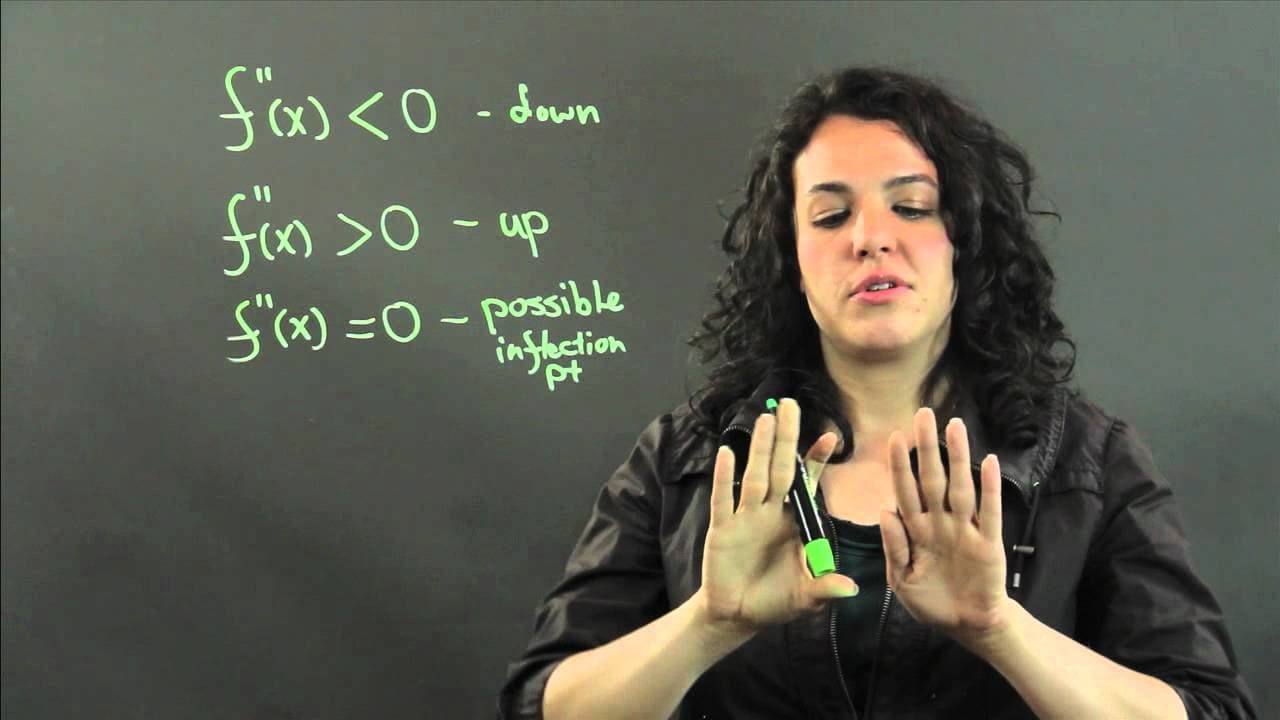
hi my name's julia and i'm going to show you how to find when the direction of concavity changes to do this you want to look at the second derivative of a function so if f double primed for the second derivative of f of x is less than zero then we are concave down if f double prime of x is greater than zero then we are concave up so the concavity c... Read More
Key Insights
- 🤘 Understanding concavity changes involves examining the sign of the second derivative.
- 😥 Inflection points are critical in identifying where the concavity of a function transitions.
- ❎ A positive second derivative indicates concave up, while a negative second derivative indicates concave down.
- 😥 Inflection points occur where the second derivative is zero, indicating a change in concavity.
- 😥 To confirm an inflection point, analyze the concavity of the function around the point with a zero second derivative.
- 😥 The sign of the second derivative at adjacent points helps determine the concavity direction at an inflection point.
- 🤘 Mathematical functions exhibit concave up and concave down regions based on the second derivative's sign.
Install to Summarize YouTube Videos and Get Transcripts
Explore YouTube Video Summarizer or Get YouTube Transcript Extractor
Questions & Answers
Q: How can the second derivative help determine the direction of concavity?
The second derivative of a function indicates whether the function is concave up (positive second derivative) or concave down (negative second derivative). This helps in understanding when the direction of concavity changes.
Q: What is an inflection point in the context of concavity changes?
An inflection point is a point where the concavity of a function changes, typically marked by the second derivative being zero. It signifies a shift between concave up and concave down regions in the function.
Q: How do you verify if a point with a second derivative of zero is an inflection point?
To confirm if a point with a second derivative of zero is an inflection point, analyze the concavity of the function around that point by checking the sign of the second derivative at nearby values.
Q: Can you provide an example of finding an inflection point in a function?
Using f(x) = x^3 as an example, the second derivative f double primed of x equals 6x. At x = 0, f double primed equals 0. By checking the concavity at x = -1 and x = 1, we can confirm an inflection point exists.
Summary & Key Takeaways
-
The direction of concavity changes when the second derivative of a function switches signs.
-
A point with a second derivative of zero may indicate an inflection point where concavity changes.
-
Inflection points are identified by checking the concavity of the second derivative around that point.
Read in Other Languages (beta)
Share This Summary 📚
Summarize YouTube Videos and Get Video Transcripts with 1-Click
Try YouTube Summary with ChatGPT & Claude or YouTube Transcript Generator
Explore More Summaries from ehow 📚

Summarize YouTube Videos and Get Video Transcripts with 1-Click
Try YouTube Summary with ChatGPT & Claude or YouTube Transcript Generator