What Are the Limitations of Current Scientific Metrics?
TL;DR
Current scientific metrics, such as citation counts and impact factors, often promote bias and may hinder research progress. Sabine Hossenfelder emphasizes the need for self-awareness among scientists regarding their influences and advocates for platforms like Scimeter.org to develop customized metrics. She warns that reliance on the naturalness argument in particle physics lacks a solid scientific foundation, highlighting the interplay between science and philosophy.
Transcript
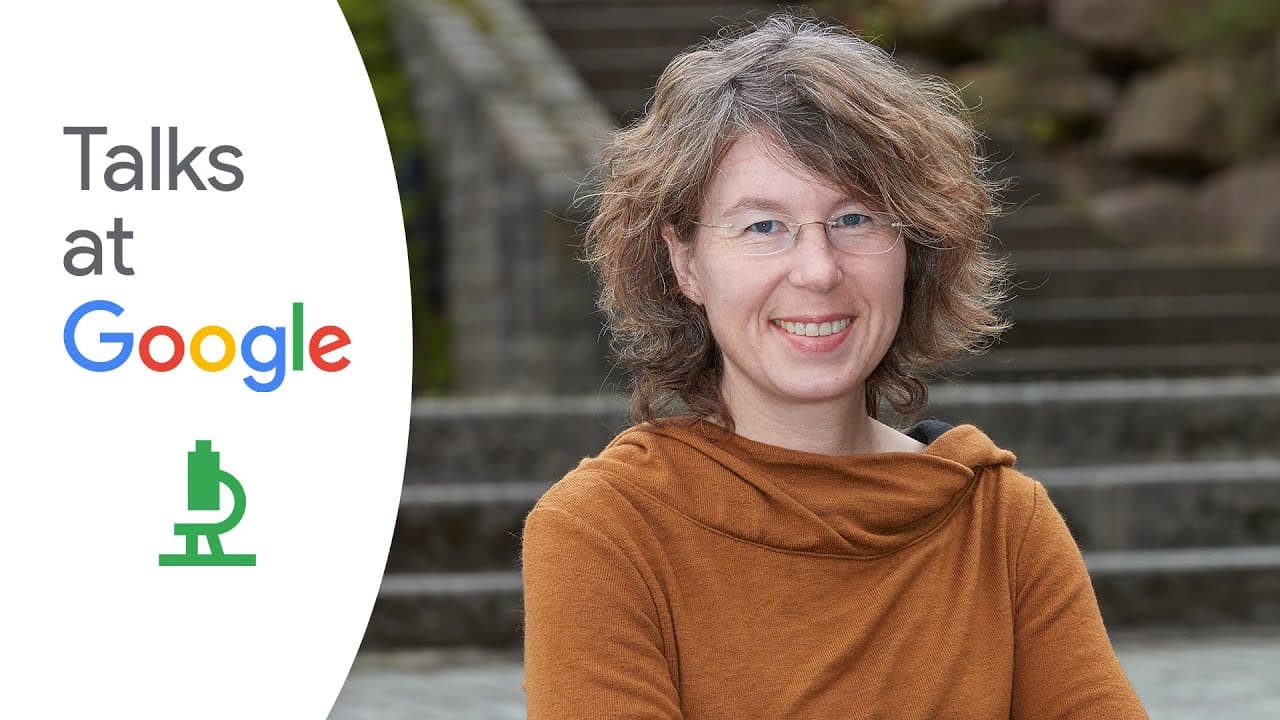
[MUSIC PLAYING] TIMOTHY NGUYEN: OK, welcome, everyone, to Talks at Google. We are very privileged today to have with us Sabine Hassenfelder. Sabine is a theoretical physicist who studies quantum gravity. But she is much more than that. She's also a prolific blogger. Her blog "Backreaction", which she started in 2006, has had over 7 million views. S... Read More
Key Insights
- 🖤 The naturalness argument used in particle physics relies on arbitrary assumptions and lacks a strong scientific basis.
- 👨🔬 Scientists should be more self-aware of their biases and the influence of the scientific community on their research interests.
- 🧑🏭 Current scientific metrics, such as citation counts and impact factors, have limitations and biases that could hinder overall scientific progress.
- 😵 Fundamental physics topics often cross into philosophical and even religious domains, attracting both legitimate scientific questions and pseudoscientific ideas.
Install to Summarize YouTube Videos and Get Transcripts
Explore YouTube Video Summarizer or Get YouTube Transcript Extractor
Questions & Answers
Q: What were Sabine Hassenfelder's research topics during her PhD studies?
Hassenfelder focused on particle physics and specifically worked on the topic of the possible creation of tiny black holes at the Large Hadron Collider.
Q: What is the naturalness problem in the standard model of physics?
The naturalness problem refers to certain numbers in the standard model, such as the mass of the Higgs boson, that are considered unnatural and require additional physics, such as supersymmetry or extra dimensions, to explain their small values.
Q: How does Scimeter.org help researchers in their day-to-day work?
Scimeter.org provides tools like keyword clouds, similar author searches, and topic matches to help researchers find collaborators, organize conferences, and explore specific research areas more effectively.
Q: Can Sabine Hassenfelder's superfluid dark matter theory be experimentally confirmed?
Hassenfelder believes that observations related to the formation of galaxies could provide evidence for superfluid dark matter. However, she also mentioned ongoing research to explore the possibility of laboratory experiments for detection.
Summary & Key Takeaways
-
Sabine Hassenfelder discusses her journey from studying particle physics to her current work on quantum gravity and her views on the limitations of the physics community.
-
She criticizes the reliance on the naturalness argument in particle physics, which she believes lacks a sound scientific basis.
-
Hassenfelder introduces Scimeter.org, a website that provides customized scientific metrics to overcome biases in research evaluation.
Read in Other Languages (beta)
Share This Summary 📚
Summarize YouTube Videos and Get Video Transcripts with 1-Click
Try YouTube Summary with ChatGPT & Claude or YouTube Transcript Generator
Explore More Summaries from Talks at Google 📚
Summarize YouTube Videos and Get Video Transcripts with 1-Click
Try YouTube Summary with ChatGPT & Claude or YouTube Transcript Generator