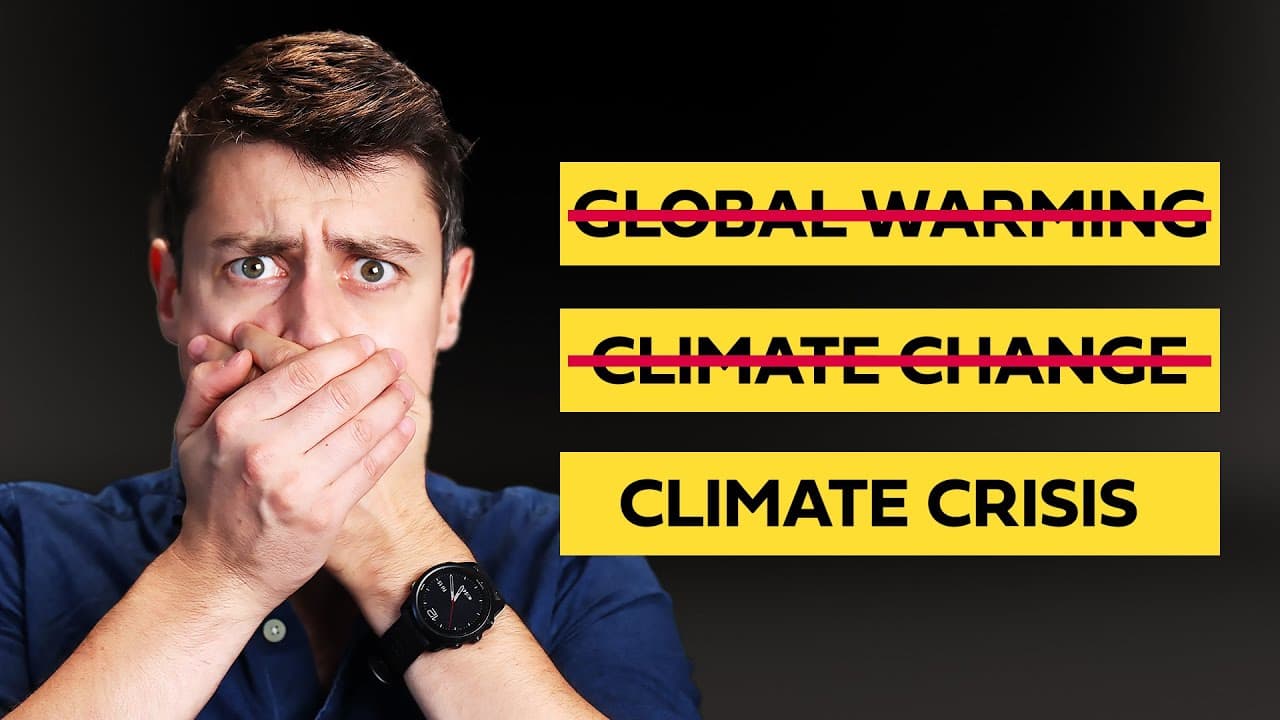
Why is it the 'climate crisis' now?
TL;DR
Language and emotion play a crucial role in climate communication, as different audiences respond differently to fear or hope-based messaging.
Transcript
this video is sponsored by brilliant you notice that the language around climate keeps changing first it was global warming then it was climate change and now it's the climate crisis and just recently United Nations Secretary General Antonio guteresh referred to Global boiling doesn't this indicate that scientists don't know what they're doing and ... Read More
Key Insights
- ⌛ The language used to communicate climate change has evolved over time to accurately reflect the complexity and urgency of the issue.
- ⚾ Emotive language, whether fear-based or hope-based, can inspire action, but its effectiveness varies among different cultures and audiences.
- ❓ Tailoring climate communication to specific audiences is crucial for effective engagement.
- 🪡 The urgency of the climate crisis necessitates immediate action, and language choices must convey this severity and the need for timely responses.
- 😨 Different emotions, such as fear, anger, or hope, can motivate action, and the most effective approach depends on the target audience.
- 🎯 The same language can have different impacts on different cultures, highlighting the importance of understanding the target audience's perspectives and experiences.
- 👯 Language not only describes reality but also creates it, influencing how people perceive and respond to climate change.
Install to Summarize YouTube Videos and Get Transcripts
Explore YouTube Video Summarizer or Get YouTube Transcript Extractor
Questions & Answers
Q: Why has the language around climate change shifted from global warming to climate change to the climate crisis?
The language evolved to reflect a better understanding of the issue. While global warming seemed fitting initially, it didn't capture the full complexity that climate change encompasses, including shifting weather patterns and extremes. The climate crisis emphasizes the urgency and severity of the problem.
Q: Does fear or hope-based messaging work better to inspire action on climate change?
It varies among audiences. Some may be more motivated by fear, as it highlights the consequences of inaction and the urgency to act. Others may respond better to hope-based messaging, offering solutions and a positive vision of the future. Different cultural backgrounds and personal experiences influence emotional responses.
Q: Why is tailoring climate communication important?
Tailoring communication ensures messages resonate with specific audiences. What may work for one group may not work for another. By understanding the target audience, climate communicators can use language and emotions that effectively inspire action and overcome barriers to engagement.
Q: How does the language used in climate communication create a reality?
Language not only describes reality but also shapes it. By using terms like the climate crisis, communicators establish the urgency and seriousness of the issue. This framing influences how people perceive the problem and the need for immediate action.
Summary & Key Takeaways
-
The language used to describe climate change has evolved from global warming to climate change to the climate crisis, reflecting the changing understanding of the issue.
-
Emotive language, whether fear-based or hope-based, can inspire action on climate change, but the effectiveness varies among different cultures and audiences.
-
Tailoring climate communication to specific audiences is essential, as different language and emotions resonate differently with different groups.
-
The urgency of the climate crisis necessitates immediate action, and language choices must convey this severity and the need for a timely response.
Read in Other Languages (beta)
Share This Summary 📚
Summarize YouTube Videos and Get Video Transcripts with 1-Click
Try YouTube Summary with ChatGPT & Claude or YouTube Transcript Generator
Explore More Summaries from Simon Clark 📚






Summarize YouTube Videos and Get Video Transcripts with 1-Click
Try YouTube Summary with ChatGPT & Claude or YouTube Transcript Generator