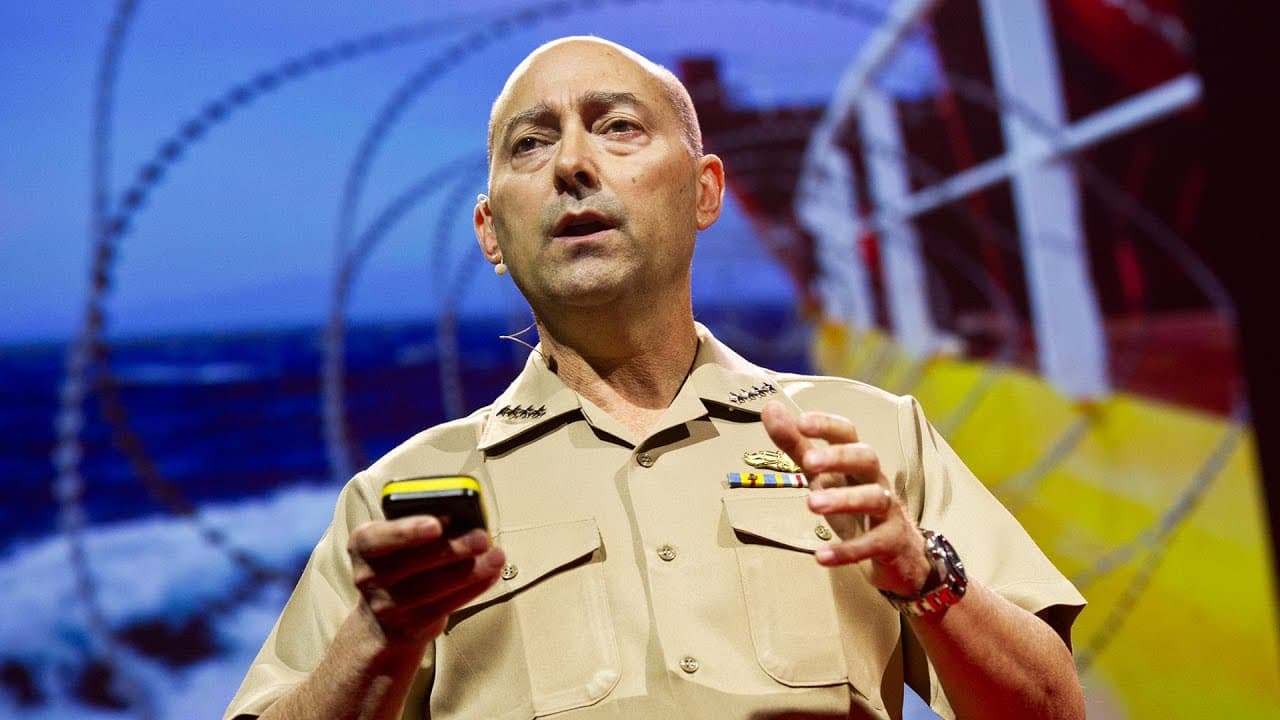
James Stavridis: How NATO's Supreme Commander thinks about global security
TL;DR
In this talk, Admiral James Stavridis discusses the importance of open-source security and the need to build bridges instead of walls for creating security in the 21st century.
Transcript
Translator: Joseph Geni Reviewer: Morton Bast I'm gonna talk a little bit about open-source security, because we've got to get better at security in this 21st century. Let me start by saying, let's look back to the 20th century, and kind of get a sense of how that style of security worked for us. This is Verdun, a battlefield in France just north o... Read More
Key Insights
- 🌍 Building bridges instead of walls is essential for security in the 21st century, as seen through historical examples of failed security measures like walls and borders.
- 💻 Open-source security, which involves connecting international, interagency, and private-public entities through strategic communication, is vital for addressing threats in the global commons, including piracy, cybercrime, trafficking, and terrorism.
- 📚 Collaboration between NATO, private sector entities, and development agencies has successfully taught illiterate Afghan security forces to read and write, highlighting the importance of international and interagency partnerships in creating security.
- ⛑️ Humanitarian efforts, such as hospital ships providing medical treatments and baseball clinics promoting fitness and positive role models, contribute to security by strengthening communities and addressing social issues.
- 🌐 The internet and social networks play a crucial role in open-source security by facilitating communication and collaboration between different actors, as shown through examples of using social media platforms like Facebook and Twitter to spread messages and connect with global audiences.
- 💪 Military capabilities are still important for creating security, but they should be used in conjunction with other tools and approaches, such as international partnerships, interagency collaboration, private-public cooperation, and competent communication.
- 🌐 The power of collective knowledge and collaboration is emphasized through the example of Wikipedia, highlighting the idea that no one individual or entity is as smart as the collective intelligence of all participants working together.
- 🌍 The goal of open-source security is to create a world where every human being can freely share in the sum of all security, achieved through the combination of international, interagency, private-public, and strategic communication efforts.
Install to Summarize YouTube Videos and Get Transcripts
Explore YouTube Video Summarizer or Get YouTube Transcript Extractor
Questions & Answers
Q: What is the main thesis of the video?
The main thesis of the video is that instead of relying on traditional security measures like building walls, we should focus on open-source security by connecting international, interagency, private-public entities and utilizing strategic communication.
Q: What are some threats to the global commons mentioned in the video?
Some threats to the global commons mentioned in the video include piracy in the Indian Ocean, cybercrime, trafficking of narcotics and illegal weapons, and terrorism in Afghanistan.
Q: How does open-source security approach address these threats?
Open-source security approaches these threats by utilizing international, interagency, private-public collaboration and strategic communication. This includes initiatives like teaching literacy to Afghan security forces, providing humanitarian assistance through hospital ships, using sports programs to create security and role models, and responding to natural disasters with international partnerships.
Q: How does the video emphasize the power of collective thinking?
The video emphasizes the power of collective thinking by using examples like Wikipedia to demonstrate that no single person or entity is as smart as the collective. It highlights the importance of combining the knowledge and efforts of many people, organizations, and nations to create the sum of all security.
Summary & Key Takeaways
-
The speaker argues that in the 21st century, security should be built through bridges and connections rather than walls, highlighting the failures of 20th-century security methods.
-
The global commons, including the cyber sea, transportation systems, and drug trafficking routes, are under attack and require a collaborative and open approach to address the threats.
-
The speaker provides examples of open-source security, including literacy programs for Afghan soldiers, humanitarian efforts, disaster relief partnerships, and the power of social media in spreading messages for security.
Read in Other Languages (beta)
Share This Summary 📚
Summarize YouTube Videos and Get Video Transcripts with 1-Click
Try YouTube Summary with ChatGPT & Claude or YouTube Transcript Generator
Explore More Summaries from TED 📚
Summarize YouTube Videos and Get Video Transcripts with 1-Click
Try YouTube Summary with ChatGPT & Claude or YouTube Transcript Generator