9 Ways to Cook Like a Scientist: Molecular Gastronomy
TL;DR
Learn how you can use science to transform your cooking with techniques like food pairing, molecular gastronomy, flash freezing, sous vide, spherification, transglutaminase, cotton candy making, maltodextrin powder, and edible foam.
Transcript
♪ SciShow Theme ♪ If you've ever been to a fancy restaurant or watched some TV cooking competitions, you've probably heard lots of people describe cooking as an art, but it's also a science. We rely on some chemistry and physics to steam, fry, bake, or microwave our meals. Some chefs have even used their knowledge of food science to develop new cre... Read More
Key Insights
- 😋 Food pairing matches ingredients based on their molecular components, enhancing flavor combinations.
- 🥘 Scientific compounds like methylcellulose, liquid nitrogen, and maltodextrin allow for unique cooking techniques and transformations of food.
- 🎮 Techniques like sous vide, spherification, and transglutaminase offer precise control in cooking and can create innovative culinary presentations.
- 😋 Cotton candy making and edible foam production demonstrate how scientific principles can be used to enhance the texture and presentation of food.
Install to Summarize YouTube Videos and Get Transcripts
Explore YouTube Video Summarizer or Get YouTube Transcript Extractor
Questions & Answers
Q: How does food pairing work and what is its purpose?
Food pairing matches foods based on their molecular components, specifically aroma compounds. By combining ingredients that share these compounds, flavors can be enhanced and complemented.
Q: How does methylcellulose work as a thickening agent and what can it be used for?
Methylcellulose is a hydrocolloid that forms a gel when mixed with hot liquid water. It can be used to create hot ice cream and act as a thickening agent in recipes such as whipped foams or meringues.
Q: How does flash freezing with liquid nitrogen improve the texture of ice cream?
Liquid nitrogen freezes foods rapidly, resulting in smaller ice crystals and a smoother, creamier texture in ice cream. It can also be used to freeze oils, alcohol, and create frozen fruit powder.
Q: How does sous vide cooking provide precise temperature control?
Sous vide cooking involves vacuum-sealed packaging of food and cooking it in a water bath at a precise temperature. This method ensures even cooking, preserves texture and flavor, and produces perfectly cooked meats.
Q: What is spherification and how does it work?
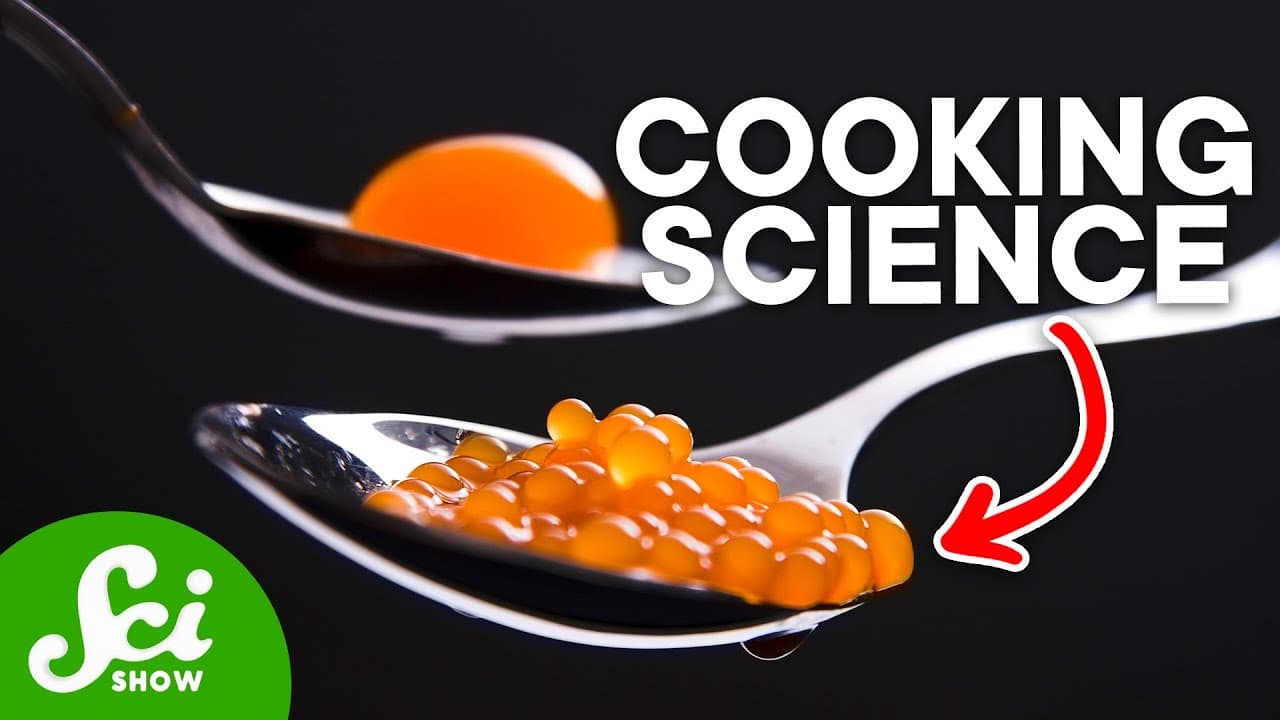
Spherification is the process of creating gel spheres using sodium alginate and calcium ions. The alginate forms a gel around flavored liquid when it comes into contact with calcium, resulting in unique textures and flavors.
Q: How does transglutaminase, or "meat glue," work in cooking?
Transglutaminase is an enzyme that can bind proteins together. It allows chefs to create mixtures of meats without the need for skewers, resulting in unique combinations and presentations.
Q: What is the science behind making cotton candy?
Cotton candy machines utilize centrifugal force to force melted sugar through small holes, creating strands of sugar. These strands are then collected and twirled onto a stick, resulting in fluffy cotton candy.
Q: How does maltodextrin turn liquid oils into fluffy powders?
Maltodextrin, a carbohydrate derived from plant starch, can turn liquid oils into powders. When it comes into contact with water or saliva, the maltodextrin dissolves, releasing the flavorful oil molecules.
Q: How does the creation of edible foam work?
Edible foam is made by mixing a water-based liquid with a stabilizer, such as soy lecithin. This lowers the surface tension of air bubbles, making them less likely to pop, resulting in a fluffy and fun foam.
Summary & Key Takeaways
-
Food pairing is a science-based method that matches foods based on their molecular components, enhancing flavor combinations.
-
Methylcellulose, a compound with a thermoreversible property, allows for the creation of hot ice cream and acts as a thickening agent.
-
Liquid nitrogen enables quick freezing, resulting in smoother and creamier ice cream, as well as the creation of frozen fruit powder.
-
Sous vide cooking involves precise temperature control, resulting in perfectly cooked and juicy meats.
-
Spherification creates gel spheres using sodium alginate and calcium ions, resulting in unique textures and flavors.
-
Transglutaminase, also known as "meat glue," allows for the fusion of different meats without skewers.
-
Cotton candy is made using centrifugal force to turn melted sugar into fluffy strands.
-
Maltodextrin can transform liquid oils into powder form, ideal for garnishing desserts or savory dishes.
-
Edible foam is created by mixing a water-based liquid with a stabilizer, resulting in a fun and flavorful experience.
Read in Other Languages (beta)
Share This Summary 📚
Summarize YouTube Videos and Get Video Transcripts with 1-Click
Try YouTube Summary with ChatGPT & Claude or YouTube Transcript Generator
Explore More Summaries from SciShow 📚
Summarize YouTube Videos and Get Video Transcripts with 1-Click
Try YouTube Summary with ChatGPT & Claude or YouTube Transcript Generator