Is Technology Our Savior or Slayer in Society's Future?
TL;DR
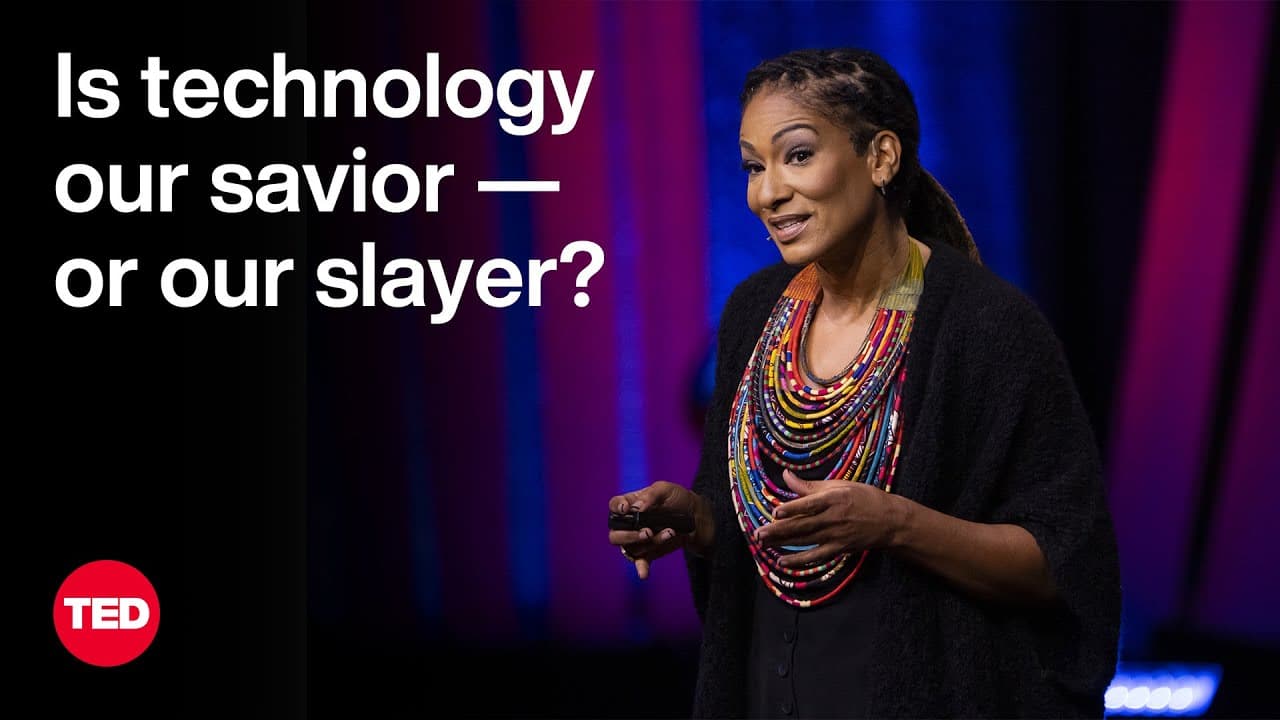
Technology can be seen as either a savior or a slayer, depending on how we choose to shape it. While some envision a utopia driven by convenience and efficiency, others warn of a dystopian future marked by inequality and exploitation. To move forward, we must actively create 'ustopias' that prioritize collective well-being and ensure that technology serves the needs of all people.
Transcript
This transmission is for future generations. As it stands, a small sliver of humanity is currently imposing their visions on the rest of us. They invest in space travel and AI superintelligence and underground bunkers, while casting health care and housing for all as outlandish and unimaginable. These futurists let their own imaginations run wild w... Read More
Key Insights
- 🚀 The current focus on space travel and AI superintelligence highlights a disconnect between the priorities of those in power and the needs of the majority, such as healthcare and housing for all.
- 🌍 The dominant narratives about the future, whether utopian or dystopian, both assume that technology is in control, neglecting the role of human values and interests in shaping our digital and physical worlds.
- 💡 To create a better future, we must move beyond dystopian or utopian visions and embrace the concept of ustopia — a collective imagination where tensions exist but everyone has what they need to thrive.
- 💻 Technology should be driven by collective intelligence, as seen in Barcelona's participatory experiment using the Decidim platform, which prioritizes data sovereignty, privacy, and collective rights.
- 🏙️ Cities like Barcelona and Atlanta are demonstrating the power of ustopias by prioritizing people over profit, public goods over policing, and protecting both the environment and social well-being.
- ✊ Grassroots movements, such as forest defenders in Atlanta and data justice organizers in Barcelona, show that collective action can challenge dominant narratives and create a more equitable future.
- 🌍 We must challenge the limitations of our imagination and envision a society without prisons, schools that foster every child's potential, and work that doesn't harm our well-being.
- 🌱 Building a world where everyone has access to basic needs like food, shelter, and love requires dismantling oppressive systems and actively participating in shaping our collective future.
Install to Summarize YouTube Videos and Get Transcripts
Explore YouTube Video Summarizer or Get YouTube Transcript Extractor
Questions & Answers
Q: What is the lopsided imagination that the speaker refers to?
The lopsided imagination refers to a society where a small minority of people control power and resources, imposing their visions on the rest of humanity. They invest in space travel, AI superintelligence, and underground bunkers, but neglect essential aspects like healthcare and housing for all.
Q: What are the two stories about the future that the monopolists sell?
The first story, inspired by Silicon Valley, portrays a utopian future where all our wants and needs are catered to by advanced technology. The second story, favored by Hollywood, depicts a dystopian world filled with conflict, inequality, and domination by technology. Both narratives assume that technology holds the power, regardless of whether it saves or destroys humanity.
Q: What is ustopia?
Ustopia, a term borrowed from Margaret Atwood, represents a collective imagination where we shape the future together. Unlike utopias or dystopias, ustopias acknowledge the interconnectedness of our struggles and aim to prioritize collective well-being over wealth concentration and exclusion. It envisions a society where everyone has what they need to thrive.
Q: Can you provide examples of ustopias in action?
One example is Barcelona, where a participatory experiment called "Decidim" allows residents to create policies based on their actual needs. This digital platform, along with in-person neighborhood-level deliberations, has resulted in proposals addressing affordable housing, air quality, and more. Another example is the mobilization of residents in Atlanta, where they have successfully pushed back against plans to build a police training facility by emphasizing community safety, public goods, and ecological well-being.
Summary & Key Takeaways
-
A small sliver of humanity is imposing their visions on the rest, prioritizing space travel and AI over healthcare and housing for all.
-
There are two opposing visions of the future: one where technology is our savior and one where it dominates and displaces humanity.
-
Ustopias, collective imaginations that prioritize well-being and address inequality, are being created by communities in Barcelona and Atlanta to shape a future where everyone thrives.
Read in Other Languages (beta)
Share This Summary 📚
Summarize YouTube Videos and Get Video Transcripts with 1-Click
Try YouTube Summary with ChatGPT & Claude or YouTube Transcript Generator
Explore More Summaries from TED 📚

Summarize YouTube Videos and Get Video Transcripts with 1-Click
Try YouTube Summary with ChatGPT & Claude or YouTube Transcript Generator