The Oldest Known Animal May Be a Weird, Fleshy Oval | SciShow News
TL;DR
Scientists have used a new technique to examine biomolecules in Dickinsonia fossils and believe it to be the oldest known member of the animal kingdom, while the evolution of the bird syrinx is still a mystery.
Transcript
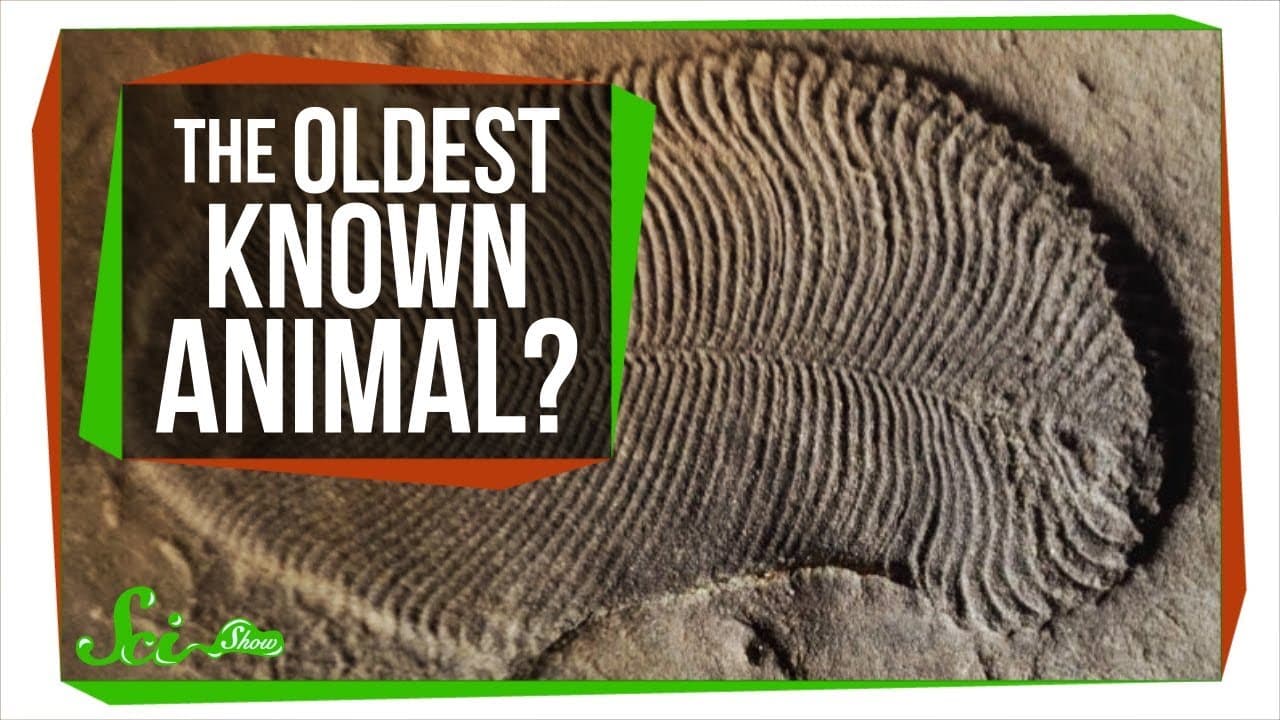
[♪ INTRO] Half a billion years ago on Earth, if you had gone wading in shallow seas, you might have come across Dickinsonia. This organism was first described by paleontologists in the 1940s, and it’s been bugging them ever since. They couldn’t make heads or tails of it… and not just because it doesn’t have an obvious head or tail. Was it an animal... Read More
Key Insights
- 🫤 Dickinsonia, a mysterious organism from 558 million years ago, has been classified as an animal based on the presence of cholesterol in its fossils.
- 👻 The discovery of intact Dickinsonia fossils allowed researchers to analyze hydrocarbon biomarkers and gain insight into its classification.
- 🐦 The syrinx in birds remains a mystery in terms of its evolutionary origins and how it replaced the larynx as the primary vocal organ.
- 🐦 The evolution of the syrinx may have been driven by changes in body shape related to flight or the increasing complexity of birds' vocal communication.
- 👶 The presence of the syrinx challenges traditional notions of how new structures evolve and highlights the potential for evolution to reinvent existing structures.
- 👨🔬 Further research is needed to fully understand the classification of Dickinsonia and the evolution of the bird syrinx.
- 🛟 The study of ancient organisms and their evolution provides valuable insights into the history of life on Earth.
Install to Summarize YouTube Videos and Get Transcripts
Explore YouTube Video Summarizer or Get YouTube Transcript Extractor
Questions & Answers
Q: Why have paleontologists had a hard time classifying Dickinsonia?
Paleontologists have struggled to classify Dickinsonia because only trace fossils, such as its body impressions in the mud, have been available, making it difficult to determine its characteristics.
Q: What biomolecule did the researchers find in Dickinsonia fossils that led them to classify it as an animal?
The researchers discovered cholesterol, a biomarker produced by animals, in Dickinsonia fossils, suggesting that it is an animal rather than a protist or lichen.
Q: What is unique about the syrinx in birds?
The syrinx is an organ found only in birds that sits at the lower end of the windpipe. It has membranes that vibrate, allowing birds to produce complex vocalizations and even sing two notes simultaneously.
Q: How did the evolution of the syrinx in birds differ from typical examples of new structures evolving?
Unlike typical examples, where a new structure evolves to serve a new function, the syrinx evolved in birds even though the larynx was already capable of producing sound. The exact reason for this evolution is still unclear.
Summary & Key Takeaways
-
Researchers have used a new technique to analyze biomolecules in Dickinsonia fossils and concluded that it is an animal, possibly the oldest known member of the animal kingdom.
-
Dickinsonia, a soft-bodied organism that lived 558 million years ago, has been difficult to classify due to only trace fossils being available.
-
Scientists have combined evidence from the fossil record and developmental biology to gain a better understanding of how birds evolved the syrinx, an organ they use to sing.
Read in Other Languages (beta)
Share This Summary 📚
Summarize YouTube Videos and Get Video Transcripts with 1-Click
Try YouTube Summary with ChatGPT & Claude or YouTube Transcript Generator
Explore More Summaries from SciShow 📚


Summarize YouTube Videos and Get Video Transcripts with 1-Click
Try YouTube Summary with ChatGPT & Claude or YouTube Transcript Generator