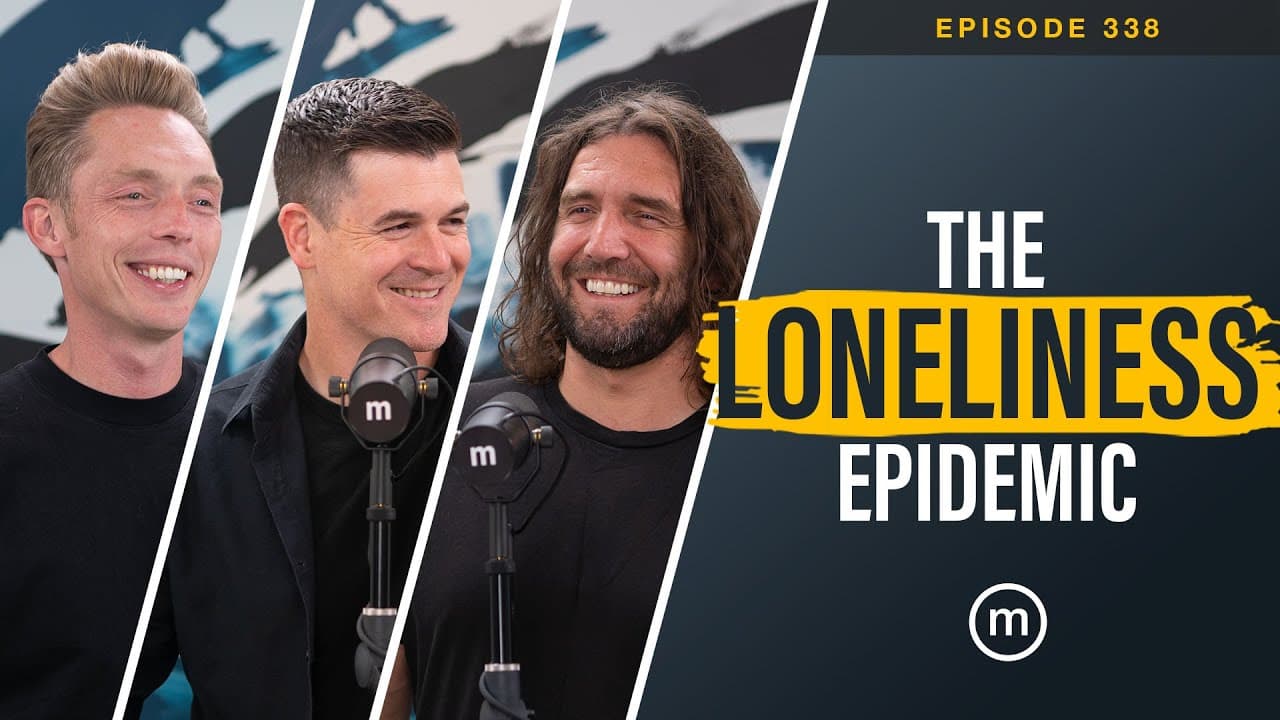
Ep. 338 | The Loneliness Epidemic (with @TheDrJohnDelonyShow)
TL;DR
Exploring loneliness, friendships, and intentional living.
Transcript
hello everybody Welcome to the minimalist podcast where we discuss what it means to live a meaningful life with less my name is Joshua Fields Milburn and I'm Ryan Nicodemus and together we are the minimalists Ryan we are the most technologically advanced Society in history and yet we've never been more anxious medicated and lonely as today's guest ... Read More
Key Insights
- In today's technologically advanced society, people are more anxious and lonely despite having numerous online connections.
- Codependency involves meeting one's needs by fulfilling others' endless needs, differing from the natural human experience of loneliness.
- Loneliness can be spiritual or physical, and recognizing it involves understanding one's disconnection from others.
- Practicing solitude intentionally is a superpower, allowing individuals to enjoy their own company and embrace boredom.
- Friendship as an adult involves risks, and one must be willing to take those risks and face potential failures.
- Intentionality in relationships means knowing when solitude is needed and ensuring deep connections with community groups.
- Love, like, and lust are components of intimate relationships, with each playing a crucial role in long-term compatibility.
- The solution to workplace dissatisfaction lies in prioritizing personal values and recognizing when a job no longer serves one's well-being.
Install to Summarize YouTube Videos and Get Transcripts
Explore YouTube Video Summarizer or Get YouTube Transcript Extractor
Questions & Answers
Q: How do I ensure I don’t fall back into crippling codependency as I explore building relationships again?
To avoid falling back into codependency, it's crucial to establish boundaries and prioritize self-awareness. Understand your needs and ensure they are met independently of others. Building relationships should not come at the cost of your well-being. Seek connections that encourage mutual support rather than dependency.
Q: How do we intentionally practice solitude?
Practicing solitude intentionally involves setting aside time to be alone and reflect without distractions. It requires being comfortable with oneself, embracing silence, and not rushing to fill the void with noise or activities. Solitude should be a restorative practice, allowing for personal growth and self-discovery.
Q: What is the difference between solitude and hiding?
Solitude is a deliberate choice to spend time alone for self-reflection and rejuvenation, while hiding is an avoidance behavior to escape from problems or social interactions. Solitude is restorative and healthy, whereas hiding can be harmful if it prevents addressing underlying issues.
Q: How do we make friends as adults?
Making friends as adults involves taking risks and putting oneself out there. Join groups or activities that align with your interests, and be open to meeting new people. Authenticity and vulnerability are key in forming genuine connections. Accept that not all attempts will lead to lasting friendships, and that's okay.
Q: Is there any issue in striving to associate with like-minded individuals over open-minded individuals?
Associating with like-minded individuals can create an echo chamber, limiting personal growth and perspective. Open-minded individuals offer diverse viewpoints and encourage critical thinking. While shared interests are important, openness to different ideas enriches relationships and fosters a more inclusive environment.
Q: Where is the best place to find a long-term partner or spouse?
Long-term partners can be found in various places, from online platforms to social gatherings. The key is to focus on shared values and mutual respect rather than specific locations. Be open to different avenues and prioritize connection over convenience. Authentic interactions often lead to meaningful relationships.
Q: What are the differences between love, like, and lust?
Love is a deep emotional connection that accepts a person wholly, while like is based on compatibility and shared interests. Lust is the physical attraction and chemistry between individuals. Successful relationships balance all three, with love providing the foundation, like ensuring compatibility, and lust maintaining passion.
Q: How do I determine whether to keep a job I detest that makes me miserable, yet provides well for myself and my daughter?
Evaluate the long-term impact of your job on your well-being and relationships. Consider the possibility of finding alternative employment that aligns with your values and provides fulfillment. Financial security is important, but not at the cost of personal happiness and family connections. Seek a balance that supports both.
Summary & Key Takeaways
-
The episode discusses the loneliness epidemic in modern society, highlighting how people are more connected online but feel more isolated. Dr. John Deloney explains the difference between codependency and loneliness, emphasizing the importance of recognizing disconnection.
-
The conversation explores how to practice intentional solitude and make meaningful friendships as adults. The hosts stress the importance of taking risks in friendships and being intentional about one's need for solitude and community connections.
-
Love, like, and lust are dissected as components of intimate relationships, with an emphasis on choosing love daily. The episode also tackles workplace dissatisfaction, urging listeners to prioritize personal values and well-being over job security.
Read in Other Languages (beta)
Share This Summary 📚
Summarize YouTube Videos and Get Video Transcripts with 1-Click
Try YouTube Summary with ChatGPT & Claude or YouTube Transcript Generator
Explore More Summaries from The Minimalists Podcast 📚






Summarize YouTube Videos and Get Video Transcripts with 1-Click
Try YouTube Summary with ChatGPT & Claude or YouTube Transcript Generator