Would You Actually Do This to Yourself?
TL;DR
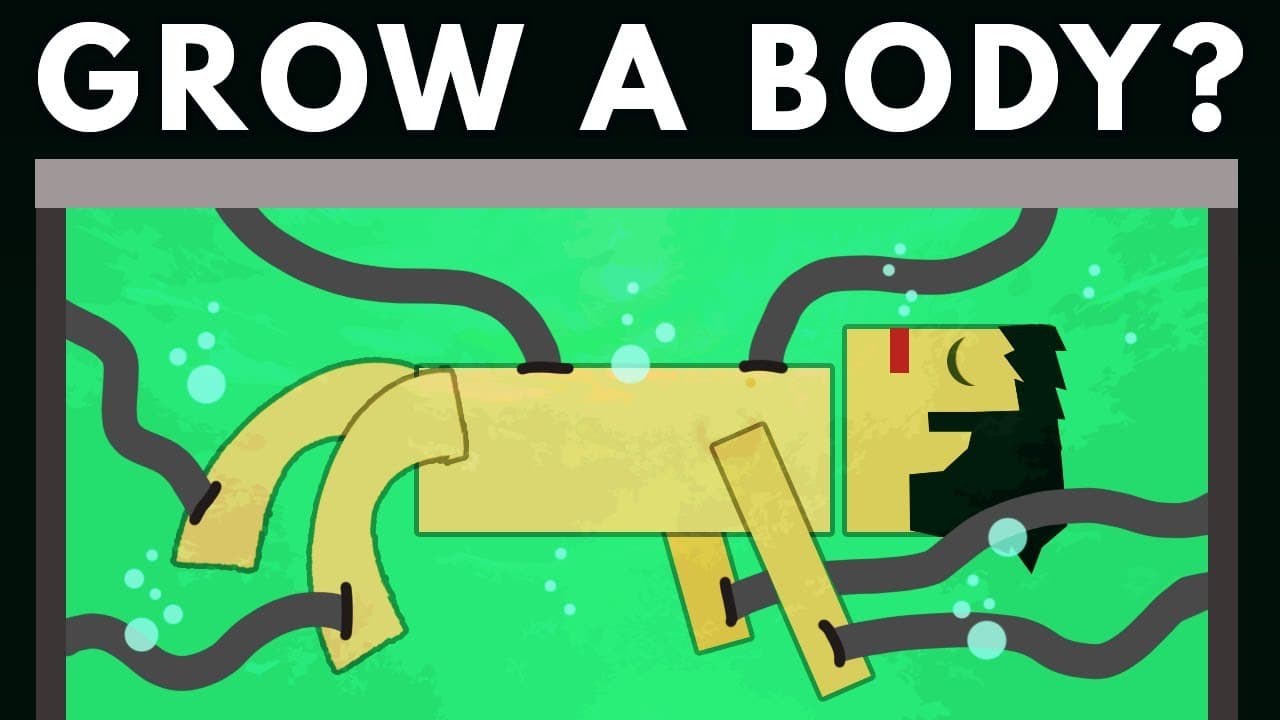
Scientists are working on growing new cells and organs to replace aging ones, paving the way for self-healing and longevity.
Transcript
Thank you so much to the SENS Research Foundation for sponsoring this video! This is really exciting apparently Triangle Bob asked animator to redo his appearance and make him look cooler! Let's reveal the new Triangle Bob! Oh. you asked to be more triangular but isn't moving gonna be difficult This catastrophic disaster has me thinking you... Read More
Key Insights
- 🤕 Aging leads to cell deterioration, impacting organ health and overall well-being.
- 🧑🔬 Scientists are exploring regenerative medicine techniques to replace damaged cells and organs.
- 🥹 Stem cells, particularly pluripotent stem cells, hold potential for regrowing organs in the lab.
- 💗 Growing organs from a patient's own cells reduces the risk of rejection in transplantation.
- 👨🔬 Research in regenerative medicine aims to improve longevity and quality of life.
- 🤕 Self-healing through cell replacement offers promising solutions for age-related health issues.
- 🔞 Replacing aging cells with new ones provides a pathway to rejuvenation and improved health.
Install to Summarize YouTube Videos and Get Transcripts
Explore YouTube Video Summarizer or Get YouTube Transcript Extractor
Questions & Answers
Q: How does aging affect cell replacement and organ health?
Aging leads to declining cell replacement efficiency, causing weakened muscles, cognitive decline, and increased susceptibility to illness.
Q: How do scientists address organ rejection in transplantation?
Scientists aim to grow organs from a patient's own cells to reduce the risk of rejection and improve the success of transplantation.
Q: What role do stem cells play in regrowing organs?
Stem cells, especially pluripotent stem cells, are essential for regrowing organs as they can differentiate into various cell types needed for organ function.
Q: What advancements have been made in growing organs outside the body?
Scientists are using techniques like reprogramming cells and scaffolds from donor organs to grow organs in the lab for future transplantation.
Summary & Key Takeaways
-
As humans age, cells deteriorate leading to health issues like weakened muscles, cognitive decline, and reduced immunity.
-
Scientists are exploring ways to replace damaged cells and organs with new ones created from the patient's own cells.
-
Stem cells, particularly pluripotent stem cells, hold the key to regrowing organs outside the body for transplantation.
Read in Other Languages (beta)
Share This Summary 📚
Summarize YouTube Videos and Get Video Transcripts with 1-Click
Try YouTube Summary with ChatGPT & Claude or YouTube Transcript Generator
Explore More Summaries from Life Noggin 📚


Summarize YouTube Videos and Get Video Transcripts with 1-Click
Try YouTube Summary with ChatGPT & Claude or YouTube Transcript Generator