A promising new treatment for PTSD
TL;DR
Hyperbaric oxygen therapy shows promise in treating PTSD.
Transcript
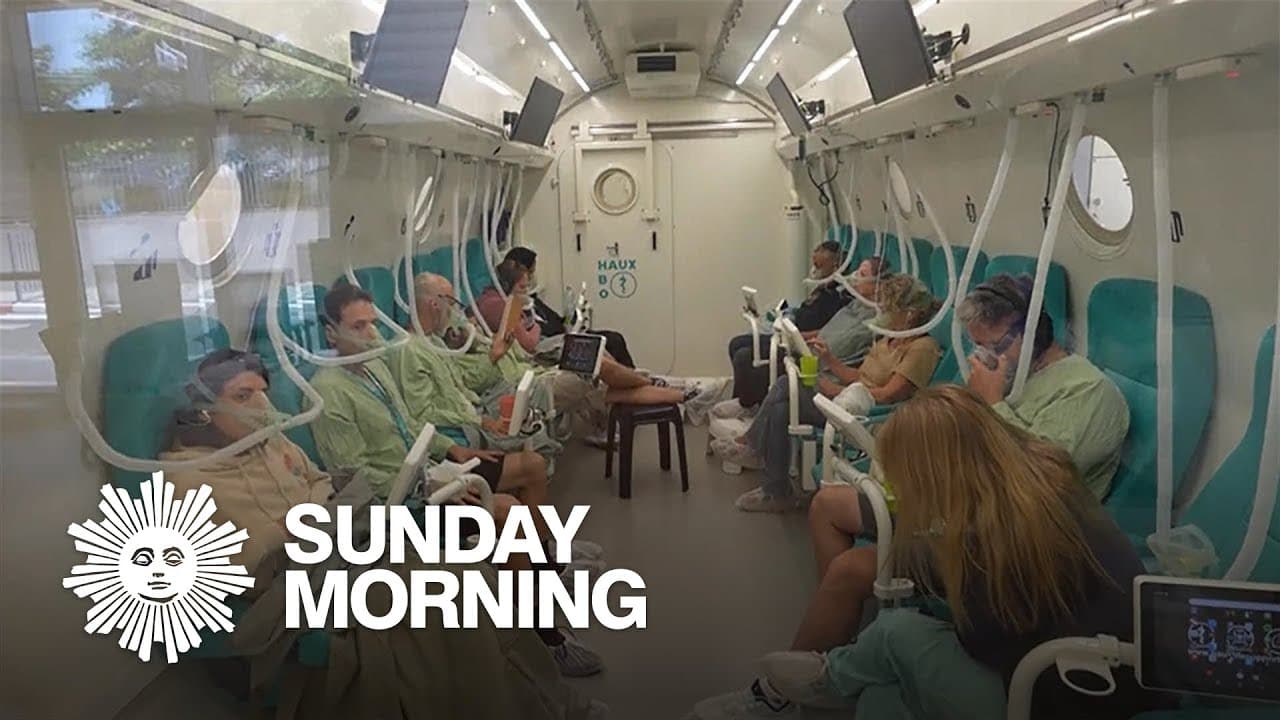
an estimated 10 million Americans struggled with PTSD this past year many of them veterans Seth Doane looks into a new treatment promising to bring relief to those grappling with post-traumatic stress I woke up every night every night around 3:00 screaming and and sweating and shaking ad Idit Negrin would try anything to beat the trauma h... Read More
Key Insights
- Hyperbaric oxygen therapy, traditionally used for divers, is being used in Israel to treat PTSD, showing promising results.
- The Sagol Center for Hyperbaric Medicine in Israel treats up to 350 patients daily, including military veterans and terror attack survivors.
- Patients undergoing this therapy breathe pure oxygen under high pressure, inducing repair mechanisms in the body and brain.
- The therapy has shown significant improvement in 68% of PTSD patients, with results lasting up to two years.
- Despite promising results, hyperbaric oxygen therapy is not widely used in the U.S. due to high costs and lack of insurance coverage.
- American doctors and lawmakers are advocating for pilot studies to explore the therapy's effectiveness for veterans with PTSD.
- The therapy is seen as a potential game-changer for neurological disorders, including PTSD, Parkinson's, and migraines.
- Challenges in the U.S. include bureaucratic hurdles, lack of funding, and the need for more extensive clinical trials.
Install to Summarize YouTube Videos and Get Transcripts
Explore YouTube Video Summarizer or Get YouTube Transcript Extractor
Questions & Answers
Q: What is hyperbaric oxygen therapy and how is it used for PTSD?
Hyperbaric oxygen therapy involves patients breathing pure oxygen in a pressurized chamber, which increases oxygen absorption in the body and brain. This process triggers repair mechanisms, including the generation of new neurons and blood vessels. In Israel, this therapy is being used to treat PTSD, showing promising results in improving symptoms and providing long-term relief.
Q: Why is hyperbaric oxygen therapy not widely used for PTSD in the U.S.?
In the U.S., hyperbaric oxygen therapy is not widely used for PTSD due to several factors: high treatment costs, lack of insurance coverage, and insufficient clinical evidence to satisfy regulatory and insurance standards. Additionally, bureaucratic challenges and the need for more comprehensive studies hinder its adoption. Advocates are pushing for pilot studies to further explore its potential benefits.
Q: What are the reported benefits of hyperbaric oxygen therapy for PTSD patients?
The reported benefits of hyperbaric oxygen therapy for PTSD patients include significant symptom improvement in 68% of patients, with effects lasting up to two years. The therapy helps in generating new neurons and blood vessels in the brain, aiding in emotional regulation and reducing PTSD symptoms. Patients often experience better sleep, reduced anxiety, and a renewed sense of vitality.
Q: How does the therapy work at a cellular level to treat PTSD?
At a cellular level, hyperbaric oxygen therapy works by increasing oxygen absorption in the body and brain under high pressure conditions. This triggers the body's repair mechanisms, including the activation of stem cells, and leads to the generation of new neurons and blood vessels. The process is interpreted as hypoxia, prompting the body to initiate these repair cascades, which are crucial for treating PTSD.
Q: What challenges do doctors face in implementing hyperbaric oxygen therapy in the U.S.?
Doctors in the U.S. face several challenges in implementing hyperbaric oxygen therapy for PTSD, including high treatment costs, lack of insurance reimbursement, and the need for more extensive clinical trials to establish efficacy. Bureaucratic hurdles and the requirement for substantial funding also pose significant barriers to its widespread adoption, despite anecdotal evidence of its effectiveness.
Q: What is the current status of research on hyperbaric oxygen therapy for PTSD?
Research on hyperbaric oxygen therapy for PTSD is ongoing, with promising results reported in Israel. Studies have shown significant improvement in PTSD symptoms, with effects lasting up to two years. However, in the U.S., more comprehensive clinical trials are needed to meet regulatory standards and secure funding. Advocates are calling for pilot studies to further investigate its potential benefits for veterans.
Q: What are the potential broader applications of hyperbaric oxygen therapy?
Beyond PTSD, hyperbaric oxygen therapy has potential applications for various neurological disorders, including Parkinson's disease, migraines, and multiple sclerosis. The therapy's ability to promote neurogenesis and angiogenesis makes it a promising treatment for conditions involving brain injury and repair. However, more research and clinical trials are needed to fully understand and validate its broader applications.
Q: What are the perspectives of American lawmakers on this therapy?
American lawmakers, such as Congressman Greg Murphy, are advocating for the exploration of hyperbaric oxygen therapy as a treatment for veterans with PTSD. They argue that not offering a promising treatment constitutes medical malpractice, given the high suicide rates among veterans. Lawmakers are pushing for pilot studies within the VA to assess the therapy's effectiveness and potentially expand its availability.
Summary & Key Takeaways
-
Hyperbaric oxygen therapy is being used in Israel to treat PTSD, showing significant improvements in patients, including military veterans and survivors of terror attacks. The therapy involves breathing pure oxygen under high pressure, which induces repair mechanisms in the brain.
-
Despite its success in Israel, the therapy faces challenges in the U.S., including high costs, lack of insurance coverage, and the need for more clinical trials. Some American doctors and lawmakers are pushing for pilot studies to assess its effectiveness for veterans.
-
The therapy has potential benefits for other neurological disorders, but bureaucratic and funding obstacles remain significant barriers to its widespread adoption in the U.S. Advocates argue for more research and support to make this treatment accessible.
Read in Other Languages (beta)
Share This Summary 📚
Summarize YouTube Videos and Get Video Transcripts with 1-Click
Try YouTube Summary with ChatGPT & Claude or YouTube Transcript Generator
Explore More Summaries from CBS Sunday Morning 📚






Summarize YouTube Videos and Get Video Transcripts with 1-Click
Try YouTube Summary with ChatGPT & Claude or YouTube Transcript Generator