Dr. Manhattan Origins - This Extremely Complex God-Like Anti-Hero Can Vapourise Us With His Thoughts
TL;DR
An analysis of Dr. Manhattan's origin, powers, and impact in the DC universe.
Transcript
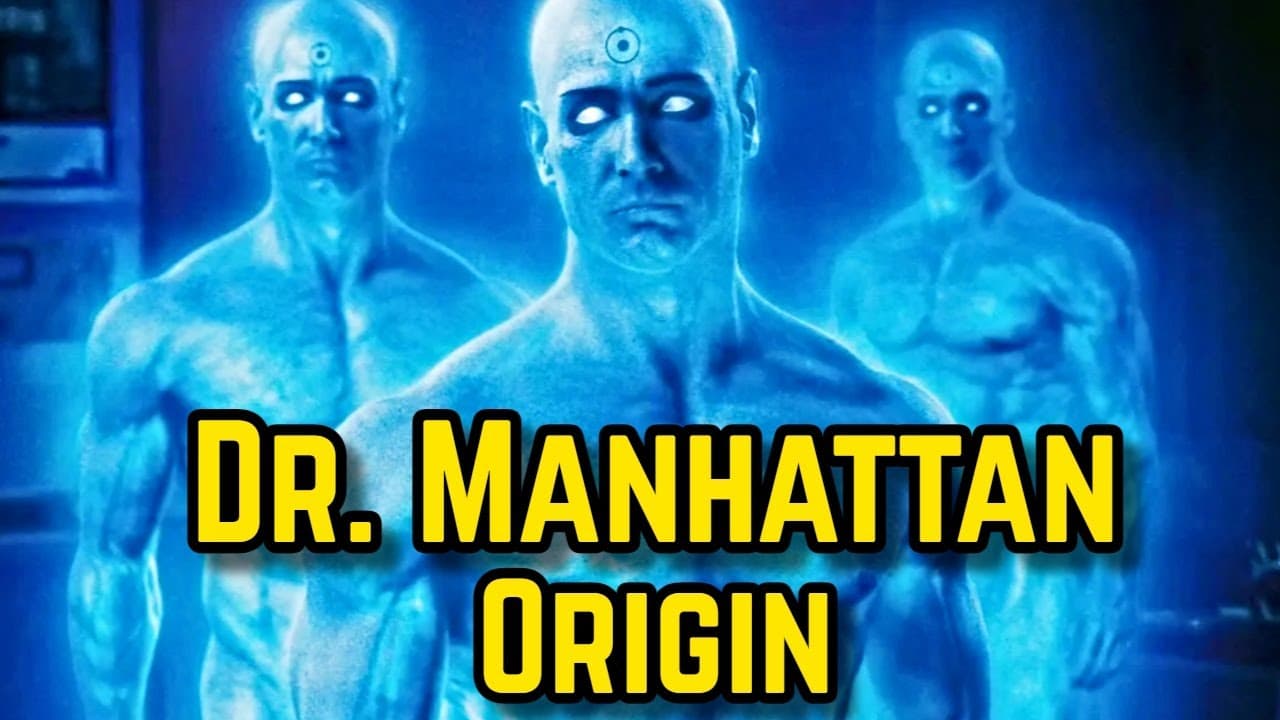
something lethal dr manhattan one of the most complex anti-heroes in the dc universe capable of matter manipulation this video is about an extremely popular and complex dc character he is an anti-hero who largely isn't concerned with saving people or the world and instead takes on the role of a silent observer of all happenings in this universe and... Read More
Key Insights
- 🤬 Dr. Manhattan is a profound symbol of the complexities surrounding power dynamics, often embodying the tension between godlike abilities and human imperfection.
- 💱 His backstory illustrates the precarious nature of parental expectations and how individual destinies can dramatically change due to external forces.
- ✊ The character raises philosophical questions regarding fate, free will, and the ethical implications of possessing immense power.
- ❓ His emotional detachment accentuates the series' exploration of the human condition, illustrating how even the most powerful beings can struggle with feelings of isolation.
- 👻 Dr. Manhattan's unique relationship with time allows for deeper narrative layers, influencing how he engages with characters and events across the universes.
- 🌍 His involvement in historic events in the narrative showcases a commentary on the impact of superpower on real-world politics and morality.
- 🛟 In both adaptations, the character reflects on what it means to be human, often contrasting his experiences with the lives of others to highlight the divide between godhood and humanity.
Install to Summarize YouTube Videos and Get Transcripts
Explore YouTube Video Summarizer or Get YouTube Transcript Extractor
Questions & Answers
Q: What tragic event led to Jonathan Ostermann becoming Dr. Manhattan?
Jonathan Ostermann transformed into Dr. Manhattan after a horrific accident in 1959 at a laboratory, where he was inadvertently vaporized during a test involving intrinsic fields. This incident allowed his consciousness to manipulate particles and reconstruct his physical form, thus rebirthing him as a god-like entity.
Q: How does Dr. Manhattan perceive time, and how does it influence his actions?
Dr. Manhattan experiences time non-linearly, perceiving past, present, and future simultaneously. This perception leads him to a deterministic mindset, where he believes all events are predetermined and often results in him being disconnected from human emotions and moral responsibilities, which complicates his interactions with other characters.
Q: In what ways does Dr. Manhattan's disinterest serve as his primary weakness?
Dr. Manhattan’s extraordinary powers are overshadowed by his growing emotional detachment from humanity. His lack of concern for human suffering often leads him to abstain from intervening in critical situations, such as not preventing the deaths of multiple individuals, revealing a paradox in his existence as an all-powerful being yet indifferent to human life.
Q: What are the implications of Dr. Manhattan's character on the themes of power in the "Watchmen" series?
Dr. Manhattan embodies the consequences of unchecked power, serving as both a protector and a potential threat. His transformation from a human to a god-like figure raises questions about morality, responsibility, and the impact of absolute power on personal relationships and societal structures, reflecting the series’ critical take on heroism.
Q: How is Dr. Manhattan portrayed in the 2009 film adaptation compared to the original comics?
In the 2009 adaptation, Dr. Manhattan is depicted with a more visually compelling sense of sovereignty through his immense physicality and unique narrative perspective. The film captures his existential musings and introduces significant emotional depth, contrasting with the cold, detached portrayal prevalent in the original comics.
Q: What key transformation did Dr. Manhattan undergo in the HBO series?
In HBO’s "Watchmen," Dr. Manhattan, initially believed to be absent, is revealed to exist in the form of Cal Abar, the loving husband of Angela Abar. This transformation displays his capacity for emotional connection and love, diverging from his previous portrayal as an indifferent god, and brings his character arc into a more personal and relatable spectrum.
Summary & Key Takeaways
-
Dr. Manhattan, originally Jonathan Ostermann, transitioned from a human to a god-like being due to a lab accident, leading to his complex characterization.
-
He possesses immense powers, including matter manipulation, time perception, and immortality, yet struggles with his detachment from humanity and moral dilemmas.
-
His role in both the "Watchmen" comic series and film adaptation showcases profound themes of power, responsibility, and existential contemplation, affecting global events in a dystopian setting.
Read in Other Languages (beta)
Share This Summary 📚
Summarize YouTube Videos and Get Video Transcripts with 1-Click
Try YouTube Summary with ChatGPT & Claude or YouTube Transcript Generator
Explore More Summaries from Marvelous Videos 📚

Summarize YouTube Videos and Get Video Transcripts with 1-Click
Try YouTube Summary with ChatGPT & Claude or YouTube Transcript Generator