Great Economists Introduction | Marginal Revolution University
TL;DR
Explore the history of economic thought to avoid past mistakes.
Transcript
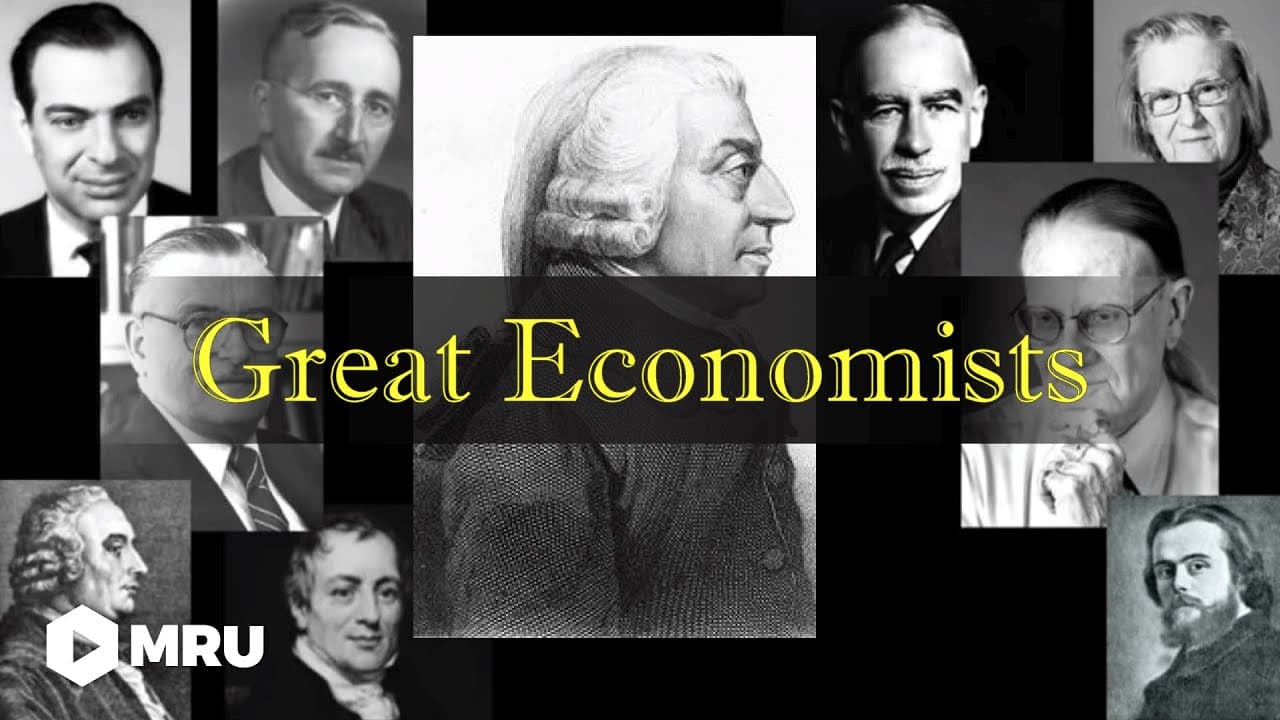
♪[Music]♪ Hi, this is Tyler Cowen, and welcome to our class on The Great Economists. Why study the great economists at all? Why be interested in the history of economic thought? Well, first of all, it turns out that they knew a lot of things that we still don't. Reading them is an enlightening experience. Furthermore, history repeats itself. We... Read More
Key Insights
- Studying great economists provides insights into historical economic mistakes, helping avoid repeating them in modern times.
- Development economics remains a significant field, echoing its importance during the era of earlier economists.
- Understanding historical economic thought offers a broader perspective on contemporary economic knowledge.
- The course covers economic history from Galileo to the Marginal Revolution of 1871, focusing on classical economics.
- Adam Smith's 'The Wealth of Nations' is extensively covered, with a dedicated video for each chapter.
- The course does not cover Karl Marx, as it is considered significant enough to warrant a separate class.
- The course includes discussions on historical policy debates, many of which remain relevant today.
- Original economic source materials are widely accessible online, with recommendations for the best resources.
Install to Summarize YouTube Videos and Get Transcripts
Explore YouTube Video Summarizer or Get YouTube Transcript Extractor
Questions & Answers
Q: Why study the great economists?
Studying the great economists is important because they provide insights into economic mistakes made in the past, which can help us avoid repeating them today. Their work also offers a deeper understanding of economic principles and perspectives that may not be fully grasped in modern economic thought.
Q: What is the focus of the course?
The course focuses on the history of economic thought, covering classical economics up until the Marginal Revolution in 1871. It includes extensive coverage of Adam Smith's 'The Wealth of Nations' and explores major economic debates of the 18th and 19th centuries, many of which remain relevant today.
Q: Why is Adam Smith emphasized in the course?
Adam Smith is emphasized in the course because his work, particularly 'The Wealth of Nations,' is considered one of the best economics books ever written. The course provides a video for each chapter, allowing for a detailed exploration of his ideas and their impact on economic thought.
Q: Does the course cover Marxian economics?
The course does not cover Marxian economics, as it is considered a significant area that deserves its own dedicated class. The instructors hope to offer a separate course on Marxian economics in the future to explore its concepts and historical impact thoroughly.
Q: What are some major debates covered in the course?
The course covers several major historical economic debates, including those on living standards during the industrial revolution, monetary policy, and taxes. These debates were significant during the 18th and 19th centuries and continue to be relevant in contemporary economic discussions.
Q: How accessible is the course to beginners?
The course is designed to be non-technical and accessible to beginners. It provides a foundational understanding of the history of economic thought, making it suitable for those new to economics while still offering valuable insights for more advanced learners.
Q: Are original economic source materials available?
Yes, many original economic source materials are available online, often for free. The course recommends using the Online Library of Liberty by Liberty Fund as a primary resource, among others, for accessing these historical documents and gaining deeper insights into economic thought.
Q: What is the significance of development economics in the course?
Development economics is significant in the course because it was a primary focus for earlier economists when no nations were wealthy by modern standards. The course explores how this field has evolved and its continued importance as one of the most exciting areas in contemporary economics.
Summary & Key Takeaways
-
This course provides a comprehensive look at the history of economic thought, spanning from Galileo to the Marginal Revolution of 1871. It focuses on classical economics and includes detailed coverage of Adam Smith's 'The Wealth of Nations.' Understanding these historical perspectives can prevent repeating past economic mistakes.
-
Earlier economists primarily focused on development economics, a field that remains crucial today. The course highlights how historical economic issues shaped classical economists' thoughts and offers insights into contemporary economic debates, such as those on living standards, monetary policy, and taxes.
-
The course is accessible to beginners and emphasizes the availability of original source materials online. It highlights the importance of studying economic history to gain a deeper understanding of current economic knowledge and avoid repeating historical errors. A separate class on Marxian economics is planned for the future.
Read in Other Languages (beta)
Share This Summary 📚
Summarize YouTube Videos and Get Video Transcripts with 1-Click
Try YouTube Summary with ChatGPT & Claude or YouTube Transcript Generator
Explore More Summaries from Marginal Revolution University 📚

Summarize YouTube Videos and Get Video Transcripts with 1-Click
Try YouTube Summary with ChatGPT & Claude or YouTube Transcript Generator