Single Phase Half Wave Circuit with RL Load - Controlled Rectifiers - Power Electronics
TL;DR
Thyristors can be used for single phase half wave rectification, providing the ability to control the conduction angle and output voltage.
Transcript
click the Bell icon to get latest videos from akira hello friends today we are going to discuss about single phase half wave rectification using our L load so friends as you discussed earlier a single phase half wave rectification using diode however now in this case I am using a thyristor for a single wave half wave rectification the main benefit ... Read More
Key Insights
- 👋 Thyristors provide the ability to control the conduction angle and output voltage in single phase half wave rectification.
- ⚡ Thyristor voltage is the voltage blocked by the thyristor during operation, leading to waveform variations.
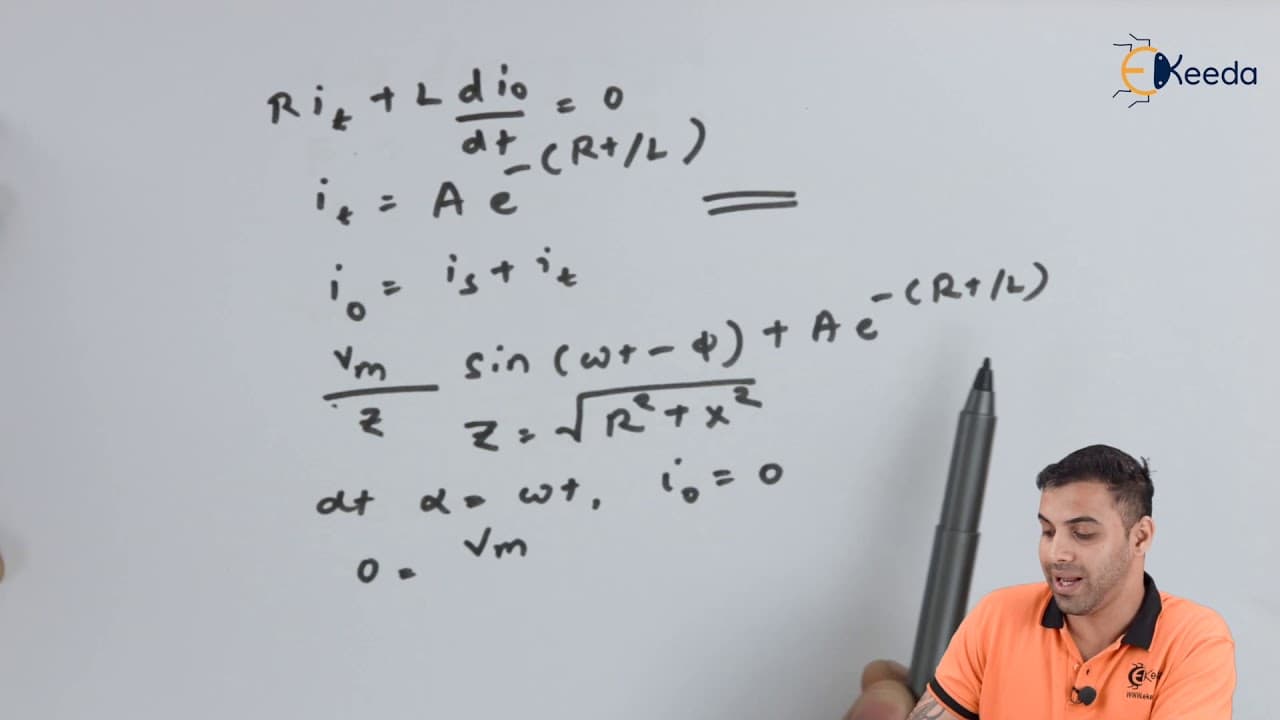
- 👋 Transient current in single phase half wave rectification can be calculated using the transient equation.
- 🧡 The average value of the output voltage and current can be determined for a given conduction angle range.
Install to Summarize YouTube Videos and Get Transcripts
Explore YouTube Video Summarizer or Get YouTube Transcript Extractor
Questions & Answers
Q: How does a thyristor differ from a diode in single phase rectification?
While both thyristors and diodes can perform rectification, thyristors offer the advantage of allowing control over the conduction angle, unlike diodes which block the negative half cycles without any control.
Q: What determines the output voltage waveform in single phase half wave rectification?
The waveform of the output voltage depends on the conduction angle, with no output voltage during certain angles and output voltage appearing after the conduction angle.
Q: What is thyristor voltage?
Thyristor voltage refers to the voltage that is blocked by the thyristor during its operation. It can be observed across the thyristor during the angles where it blocks the voltage.
Q: How can the output current be calculated in single phase half wave rectification using thyristors?
The output current can be calculated by adding the steady state current to the transient current. The steady state current depends on the steady state equation, while the transient current can be obtained using the transient equation.
Summary & Key Takeaways
-
Thyristors can perform the same job as diodes in single phase rectification by blocking the negative half cycles and allowing control over the conduction angle.
-
The output voltage waveform depends on the conduction angle, with no output voltage during 0 to alpha, beta to the next alpha, and output voltage appearing after alpha.
-
Thyristor voltage is the voltage blocked by the thyristor during operation, resulting in waveform variations.
Read in Other Languages (beta)
Share This Summary 📚
Summarize YouTube Videos and Get Video Transcripts with 1-Click
Try YouTube Summary with ChatGPT & Claude or YouTube Transcript Generator
Explore More Summaries from Ekeeda 📚

Summarize YouTube Videos and Get Video Transcripts with 1-Click
Try YouTube Summary with ChatGPT & Claude or YouTube Transcript Generator