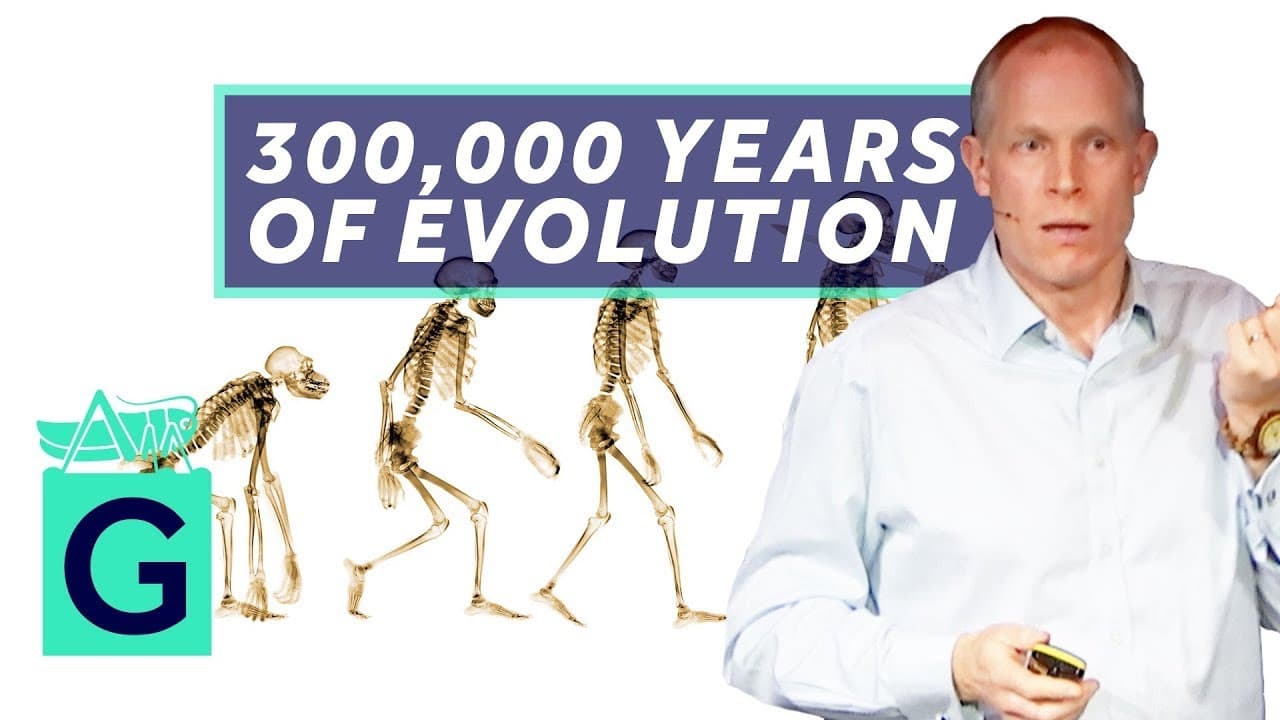
A 300,000-Year History of Human Evolution - Robin May
TL;DR
Human evolution is a brief moment in planetary history, but it holds valuable insights into our understanding of ourselves. Agriculture has played a significant role in shaping human evolution, along with infectious diseases and other factors.
Transcript
so today what I want to talk to you about um is a blink of an eye in evolutionary terms 300,000 years is a a kind of moment in time um for most organisms on this planet it wouldn't even be worth thinking about it it's such a brief diance but we of course as a species are incredibly young we haven't been here for very long um and at the rate we're g... Read More
Key Insights
- ⌛ Human existence of 300,000 years is a brief moment in evolutionary time, but studying it provides valuable insights into human evolution.
- 🧑🏭 Evolution is primarily driven by factors that impact an individual's ability to reproduce and the survival and reproduction of their offspring.
- ☠️ Infectious diseases, infant mortality rates, and factors related to infant survival have played significant roles in shaping human evolution.
- 💄 Hybridization events with ancient species, like Neanderthals, have contributed to the genetic makeup of modern humans.
- 👻 The development of agriculture has influenced human evolution by allowing settlements and changing dietary patterns.
Install to Summarize YouTube Videos and Get Transcripts
Explore YouTube Video Summarizer or Get YouTube Transcript Extractor
Questions & Answers
Q: How does evolution work in terms of reproductive success?
Evolution is mainly driven by factors that impact an individual's ability to reproduce and the number of offspring that go on to reproduce themselves. Successful reproduction is crucial for evolutionary success.
Q: How has the evolution of humans been influenced by hybridization with Neanderthals and other ancient species?
Hybridization events between Homo sapiens and other species, such as Neanderthals, have contributed to the genetic makeup of modern humans. Genes inherited from these ancient species can provide valuable insights into human evolution.
Q: How has agriculture influenced human evolution?
The development of agriculture allowed humans to settle in one place, leading to the emergence of villages, towns, and cities. Changes in the diet and exposure to new infectious diseases due to agricultural practices have had profound impacts on human evolution.
Q: Can modern medicine and advancements impact human evolution?
Modern medicine and advancements may impact human evolution, but the effects are still uncertain. Factors such as changes in reproductive patterns and advancements in healthcare may influence the selective pressures acting on humans in the future.
Summary & Key Takeaways
-
Human existence of 300,000 years is a tiny slice of evolutionary time, but studying it can teach us about human evolution and our understanding of who we are today.
-
Evolution is primarily about reproduction and the impact it has on the survival and reproduction of offspring. Factors that affect reproduction are crucial for evolution, while those that don't have no direct impact.
-
Evolutionary forces related to infant survival and reproductive success have shaped human evolution. Infectious diseases, like those causing high infant mortality rates, have been significant evolutionary problems.
Read in Other Languages (beta)
Share This Summary 📚
Summarize YouTube Videos and Get Video Transcripts with 1-Click
Try YouTube Summary with ChatGPT & Claude or YouTube Transcript Generator
Explore More Summaries from Gresham College 📚
Summarize YouTube Videos and Get Video Transcripts with 1-Click
Try YouTube Summary with ChatGPT & Claude or YouTube Transcript Generator