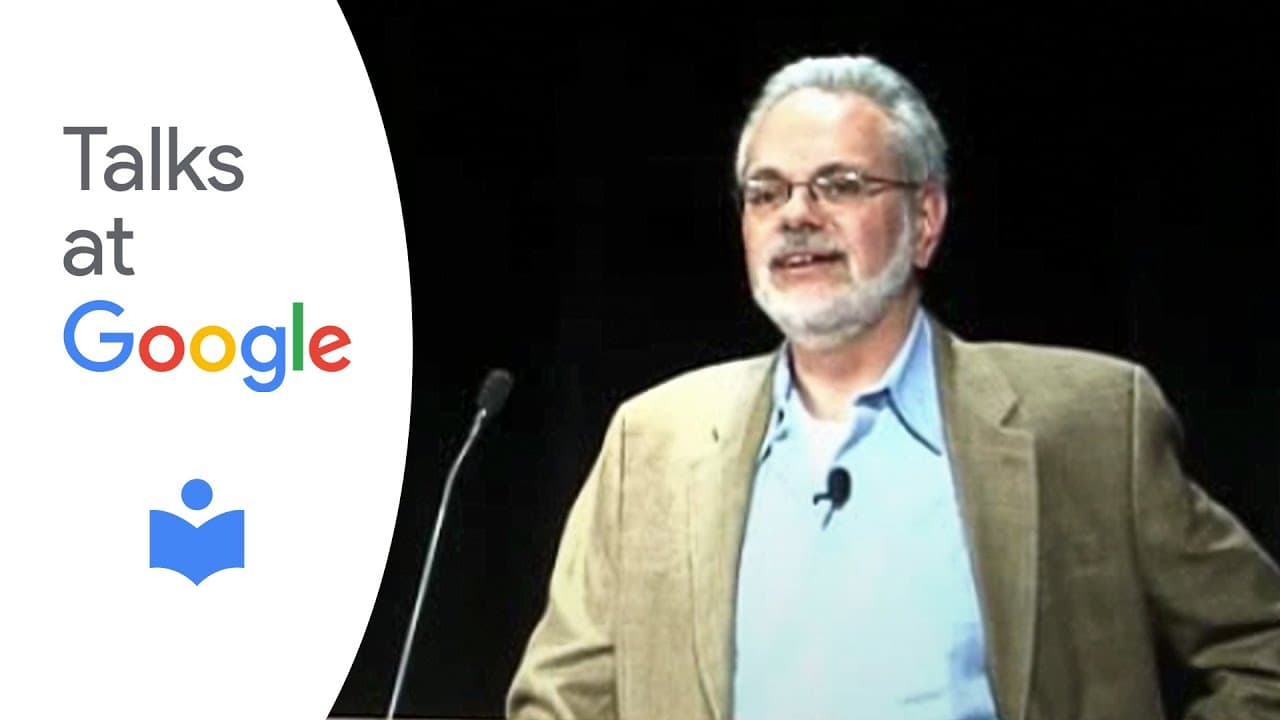
In Fed We Trust | David Wessel | Talks at Google
TL;DR
David Wessel discusses the 2008 financial crisis and the role of the Federal Reserve in preventing a catastrophic event.
Transcript
Hal Varian: Hello. I'm Hal Varian. I'm the chief economist here at Google. And it's my great pleasure to introduce David Wessel. We were just talking that -- a year ago, maybe a little more than a year ago -- the end of July 2008, he was visiting Google. And we were talking about, "What are your next plans?” He says, "I'm going to take a six-month ... Read More
Key Insights
- 🖤 The 2008 financial crisis revealed shortcomings in the regulatory system and a lack of preparedness by the US government.
- 🖐️ Ben Bernanke's decisions and actions as Chairman of the Federal Reserve played a crucial role in preventing a catastrophe.
- 👁️🗨️ The crisis highlighted the importance of reevaluating the Fed's approach to bubbles and moral hazard, as well as the need for stronger oversight and regulation.
Install to Summarize YouTube Videos and Get Transcripts
Explore YouTube Video Summarizer or Get YouTube Transcript Extractor
Questions & Answers
Q: Why did the Federal Reserve lend money to Bear Stearns and not Lehman Brothers?
The Federal Reserve lent money to Bear Stearns to prevent a wider financial contagion, believing that the collapse of the investment bank would have severe consequences. However, when Lehman Brothers faced a similar situation, the Fed decided not to intervene due to legal constraints and concerns over moral hazard.
Q: Did the Federal Reserve and Treasury favor Wall Street over Main Street during the crisis?
The government's actions during the crisis were focused on stabilizing the financial system, which had a direct impact on both Wall Street and Main Street. The aim was to prevent a complete collapse of the banking sector, which would have resulted in a severe recession affecting everyone.
Q: Was the 2008 financial crisis caused by over-leveraged banks?
Yes, the crisis was partly due to banks taking on excessive leverage, fueled by a belief that the housing market would continue to rise. When housing prices fell, the value of mortgage-backed securities held by banks plummeted, leading to significant losses and a freeze in liquidity. The lack of capital buffers exacerbated the crisis.
Q: How has the Federal Reserve changed its approach to dealing with bubbles and moral hazard?
The Fed acknowledges the need to reassess its previous stance on bubbles and moral hazard. It now sees the importance of monitoring and addressing asset bubbles, even if it means raising interest rates. To mitigate moral hazard, the Fed aims to implement stricter regulations and capital requirements for large financial institutions.
Summary & Key Takeaways
-
The 2008 financial crisis caught many people off guard, but the signs were there, with the housing bubble burst and the contagion spreading to the banking system.
-
The US government was ill-prepared to handle such a crisis, with only the Federal Reserve having the authority to take action.
-
Ben Bernanke, the Chairman of the Federal Reserve, played a key role in averting a Great Depression-like scenario by taking unprecedented measures to stabilize the financial system.
Read in Other Languages (beta)
Share This Summary 📚
Summarize YouTube Videos and Get Video Transcripts with 1-Click
Try YouTube Summary with ChatGPT & Claude or YouTube Transcript Generator
Explore More Summaries from Talks at Google 📚

Summarize YouTube Videos and Get Video Transcripts with 1-Click
Try YouTube Summary with ChatGPT & Claude or YouTube Transcript Generator