What Actually Caused Mad Cow Disease
TL;DR
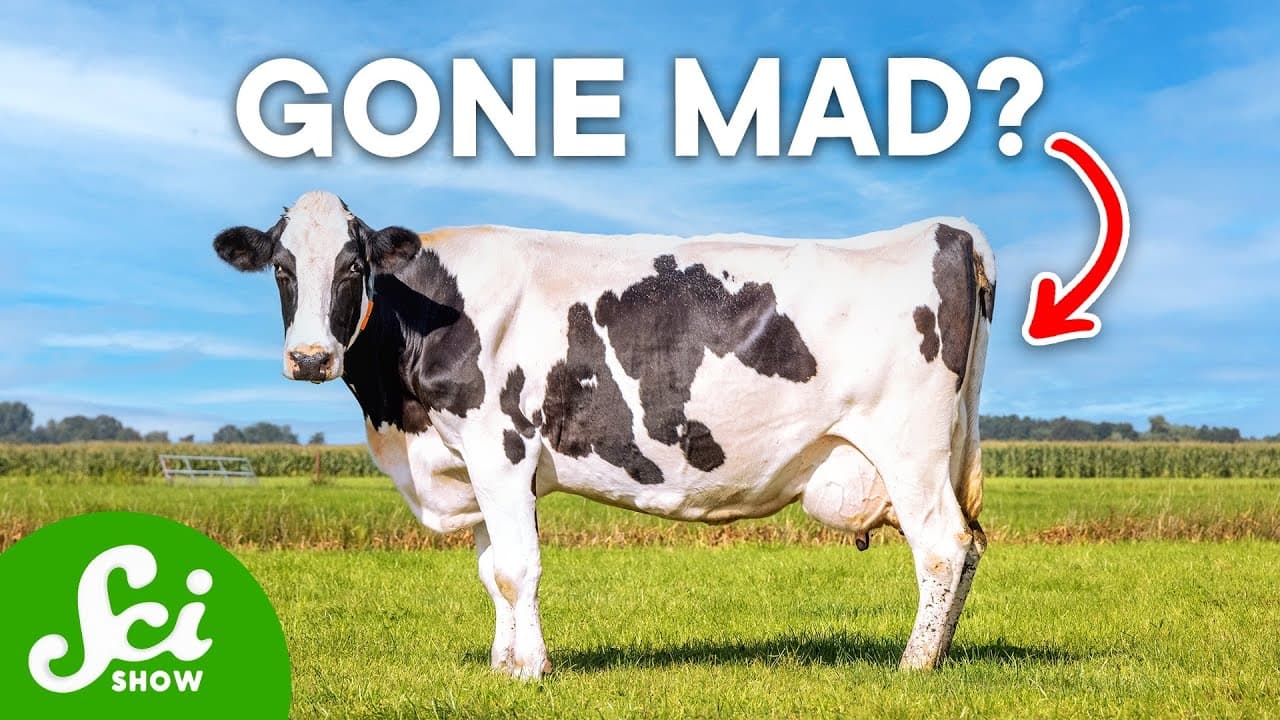
Mad cow disease, also known as Bovine Spongiform Encephalopathy (BSE), is a progressive neurological disease that affects cows and can also infect humans. It is caused by self-replicating proteins called prions and was likely spread through contaminated cattle feed. New farming practices have significantly reduced the occurrence of BSE in cows, and there is no evidence that it can be transmitted through milk or meat products.
Transcript
If you were around in the ‘90s, and especially if you lived in the UK, you might remember all the panic about mad cow disease. It’s a disorder that’s killed thousands of cattle since the ‘80s and ‘90s, and because a version of it can also infect humans, a lot of people were really freaked out. Today, thanks to safer farming, it probably isn’t anyth... Read More
Key Insights
- 🤠 Mad cow disease, or BSE, is a progressive neurological disease that affects cows and can also infect humans, causing severe brain and nervous system damage.
- 🤙 BSE is caused by self-replicating proteins called prions, which can spread and cause brain degeneration over time.
- 😋 The outbreak of BSE was likely caused by contaminated cattle feed, with prions from infected animals entering the food chain.
- 😋 Safer farming practices, including avoiding contaminated feed and preventing nervous system tissue from entering the food chain, have significantly reduced the occurrence of BSE.
- 🛩️ The human version of BSE, known as vCJD, has caused a relatively small number of cases worldwide, with the majority occurring in the UK.
- 🍖 There is no evidence that BSE can be transmitted through milk or meat products, reducing the risk of infection through consumption.
- 👶 New farming practices and regulations have effectively controlled the spread of BSE, leading to a decline in new cases.
Install to Summarize YouTube Videos and Get Transcripts
Explore YouTube Video Summarizer or Get YouTube Transcript Extractor
Questions & Answers
Q: What is Mad Cow Disease, and how does it affect cows and humans?
Mad cow disease, or BSE, is a progressive neurological disease that causes brain and nervous system damage in cows. It can also infect humans, leading to a variant form of Creutzfeldt-Jakob disease (vCJD), which rapidly causes brain degeneration and death.
Q: How does BSE spread, and what caused the outbreak?
BSE is primarily spread through contaminated cattle feed, where prions from infected cows or sheep can enter the food chain. The outbreak was likely caused by feeding cows ground-up meat and bones from infected animals, such as sheep with scrapie.
Q: How has farming practices changed to control BSE?
Safer farming practices, such as avoiding the use of contaminated feed and preventing nervous system tissue from entering the food chain, have significantly reduced the occurrence of BSE in cows. In 2016, the UK reported no new cases of BSE for the first time since the outbreak began.
Q: Can BSE be transmitted through milk or meat products?
There is no evidence that BSE can be transmitted through milk or meat products. The disease is primarily associated with the nervous system tissue, and the risk of contracting BSE from consuming beef or beef products is extremely low.
Summary & Key Takeaways
-
Mad cow disease, or BSE, is a neurological disease that affects cows and humans, causing severe brain and nervous system damage.
-
The disease is caused by prions, which are abnormal proteins that can replicate and cause brain degeneration over time.
-
BSE was likely spread through contaminated cattle feed and has been significantly controlled through safer farming practices.
Read in Other Languages (beta)
Share This Summary 📚
Summarize YouTube Videos and Get Video Transcripts with 1-Click
Try YouTube Summary with ChatGPT & Claude or YouTube Transcript Generator
Explore More Summaries from SciShow 📚


Summarize YouTube Videos and Get Video Transcripts with 1-Click
Try YouTube Summary with ChatGPT & Claude or YouTube Transcript Generator