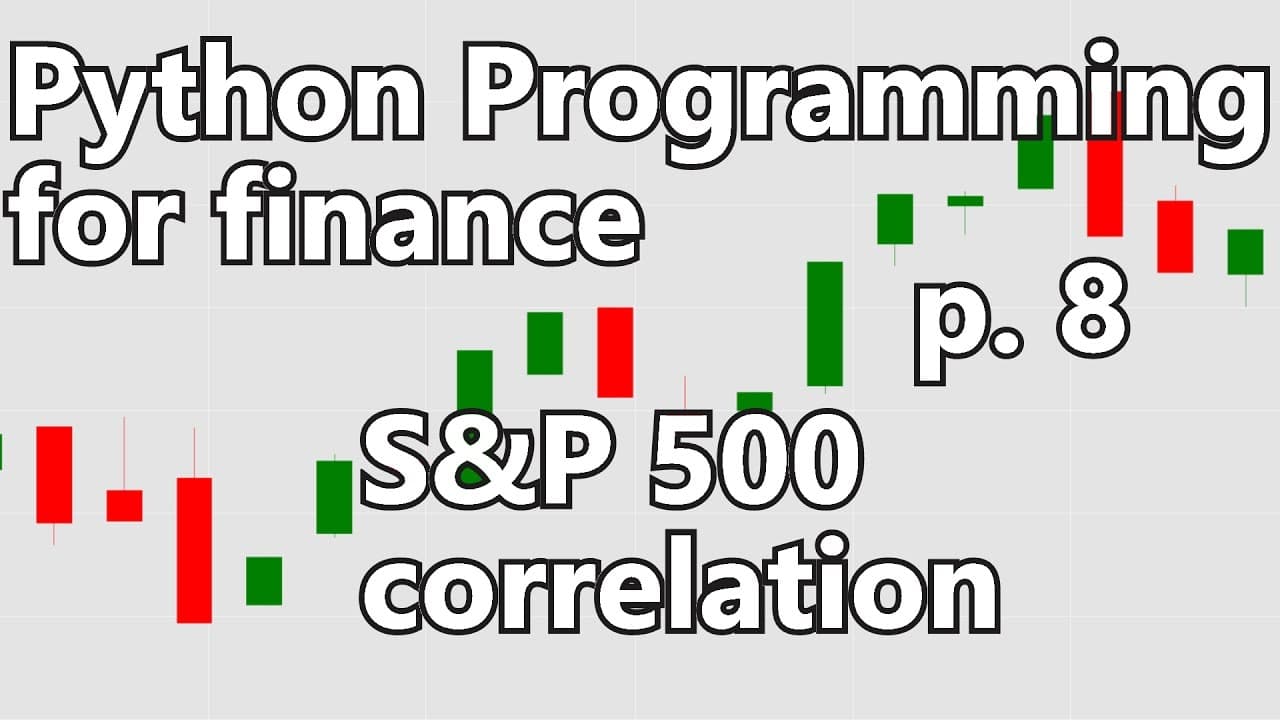
S&P 500 company correlation table - Python Programming for Finance p. 8
TL;DR
This video tutorial demonstrates how to analyze stock market data using Python, including compiling data into a data frame, creating correlation tables and heat maps, and exploring relationships between different stocks.
Transcript
everybody what's going on and welcome to part 8 of the finance with Python tutorial series in last video we basically we've been pulling all these stocks we save them all the pricing data in the last tutorial we actually compiled them all into one large data frame and we save that data frame as a CSV file now what we're going to do is we're going t... Read More
Key Insights
- 🖼️ Compiling stock market data into a single data frame is an important step in analyzing relationships between different stocks.
- ⌛ Missing data and changes in companies over time should be considered when analyzing stock market data.
- ❓ Correlation data can provide valuable insights for investors, such as identifying mean reversion or diversification opportunities.
- 🥵 Visualizing correlation data as a heat map allows for a clearer understanding of relationships between different stocks.
Install to Summarize YouTube Videos and Get Transcripts
Explore YouTube Video Summarizer or Get YouTube Transcript Extractor
Questions & Answers
Q: What is the main purpose of compiling stock market data into a single data frame?
Compiling data from multiple stocks into a single data frame allows for easier comparison and analysis of relationships between different stocks.
Q: How can missing data affect the analysis of stock market data?
Missing data can skew correlation values and affect the accuracy of the analysis. It is important to consider and address missing data appropriately.
Q: How can correlation data be useful for investors?
Correlation data can help investors identify relationships between different stocks, such as mean reversion opportunities or diversification strategies.
Q: What is the significance of visualizing correlation data as a heat map?
Visualizing correlation data as a heat map allows for a better understanding and interpretation of the relationships between different stocks, making it easier to identify patterns and trends.
Summary & Key Takeaways
-
The tutorial focuses on working with stock market data, specifically compiling data from multiple stocks into a single data frame and saving it as a CSV file.
-
The importance of considering missing data and changes in companies over time is highlighted, and the need for more specific analysis within specific time periods is mentioned.
-
The tutorial demonstrates how to generate a correlation table and visualize it as a heat map to identify relationships between different stocks.
-
The potential uses of correlation data, such as identifying mean reversion or diversification opportunities, are discussed.
Read in Other Languages (beta)
Share This Summary 📚
Summarize YouTube Videos and Get Video Transcripts with 1-Click
Try YouTube Summary with ChatGPT & Claude or YouTube Transcript Generator
Explore More Summaries from sentdex 📚





Summarize YouTube Videos and Get Video Transcripts with 1-Click
Try YouTube Summary with ChatGPT & Claude or YouTube Transcript Generator