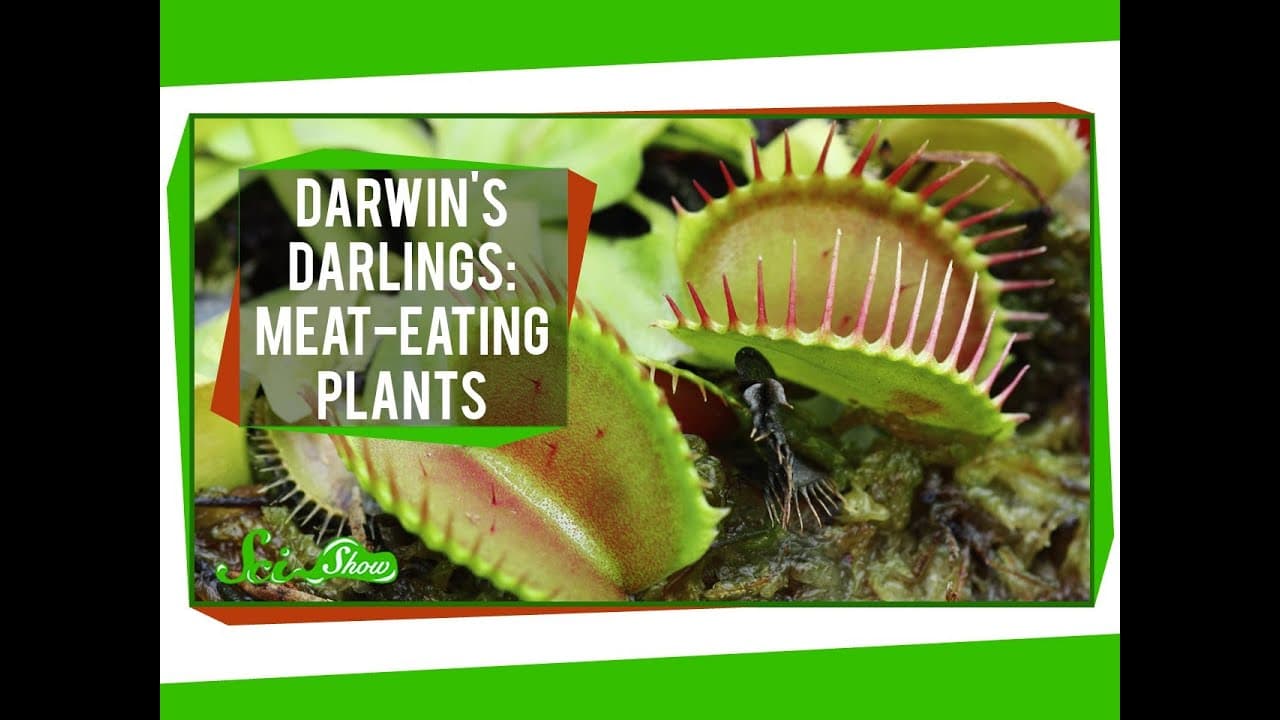
Darwin's Darlings: Meat-Eating Plants
TL;DR
Charles Darwin was fascinated by the carnivorous plant Drosera, also known as the Sundew, because of its ability to capture and digest insects. Carnivorous plants have evolved adaptations to attract, capture, kill, and digest prey, and they primarily thrive in nutrient-poor swampy environments.
Transcript
Charles Darwin studied thousands of plants and animals from all over the world throughout his career. But it was a plant he encountered in his native England in 1860 that inspired him to write: "I care more about Drosera than the origin of all the species in the world". Any guesses as to what plant that might be? [theme music] Darwin's fascination ... Read More
Key Insights
- 🌱 Charles Darwin's fascination with the carnivorous plant Drosera inspired his studies and classification of carnivorous plants.
- 👻 Carnivorous plants have adaptations that allow them to attract, capture, kill, and digest prey.
- 🌱 Carnivorous plants primarily thrive in nutrient-poor environments, where they acquire nitrogen and nutrients from animal tissue.
- 🌱 Some common types of carnivorous plants include pitcher plants, bladderworts, and sundews.
- 🌱 Carnivorous plants have evolved independently at least six times within five orders of plants.
- 🐸 Despite their name, carnivorous plants are not limited to consuming insects and can trap larger prey, including frogs and small mammals.
- 🌱 The diversity of carnivorous plants has fascinated botanists for over 150 years.
Install to Summarize YouTube Videos and Get Transcripts
Explore YouTube Video Summarizer or Get YouTube Transcript Extractor
Questions & Answers
Q: What are carnivorous plants?
Carnivorous plants are plants that have adaptations to capture and digest prey, primarily insects. They can absorb nutrients from dead animals and thrive in nutrient-poor environments.
Q: How do carnivorous plants acquire nutrients?
Carnivorous plants, like the Sundew and Venus flytrap, absorb nutrients from animals through glands in their specially modified leaves. They have evolved various trapping mechanisms to capture and digest their prey.
Q: How do pitcher plants trap their prey?
Pitcher plants have leaves that resemble a long tube. They lure prey with sweet nectar, and insects fall into the pitcher, which contains a mix of rainwater, digestive enzymes, and the leftovers of previous prey.
Q: Are Venus flytraps the only type of carnivorous plants?
No, Venus flytraps are just one of over 600 known carnivorous plant species. Other examples include bladderworts, sundews, and various pitcher plant species.
Summary & Key Takeaways
-
Charles Darwin was particularly intrigued by the plant Drosera (Sundew) and its insectivorous nature, which inspired him to study carnivorous plants.
-
Carnivorous plants can absorb nutrients from dead animals and have adaptations to attract, capture, kill, and digest prey.
-
These plants are typically found in nutrient-poor environments like bogs, where they acquire nitrogen from animal tissue.
Read in Other Languages (beta)
Share This Summary 📚
Summarize YouTube Videos and Get Video Transcripts with 1-Click
Try YouTube Summary with ChatGPT & Claude or YouTube Transcript Generator
Explore More Summaries from SciShow 📚


Summarize YouTube Videos and Get Video Transcripts with 1-Click
Try YouTube Summary with ChatGPT & Claude or YouTube Transcript Generator