How to solve aging | David Sinclair and Lex Fridman
TL;DR
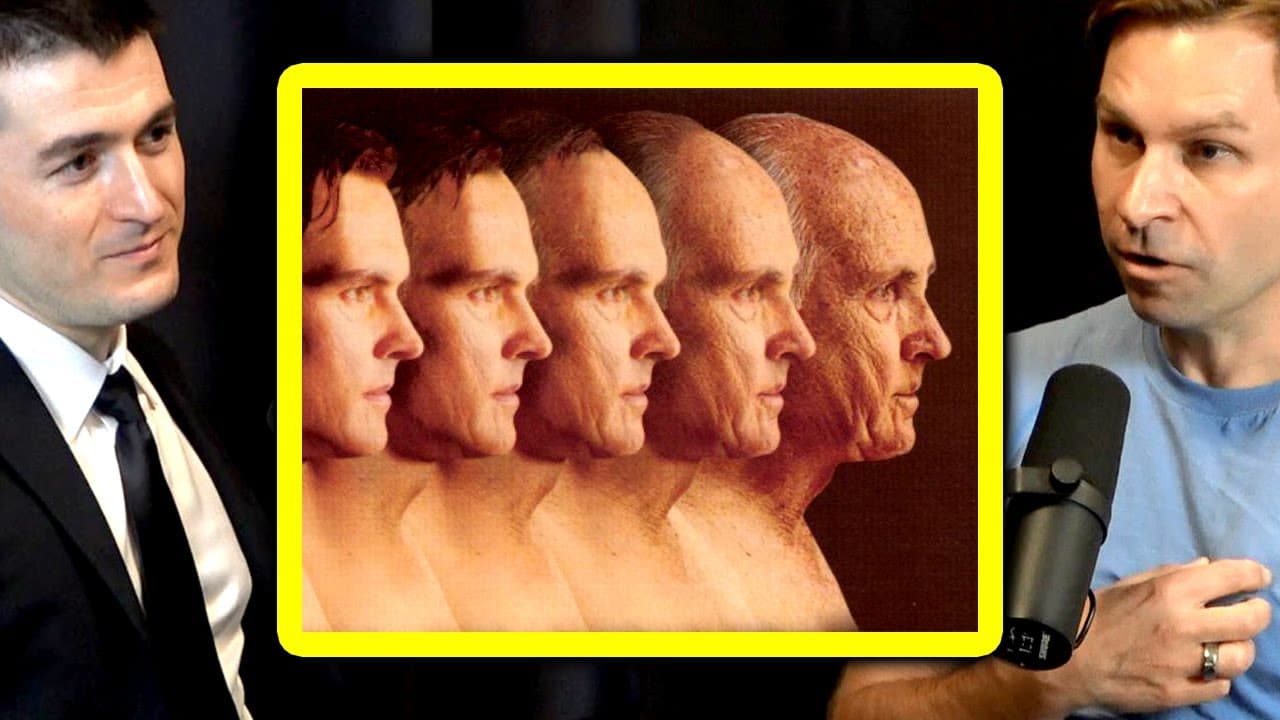
Aging is both a bug and a feature of biological machines, and understanding the preservation of information and its loss due to entropy is key to tackling the root causes of aging.
Transcript
if we could we step back to the big profound philosophical both tragic and beautiful question about age how and why do we age is it uh from an engineering perspective he said you like the biological machine is that a feature or a bug of the biological machine it is both a bug and a feature uh evolutionary speaking we only live as long as we need to... Read More
Key Insights
- 🤕 Aging is a result of evolutionary adaptation and the need to efficiently reproduce.
- 😋 Different species have varying lifespans based on their reproductive strategies and position in the food chain.
- 🌸 There are several hallmarks of aging, including telomere loss, cellular senescence, mitochondrial deterioration, and stem cell depletion.
- 🤕 Aging is primarily caused by the preservation of information and its loss due to entropy.
- 💁 Information regulator genes, such as SIR genes, play a role in slowing down the loss of information and preserving the epigenome.
- 😑 The epigenome, which regulates gene expression, undergoes deterioration through a process called x-differentiation.
- 💁 Research is being conducted to find a backup copy of information in the body to reset the epigenome and repair cellular damage.
Install to Summarize YouTube Videos and Get Transcripts
Explore YouTube Video Summarizer or Get YouTube Transcript Extractor
Questions & Answers
Q: Why do mice have such short lifespans compared to whales?
Mice have evolved to reproduce rapidly and allocate most resources to reproduction rather than preserving their bodies. Whales, being at the top of the food chain, can live longer and invest in building long-lasting bodies.
Q: How does the preservation of information and its loss relate to aging?
Aging can be boiled down to the preservation of information and its loss due to entropy. As organisms age, the regulation of information in cells deteriorates, leading to the dysregulation of biological processes and the onset of age-related diseases.
Q: What role do regulators of information play in aging?
Information regulator genes, such as the silent information regulator (SIR) genes, help slow down the loss of information in cells. Increasing the expression of these genes can preserve the epigenome, which regulates gene expression, and slow down aging processes in mice.
Q: Is there a backup copy of information in the body to reset the epigenome?
The search for a backup copy, inspired by Claude Shannon's work, aims to find a mechanism in the body that can reset the epigenome and repair scratches or damage to the information. Finding this backup could potentially restore the function of aging cells.
Summary & Key Takeaways
-
Aging is a result of evolutionary adaptation, with organisms living as long as needed to efficiently reproduce.
-
Different species have different lifespans based on their position in the food chain and reproductive strategies.
-
There are several hallmarks of aging, including telomere loss, cellular senescence, mitochondrial deterioration, and stem cell depletion.
Read in Other Languages (beta)
Share This Summary 📚
Summarize YouTube Videos and Get Video Transcripts with 1-Click
Try YouTube Summary with ChatGPT & Claude or YouTube Transcript Generator
Explore More Summaries from Lex Clips 📚

Summarize YouTube Videos and Get Video Transcripts with 1-Click
Try YouTube Summary with ChatGPT & Claude or YouTube Transcript Generator