Why Are there Holes in the James Webb Sunshield? (Explained by My Dad) - Smarter Every Day 270
TL;DR
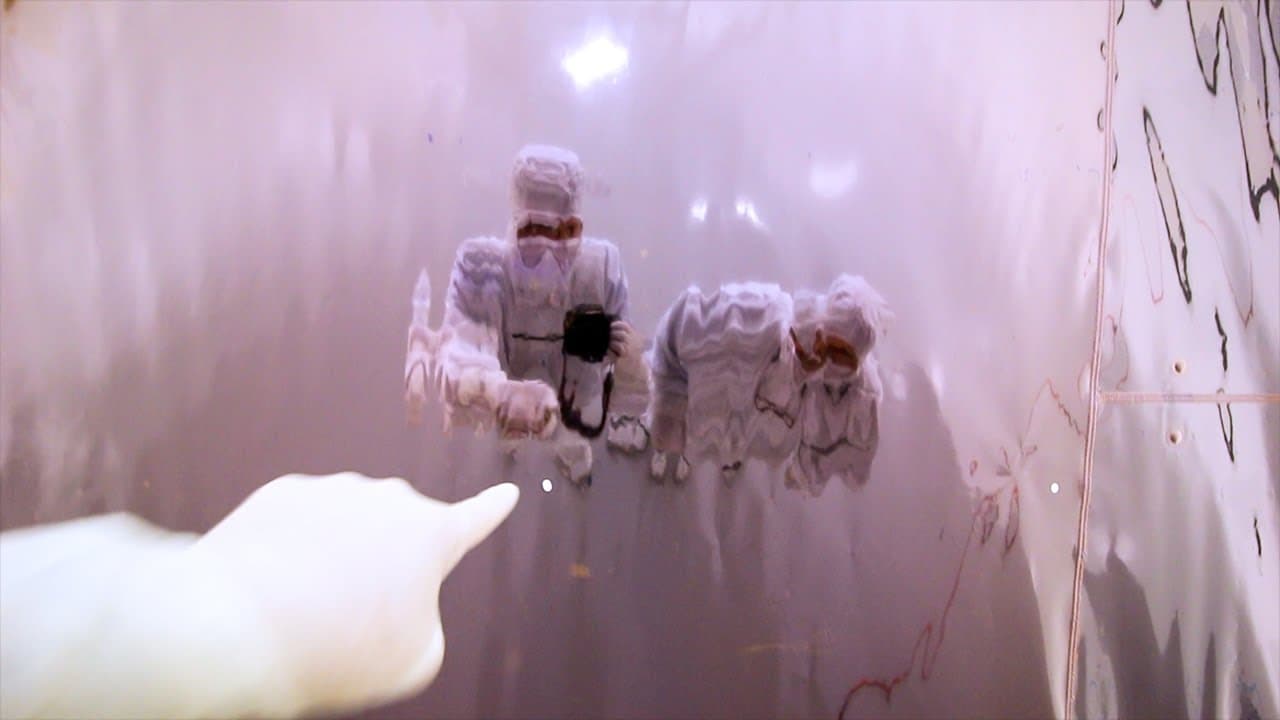
A comprehensive analysis of the making of the James Webb Space Telescope's sunshield, highlighting the precision measurements, techniques, and collaboration involved in ensuring its success.
Transcript
Hey, it's me, Destin Welcome back to Smarter Every Day. We are on the way to my dad's work, and everything about this is weird I have been trying to interview my own father for two years now at his work. The reason it's so difficult is because he has a really unique job It's 2 a.m., let's go see what he does I think you'll understand. I can not fin... Read More
Key Insights
- 💿 The James Webb Space Telescope's sunshield is a crucial component for protecting the telescope's optics and maintaining the desired temperature. Precise measurements and shape validation are essential to its effective functioning.
- 😥 Laser scanning and point measurement techniques are used to accurately measure the sunshield and verify its shape and position.
- 🙂 The sunshield's shape, following a catenary curve, plays a critical role in radiating heat away from the optics and protecting them from unwanted light and thermal effects.
- 😤 The sunshield's design involves complex engineering and collaboration among various teams, including metrologists, technicians, analysts, and scientists, to ensure its success.
- 🔁 The sunshield undergoes rigorous testing and validation, including comparisons with models and repeated measurements, to meet strict accuracy and performance requirements.
- ❓ The sunshield's manufacturing process, including thermal bonding, is proprietary and exclusive to Mantech NeXolve, the company responsible for its creation.
- ✈️ The sunshield's final flight material is the product of years of development, testing, and measurement, with several layers and prototypes created before the final version was produced.
Install to Summarize YouTube Videos and Get Transcripts
Explore YouTube Video Summarizer or Get YouTube Transcript Extractor
Questions & Answers
Q: How does the sunshield of the James Webb Space Telescope protect the optics from heat and light?
The sunshield uses multiple layers and a unique shape to radiate heat away from the optics and block unwanted light. It reflects heat and light back and forth, following a catenary curve, to direct the heat away from the telescope.
Q: How do the technicians measure and validate the sunshield's shape?
The technicians use laser scanning and point measurements, along with spherical markers, to measure the shape and position of the sunshield accurately. They compare the data with a model and collaborate with analysts to ensure the sunshield's proper function.
Q: What is the purpose of the holes in the sunshield?
The holes in the sunshield are vent holes used during the folding and deployment of the sunshield before it reaches space. They allow trapped air to escape and prevent the sunshield from expanding like a balloon during launch.
Q: How do they ensure that the sunshield's measurements and holes are precise?
The technicians use rigorous measurement techniques, precise tooling, and alignment methods to achieve high accuracy. They measure multiple times, validate with reference points, and compare their measurements with model predictions to ensure precision.
Summary & Key Takeaways
-
Destin Sandlin, in collaboration with his father (a metrologist) and a team at Mantech NeXolve, explores the intricacies of measuring the sunshield of the James Webb Space Telescope, a critical component for protecting the telescope's optics and maintaining temperature balance.
-
The team uses laser scanning and point measurement techniques, along with spherical markers, to measure and validate the shape and position of the sunshield accurately.
-
The sunshield's shape plays a crucial role in radiating heat and protecting the optics from the sun and Earth's heat, requiring precise measurements and alignment of multiple layers.
-
The process involves comparing the measured data with a model and collaborating with analysts to ensure the proper shape and function of the sunshield in Earth's gravity and zero-G in space.
Read in Other Languages (beta)
Share This Summary 📚
Summarize YouTube Videos and Get Video Transcripts with 1-Click
Try YouTube Summary with ChatGPT & Claude or YouTube Transcript Generator
Explore More Summaries from SmarterEveryDay 📚



Summarize YouTube Videos and Get Video Transcripts with 1-Click
Try YouTube Summary with ChatGPT & Claude or YouTube Transcript Generator