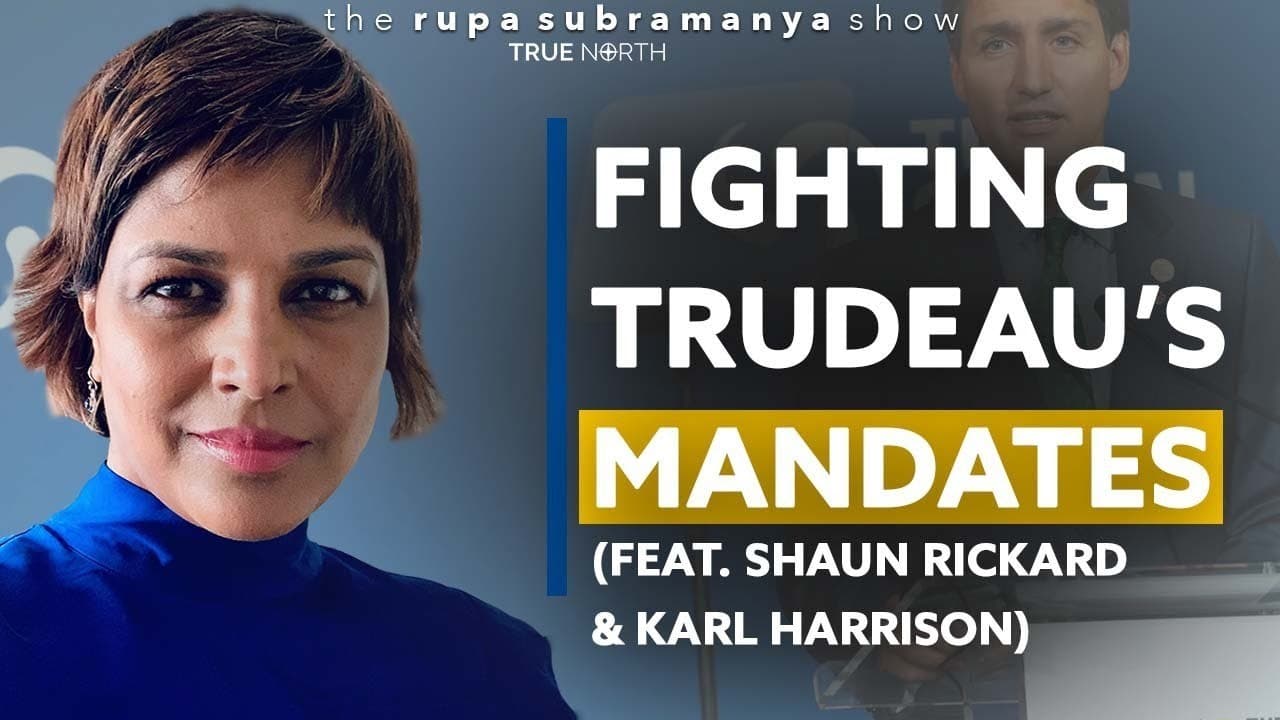
Fighting Trudeau’s Mandates
TL;DR
The federal court is reviewing the mootness of a lawsuit against Canada's vaccine mandates as restrictions are lifted.
Transcript
thank you well hello everybody Welcome Back and I hope you're doing well wherever you are thanks again for tuning in and I'm so glad to have you here this past week there was some good news at long last the federal government announced that they were going to allow their last remaining pandemic restrictions to expire on October 1st essentially arri... Read More
Key Insights
- 🧑⚕️ The lifting of pandemic restrictions in Canada on October 1st signifies a transition towards normality and reflects evolving public sentiment around health regulations.
- 😀 The federally mandated vaccine travel requirements faced legal challenges citing lack of scientific foundation, highlighting the tension between public health policies and individual freedoms.
- ✊ The case raises crucial questions about governmental accountability and the balance of power regarding personal health choices versus state mandates.
- 🗯️ Court proceedings emphasize the importance of public interest in health policy decisions and the necessity of judicial scrutiny in governmental actions affecting individual rights.
- 😫 The plaintiffs argue that government practices of suspending mandates to avoid legal scrutiny set a troubling precedent for future actions against civil liberties.
- 💳 Public engagement and advocacy are credited with influencing governmental policy changes regarding vaccine mandates, showcasing democracy's responsive elements.
- 💖 The case has sparked broader discussions on constitutional rights and the implications of executive health mandates, involving significant legal and societal ramifications.
Install to Summarize YouTube Videos and Get Transcripts
Explore YouTube Video Summarizer or Get YouTube Transcript Extractor
Questions & Answers
Q: What is the significance of the recent expiration of Canada's pandemic restrictions?
The expiration marks a notable shift in Canada’s pandemic management, aligning it with international practices. It indicates a move towards normalcy after prolonged restrictions. Additionally, the lifting of the vaccine mandates reflects increased public pressure and possible political influences, emphasizing the government's responsiveness to citizen sentiment.
Q: Why is the mootness of the lawsuit being challenged?
The lawsuit’s mootness is contested because the plaintiffs argue that the grounds for the case—government actions violating individual rights—could resurface. The uncertainty that similar mandates could be reinstated anytime underlines the need for a judicial decision to ensure accountability, not merely a political withdrawal of restrictions.
Q: How did public opinion play a role in the government’s decision to lift mandates?
Public opinion, including vocal protests and significant media pressure, is believed to have contributed to the government’s decision to lift mandates. With the emergence of political opposition and growing discontent from citizens, the government likely recognized the necessity of responding to the public’s concerns about its restrictive measures.
Q: What are the potential outcomes if the case is dismissed as moot?
Should the case be deemed moot and dismissed, it could set a dangerous precedent, allowing the government to limit rights without accountability. Such a ruling may embolden future executive decisions that infringe upon individual freedoms, creating a pattern of imposing and retracting restrictions without judicial oversight.
Q: What evidence was presented in the court regarding the mandate’s rationale?
During the hearings, it was asserted that there was no solid scientific rationale behind the travel mandates, as evidenced through cross-examinations that revealed inconsistencies and lack of expert recommendations. This underscores the argument that governmental actions could have harmed individual rights unconstitutionally.
Q: How are Sean Rickard and Carl Harrison planning to continue their legal battle?
They are transitioning their funding efforts to a charitable foundation, allowing for increased financial support and issuing tax receipts for donors. They are committed to fighting the case through every legal channel available, emphasizing that the pursuit of civil liberties is paramount, regardless of their current success.
Q: What does the term 'mootness' refer to in legal terms?
Mootness in legal terms describes a situation where a court case can no longer be effectively resolved due to changes in circumstances. If a case is declared moot, it typically means that the issue no longer exists, leading to potential dismissal of the lawsuit.
Summary & Key Takeaways
-
The Canadian federal government announced the expiration of pandemic restrictions, including travel mandates, effective October 1st, marking a shift towards post-pandemic normalcy.
-
Sean Rickard and Carl Harrison are involved in a civil lawsuit against the government regarding the science underpinning these mandates, arguing for broader accountability and individual rights.
-
The federal court hearing on September 21 aimed to determine if the case is moot, with implications for future government authority over individual rights in health matters.
Read in Other Languages (beta)
Share This Summary 📚
Summarize YouTube Videos and Get Video Transcripts with 1-Click
Try YouTube Summary with ChatGPT & Claude or YouTube Transcript Generator
Explore More Summaries from True North 📚



Summarize YouTube Videos and Get Video Transcripts with 1-Click
Try YouTube Summary with ChatGPT & Claude or YouTube Transcript Generator