How Do You Make Memories?
TL;DR
Henry Molaison's surgery in 1953, which removed parts of his brain, changed our understanding of memory and revealed the importance of the hippocampus in forming and retaining certain types of memories.
Transcript
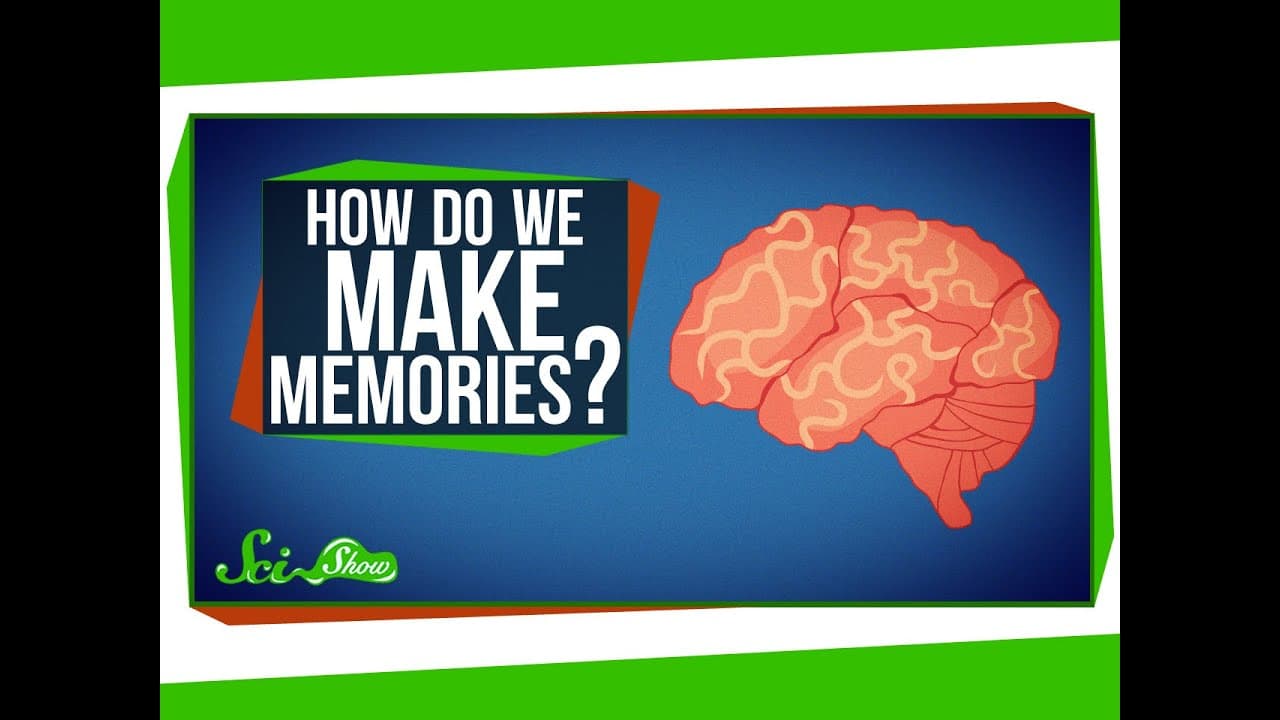
How do you make memories? Inspirational websites will tell you to spend time with the people you love. Travel websites will tell you to travel to beautiful places. I’m just going to tell you to watch this episode of SciShow over and over and over again until it actually sticks in there. But if you ask a neuroscientist, they might tell you about a m... Read More
Key Insights
- 🥺 Henry Molaison's surgery in 1953 led to the discovery of the importance of the hippocampus in memory formation and retention.
- 🧠 Different types of long-term memory, declarative and non-declarative, rely on different brain structures.
- 🧠 Molaison's case highlighted the limitations of early brain surgery techniques and the need for further understanding of the brain's complexity.
- 🧠 Molaison's brain continues to be studied, providing insights into the effects of his surgery and expanding our knowledge of memory and the human brain.
- 🧠 The study of Molaison's brain contributed to the creation of a 3D brain model, revealing the extent of his hippocampal damage.
- 🧠 Molaison's story emphasizes the ongoing importance and value of scientific research in understanding memory and the intricacies of the human brain.
- 💁 The limitations of memory and the brain's ability to form and retain new information are brought to light through Molaison's experience.
Install to Summarize YouTube Videos and Get Transcripts
Explore YouTube Video Summarizer or Get YouTube Transcript Extractor
Questions & Answers
Q: How did Henry Molaison's surgery impact his memory?
Henry Molaison's surgery resulted in anterograde amnesia, meaning he could no longer form new memories while retaining his ability to remember his name and childhood events.
Q: What did researchers learn about the hippocampus from studying Molaison?
Researchers discovered that the hippocampus plays a crucial role in the formation and retention of certain types of long-term memories.
Q: What are declarative and non-declarative memories?
Declarative memories require conscious processing and involve episodic memories (such as specific events) and semantic memories (facts and ideas). Non-declarative memories, on the other hand, are memories of habits and learned motor skills.
Q: How did Molaison's brain contribute to scientific understanding after his death?
Molaison's brain was donated to science, and the examination of his brain revealed that he had not lost his entire hippocampus, but only a significant portion of it. This finding provided further insight into the effects of his surgery.
Summary & Key Takeaways
-
In 1953, Henry Molaison underwent brain surgery that resulted in anterograde amnesia, losing the ability to form new memories.
-
Molaison's case led to the discovery that the hippocampus plays a significant role in the formation and retention of certain types of memories.
-
Different kinds of long-term memory, declarative and non-declarative, are controlled by different brain structures.
Read in Other Languages (beta)
Share This Summary 📚
Summarize YouTube Videos and Get Video Transcripts with 1-Click
Try YouTube Summary with ChatGPT & Claude or YouTube Transcript Generator
Explore More Summaries from SciShow 📚

Summarize YouTube Videos and Get Video Transcripts with 1-Click
Try YouTube Summary with ChatGPT & Claude or YouTube Transcript Generator