A Simple Proof of Conservation of Energy
TL;DR
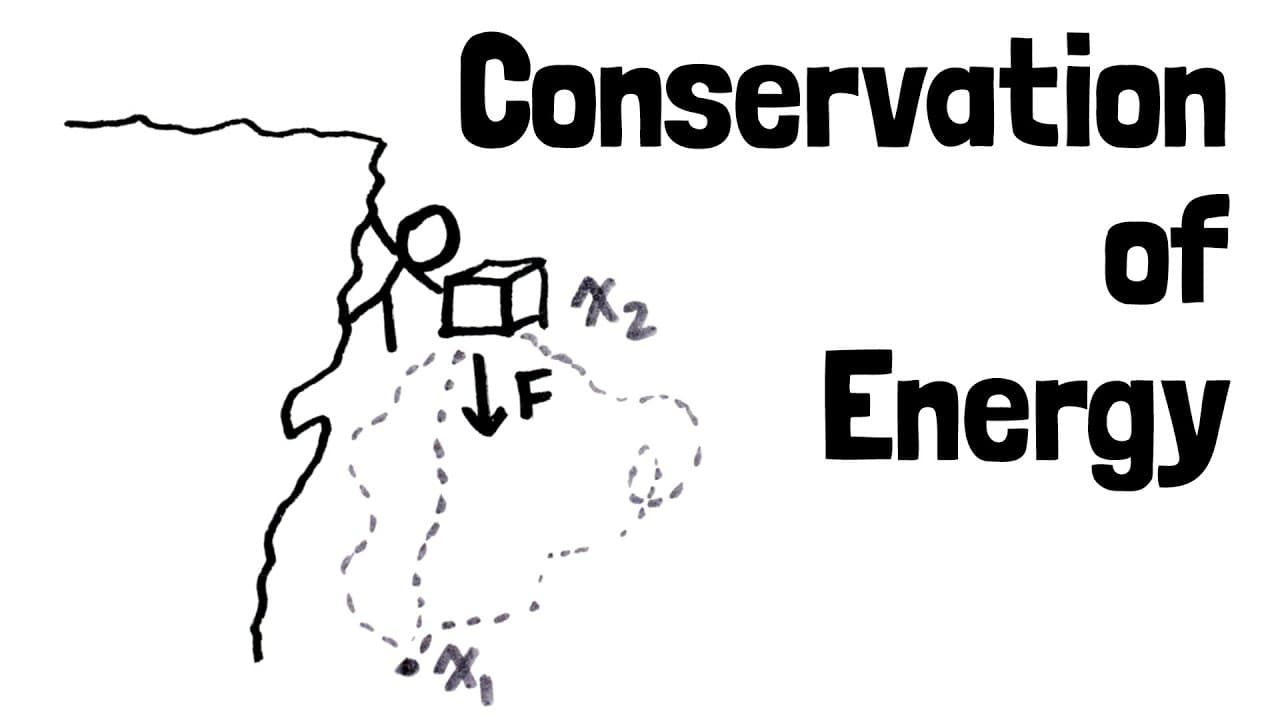
Time in physics is not absolute, and the conservation of energy is a fundamental principle. This video explains how forces that do not depend on time conserve energy.
Transcript
One of the fundamental principles in modern physics is that there’s no absolute time. And I’m not even talking about relativity making time go at different rates if you’re going near light speed – I just mean that any time is as good as any other to set your clock to zero. The predictions of physics work all the same, and it’s not like there’s some... Read More
Key Insights
- ⌛ Physics has no absolute time, allowing for the existence of time zones.
- ⌛ The principle of conservation of energy is supported by the absence of absolute time.
- ⌛ The change in kinetic energy over time is equal to velocity times force.
- ⌛ The change in potential energy over time is negative velocity times force.
- 🍹 The sum of the changes in kinetic and potential energies over time is zero, indicating the conservation of energy.
- ❓ Noether's theorem, discovered by Emmy Noether in 1915, applies this proof to all of physics.
- ⌛ Calculus provides a simpler derivation of this proof, considering the time derivatives of kinetic and potential energy.
Install to Summarize YouTube Videos and Get Transcripts
Explore YouTube Video Summarizer or Get YouTube Transcript Extractor
Questions & Answers
Q: Why is there no absolute time in physics?
The absence of absolute time in physics is illustrated by the fact that time zones work. If there were an absolute starting time, time zones would not be possible.
Q: What is the definition of conserving energy in physics?
In physics, conserving energy means that the total energy of a system remains constant over time. This implies that the energy at two different times will be the same.
Q: How does the change in kinetic energy over time relate to velocity and force?
The change in kinetic energy over time is equivalent to the product of velocity and force. This relationship demonstrates that forces that do not depend explicitly on time conserve energy.
Q: How does the change in potential energy over time relate to velocity and force?
The change in potential energy over time is equal to negative velocity times force. This occurs because the change in position over time is represented by velocity.
Summary & Key Takeaways
-
Physics has no absolute time, and any time is as good as any other to set your clock to zero.
-
The law of conservation of energy is implied by the absence of absolute time.
-
The change in kinetic energy over time is equal to velocity times force, while the change in potential energy over time is negative velocity times force.
-
The sum of the changes in kinetic and potential energies over time equals zero, demonstrating the conservation of energy.
Read in Other Languages (beta)
Share This Summary 📚
Summarize YouTube Videos and Get Video Transcripts with 1-Click
Try YouTube Summary with ChatGPT & Claude or YouTube Transcript Generator
Explore More Summaries from minutephysics 📚


Summarize YouTube Videos and Get Video Transcripts with 1-Click
Try YouTube Summary with ChatGPT & Claude or YouTube Transcript Generator