Presenting... The Weaviate Podcast!
TL;DR
The podcast explores vector search engines, algorithms, and knowledge graphs.
Transcript
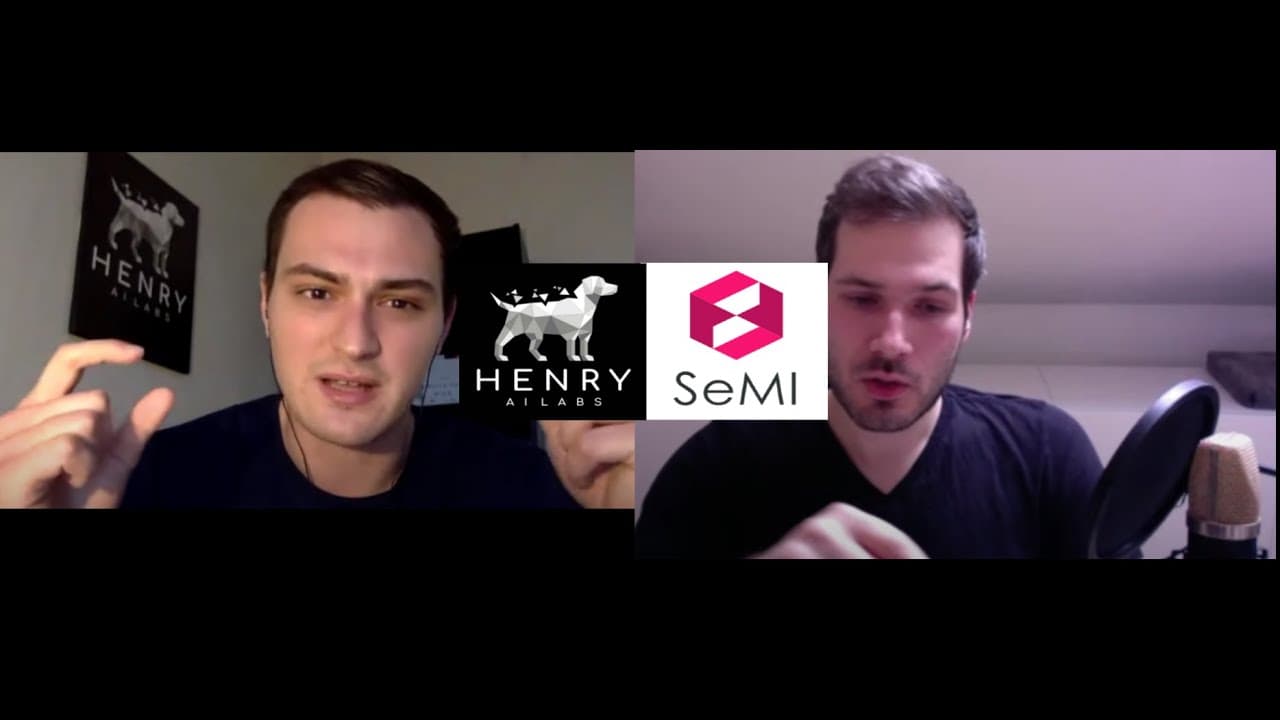
hey everyone thanks so much for checking out my second interview with eddie and dillocker from semi technologies and the we v8 vector search engine we're developing new podcast content also working with dimitri khan from the vector podcast to bring more podcast style content to youtube and particularly around vector search engines so we're currentl... Read More
Key Insights
- 👶 The podcast introduces a new series focused on vector search engines and related technologies, aiming to engage listeners with practical insights and discussions.
- 👤 Community interaction via the slack channel enriches the podcast content by addressing real-world user needs, ensuring relevance and applicability in discussions.
- 👨🔬 HNSW's hierarchical approach provides a unique and efficient methodology for performing nearest neighbor searches, optimizing the balance between speed and accuracy.
- 😫 The upcoming web console is set to revolutionize user engagement with machine learning datasets, promoting accessibility without heavy technical requirements.
- 👨🔬 The integration of symbolic filtering with vector searches opens avenues for refining results by allowing users to apply specific criteria during the search process.
- 😵 Discussions on knowledge graphs highlight their importance in linking disparate data types effectively, facilitating cross-modal searches in vector spaces.
- 💦 The podcast emphasizes the necessity of clean and meaningful data input, particularly when working with automated processes like averaging sentence embeddings.
Install to Summarize YouTube Videos and Get Transcripts
Explore YouTube Video Summarizer or Get YouTube Transcript Extractor
Questions & Answers
Q: What is the significance of the HNSW algorithm in vector search engines?
The HNSW (Hierarchical Navigable Small World) algorithm plays a crucial role in vector search engines by enhancing the speed and efficiency of approximate nearest neighbor searches. It utilizes a graph-based structure to organize and access data points, allowing for rapid similarity searches. The unique design of HNSW balances the trade-off between search accuracy and speed, making it suitable for handling large-scale datasets effectively. Understanding its mechanism deepens the knowledge of vector search technologies and aids in optimizing performance.
Q: What role does the slack community play in the development of the podcast content?
The slack community serves as a vital feedback and idea-sharing platform for the podcast. Users actively post specific questions regarding their use cases, enabling the producers to select relevant topics for discussion. By bringing real user queries into the podcast, the discussions remain grounded in practical applications, fostering a collaborative environment where the audience contributes directly to the show's content.
Q: How does the web console improve accessibility for users working with datasets?
The web console allows users to interact with various datasets through a straightforward graphical interface without requiring extensive technical setup, such as downloading or configuring complex environments. This feature is particularly beneficial for those unfamiliar with database management, enabling them to perform vector searches and explore neural symbolic queries seamlessly. The one-click access to popular datasets simplifies the experimentation process for new users and deep learning practitioners alike.
Q: What are the two main perspectives on knowledge graphs discussed in the podcast?
The podcast elaborates on two perspectives regarding knowledge graphs: one is the dual representation of different entities linked together to facilitate correlation in multimodal spaces, such as connecting textual data with images leveraging vector embeddings. The other perspective focuses on training models to create embeddings that represent the interconnectedness of data in a graph format, allowing efficient similarity searches across various data types. Both approaches enhance the understanding and application of knowledge graphs in modern machine learning.
Summary & Key Takeaways
-
The podcast discusses upcoming content centered on vector search engines and initiates discussions sourced from a community slack where users ask technical queries.
-
Focus is given to the HNSW algorithm and its function in facilitating vector comparisons for rapid similarity search, enhancing understanding of the algorithm dynamics.
-
Future updates include a web interface for users to explore various datasets and utilize vector search techniques without extensive setup, making the technology more accessible.
Read in Other Languages (beta)
Share This Summary 📚
Summarize YouTube Videos and Get Video Transcripts with 1-Click
Try YouTube Summary with ChatGPT & Claude or YouTube Transcript Generator
Explore More Summaries from Connor Shorten 📚
Summarize YouTube Videos and Get Video Transcripts with 1-Click
Try YouTube Summary with ChatGPT & Claude or YouTube Transcript Generator