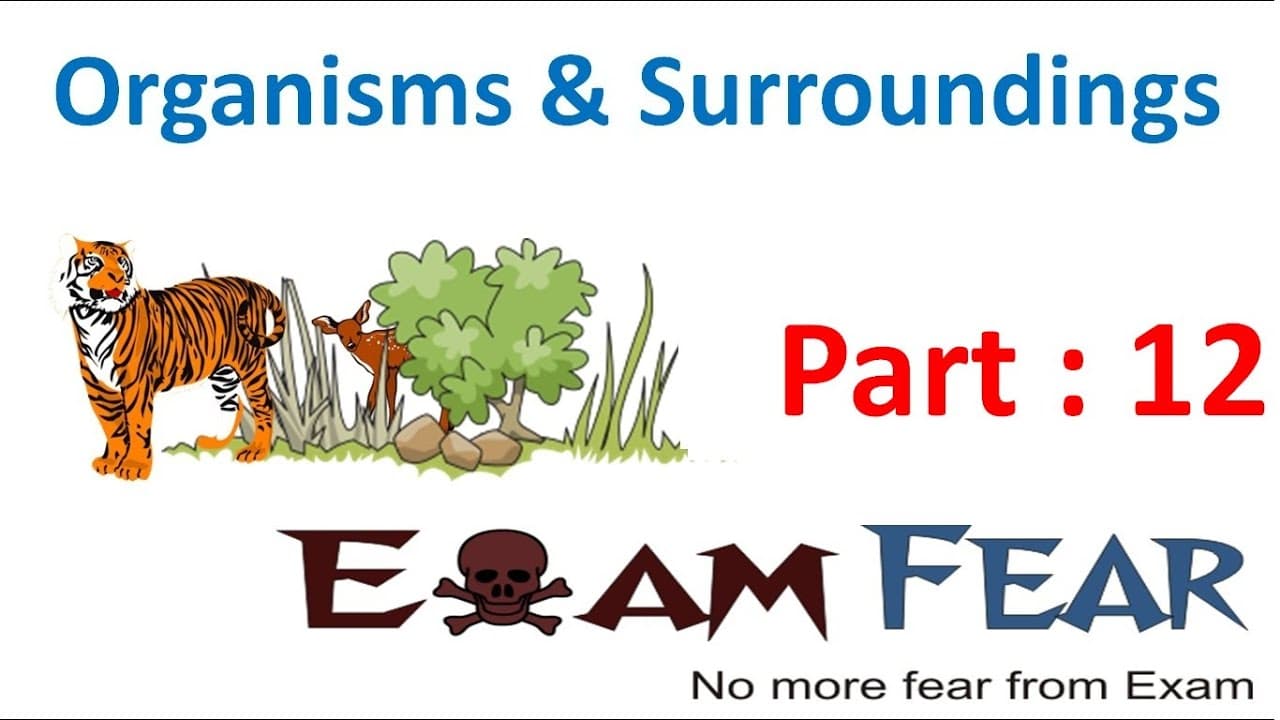
Biology Organisms & Their Surroundings Part 12 (Grasslands) Class 6 VI
TL;DR
Grasslands and forests are distinct habitats that support different types of vegetation and wildlife, with each having its own unique adaptations for survival.
Transcript
hello friends this video on organisms and their surroundings part 12 is brought to you by example.com no more fear from exam let us now discuss about the next habitat that is grasslands grassland as the name suggests areas dominated by grasses that is why we call them grasslands now it is not really necessary that grasslands can only have dresses g... Read More
Key Insights
- 🧡 Grasslands support a range of vegetation, from short grasses to tall trees, providing habitats for diverse animal species.
- 🐠 Different types of grasslands exist, including tropical and temperate, each with its own unique characteristics and vegetation.
- 👪 Forests, characterized by tall trees and dense vegetation, provide ample resources and protection, making them home to a wide variety of animals.
- 🫵 Animals in forests have adaptations such as speed, strong teeth, keen senses, and wide field of view to protect themselves from predators.
- 🖐️ Both grasslands and forests play important roles in supporting ecosystems, providing resources and habitats for a variety of organisms.
- 🅰️ Grasslands have a different composition and climate compared to forests, resulting in different types of vegetation and wildlife.
- 😋 Forests offer a rich and diverse environment, attracting a wide range of animal species due to the availability of food, water, and shelter.
Install to Summarize YouTube Videos and Get Transcripts
Explore YouTube Video Summarizer or Get YouTube Transcript Extractor
Questions & Answers
Q: What is the difference between tropical and temperate grasslands?
Tropical grasslands have scattered individual trees and different climatic conditions, while temperate grasslands have mostly grasses as the dominant vegetation.
Q: How do forests support a variety of animal species?
Forests provide ample food, water, and shelter for animals, making them a suitable habitat for a wide range of species, including elephants, giraffes, lions, tigers, monkeys, birds, and insects.
Q: How do animals protect themselves in forests from predators?
Animals in forests have various adaptations for protection. For example, deer are fast runners, have strong teeth for chewing plants, long ears to detect predators' footsteps, and eyes located on the sides of their face for a wider field of view.
Q: Why do animals prefer to live in forests?
Forests offer abundant resources, such as water, trees, oxygen, and fertile soil, making them ideal for supporting diverse ecosystems and attracting a variety of animal species.
Summary & Key Takeaways
-
Grasslands are areas dominated by grasses, but can also have a variety of other vegetation, supporting a diverse range of animals and insects.
-
There are different types of grasslands, including tropical and temperate grasslands, each with their own dominant vegetation and climatic conditions.
-
Forests are characterized by the presence of tall trees and an abundance of plants, providing food, water, and protection for many animal species.
Read in Other Languages (beta)
Share This Summary 📚
Summarize YouTube Videos and Get Video Transcripts with 1-Click
Try YouTube Summary with ChatGPT & Claude or YouTube Transcript Generator
Explore More Summaries from LearnoHub - Class 11, 12 📚



Summarize YouTube Videos and Get Video Transcripts with 1-Click
Try YouTube Summary with ChatGPT & Claude or YouTube Transcript Generator