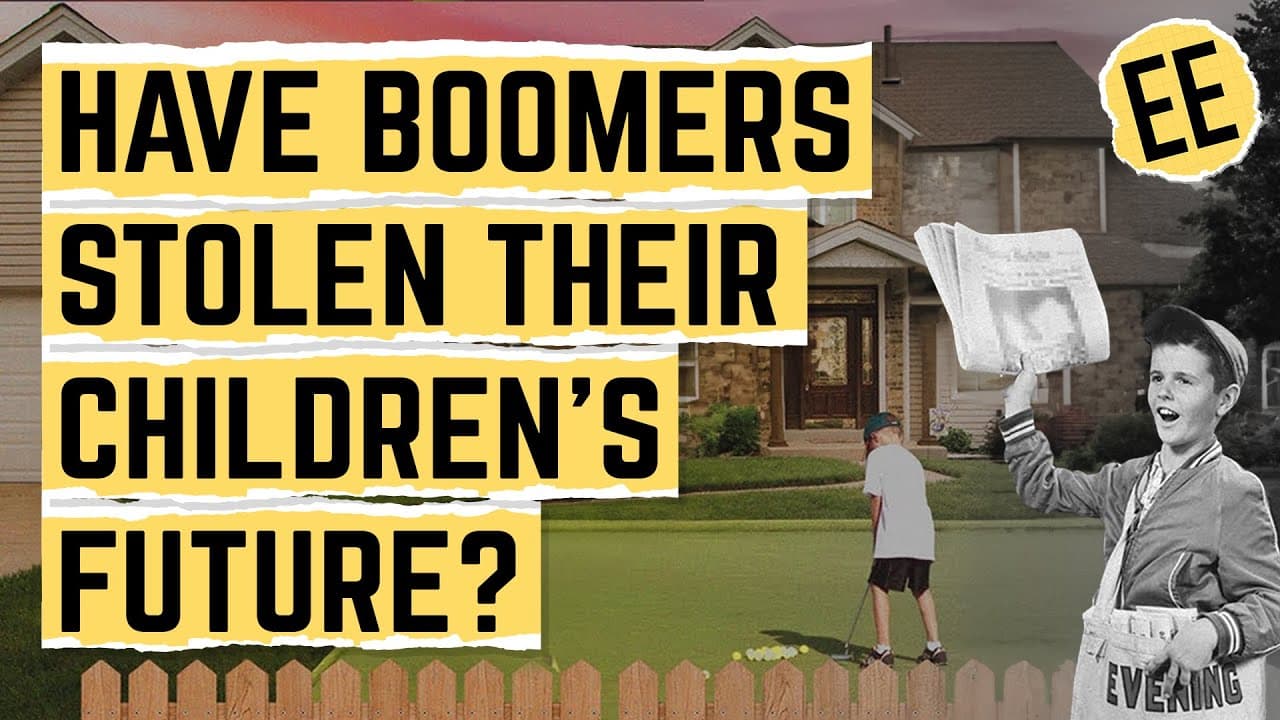
Why Are Young Generations Poorer Than Parents?
TL;DR
Young generations today are facing economic challenges that make them poorer than their parents, despite living in a wealthier world. Factors include housing affordability, job market competition, and intergenerational wealth concentration. Solutions are complex and involve addressing policy biases favoring older generations, as well as considering wealth and estate taxes.
Transcript
A society grows great when old men plant trees whose shade they know they shall never sit in. A Greek proverb from a time well before the problems of our modern economies, or the study of economics itself, is as true today as it was thousands of years ago. But do we really live by this idea? For the first time since the industrial revolution su... Read More
Key Insights
- Young generations are struggling with job security, housing affordability, and saving for retirement compared to their parents.
- Despite overall global wealth increase, younger generations are not experiencing the same economic benefits.
- Baby boomers benefited from favorable policies and economic conditions, including low-cost education and strong social welfare systems.
- Housing has shifted from a basic commodity to a significant investment, impacting affordability for younger generations.
- Higher housing prices contribute to reduced social and geographical mobility, affecting job opportunities and economic growth.
- Intergenerational wealth concentration can hinder economic progress as wealth is often passed to older individuals nearing retirement.
- Proposed solutions like wealth and estate taxes face opposition from influential voting blocks that benefited from current policies.
- Blaming a single generation is unproductive; economic prosperity often results from favorable historical conditions and policy environments.
Install to Summarize YouTube Videos and Get Transcripts
Explore YouTube Video Summarizer or Get YouTube Transcript Extractor
Questions & Answers
Q: Why are young generations poorer than their parents?
Young generations are poorer than their parents due to a combination of factors including housing affordability, job market competition, and intergenerational wealth concentration. Despite living in a wealthier world, they face higher costs of living and less favorable economic conditions compared to the baby boomer generation, who benefited from policies supporting education and social welfare.
Q: How does housing affordability impact young generations?
Housing affordability significantly impacts young generations by limiting their ability to purchase homes and build wealth. As housing has shifted from a basic commodity to a major investment, prices have soared, making it difficult for younger individuals to afford homes. This restricts their financial mobility and contributes to economic challenges, affecting their overall economic stability and growth.
Q: What role do policies play in generational wealth disparity?
Policies have played a crucial role in generational wealth disparity by historically favoring the baby boomer generation. They benefited from low-cost education, strong social welfare systems, and favorable tax structures. These policies allowed them to accumulate wealth, while younger generations face less supportive economic policies, contributing to the growing wealth gap between generations.
Q: How does intergenerational wealth concentration affect the economy?
Intergenerational wealth concentration affects the economy by limiting economic opportunities for younger generations. Wealth is often passed to older individuals nearing retirement, who may not reinvest it productively. This concentration of wealth can hinder economic progress, as younger generations struggle to secure jobs, afford housing, and contribute to economic growth, leading to a less dynamic economy.
Q: What are potential solutions to address generational wealth inequality?
Potential solutions to address generational wealth inequality include implementing wealth and estate taxes to redistribute wealth more equitably. However, these solutions face opposition from influential voting blocks that have benefited from current policies. Addressing policy biases and creating more supportive economic environments for younger generations can also help mitigate the wealth gap.
Q: Is it fair to blame baby boomers for current economic issues?
Blaming baby boomers for current economic issues is not entirely fair, as economic prosperity often results from favorable historical conditions and policy environments. While they benefited from supportive policies, economic growth during their time was also driven by factors beyond their control, such as international trade and cheap energy. Addressing these issues requires a broader understanding of economic dynamics.
Q: How does the job market affect economic prospects for young generations?
The job market affects economic prospects for young generations by creating competition and uncertainty. Younger individuals face challenges in securing stable, well-paying jobs due to increased competition and changing economic conditions. This impacts their ability to build wealth, afford housing, and plan for the future, contributing to the economic disparity between generations.
Q: Why is housing considered an unproductive asset?
Housing is considered an unproductive asset because it doesn't produce goods or services. While it can appreciate in value and provide rental income, it doesn't contribute to economic productivity like other investments. High housing costs can also drain resources from productive economic activities, limiting economic growth and mobility, especially for younger generations trying to enter the housing market.
Summary & Key Takeaways
-
Young generations today face significant economic challenges, finding it difficult to secure stable jobs, afford homes, and save for retirement. Despite living in a wealthier world, they are poorer than their parents due to factors like housing affordability, job market competition, and intergenerational wealth concentration.
-
Baby boomers enjoyed economic prosperity due to favorable policies and conditions, such as low-cost education and strong social welfare, which are not as accessible to younger generations. Housing has become a major investment, further exacerbating affordability issues for today's youth.
-
Intergenerational wealth concentration poses a problem for economic progress, as wealth is often passed to older individuals who may not reinvest it productively. Solutions like wealth and estate taxes are complex and face opposition from those who benefited from the current economic system.
Read in Other Languages (beta)
Share This Summary 📚
Summarize YouTube Videos and Get Video Transcripts with 1-Click
Try YouTube Summary with ChatGPT & Claude or YouTube Transcript Generator
Explore More Summaries from Economics Explained 📚





Summarize YouTube Videos and Get Video Transcripts with 1-Click
Try YouTube Summary with ChatGPT & Claude or YouTube Transcript Generator