Radar systems | Introduction | Basic Principle | Lec - 01
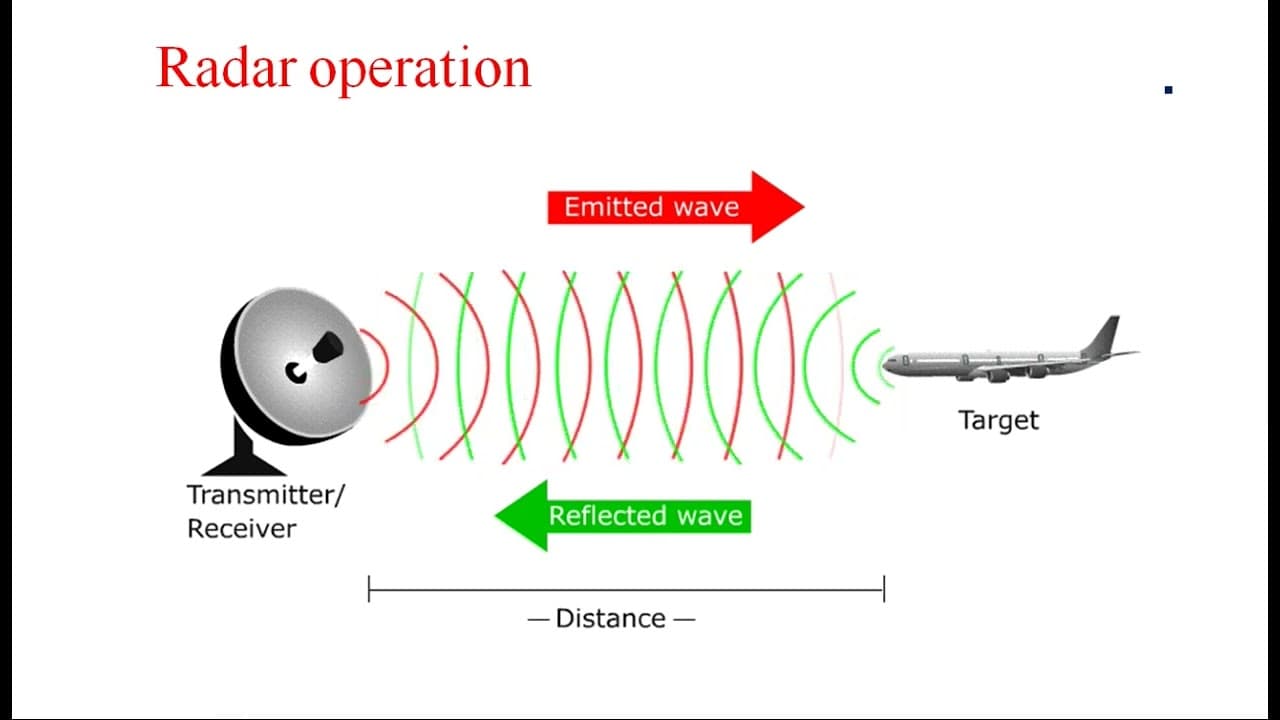
TL;DR
Radar systems utilize radio waves for object detection and distance measurement.
Transcript
hi everyone in this video I am going to start the new subject that is a radar systems so radar system stands for radio detection and ranging so Rea stands for radio D for detection a means and R means ranging radio detection and ranging so this is the acronym for this radar now I will explain why this radar and why the radio detection and ranging s... Read More
Key Insights
- 🧡 Radar systems utilize radio waves to effectively detect objects and measure distances across long ranges.
- ☀️ They operate effectively in various environmental conditions, making them crucial for applications like aviation and weather monitoring.
- ✋ The basic principle involves emitting high-power signals and processing the returned echoes to gather information about targets.
- ⚾ Different radar systems are classified based on the type of signal processing used, catering to diverse applications and operational needs.
- 🛟 Radar technology serves as an essential tool across multiple sectors, including military, meteorology, and transportation.
- 📞 One antenna is often used in radar systems for both transmitting and receiving, optimizing performance and reducing complexity.
- 🏑 The accuracy of radar systems can enhance safety and operational efficiency in different fields, such as navigation and surveillance.
Install to Summarize YouTube Videos and Get Transcripts
Explore YouTube Video Summarizer or Get YouTube Transcript Extractor
Questions & Answers
Q: What is the primary function of radar systems?
The main function of radar systems is to detect objects in the vicinity and measure the distance to those objects. By transmitting radio waves that bounce off targets, radar can identify whether an object is present and its position, under various environmental conditions, including darkness and poor visibility.
Q: How do radar systems differ from human detection?
Radar systems can detect objects under challenging conditions such as darkness, fog, and heavy rain where human vision may fail. Unlike human detection, which relies on visual clarity and distance perception, radar relies on radio frequencies, providing accurate object identification and distance measurement in various environments.
Q: What are the key components of a radar system?
A radar system typically consists of three key components: a transmitter that emits electromagnetic signals, a receiver that collects echoed signals from targets, and an antenna that functions both for transmission and receipt of signals. Together, these elements enable the radar to function effectively.
Q: How is the performance of radar measured?
The performance of radar systems is often assessed by their ability to detect distant targets and their efficacy in varying weather conditions. Key measures include the radar's range, accuracy in distance measurement, and its ability to distinguish between real targets and background noise.
Q: Can radar systems be classified into different types?
Yes, radar systems can be classified into various types based on their operation, such as pulse radar, continuous wave (CW) radar, frequency-modulated continuous wave (FMCW) radar, and Doppler radar. Each type utilizes different methods for signal transmission and reception, catering to specific applications.
Q: What is the significance of using high-power signals in radar?
High-power signals in radar are crucial because they ensure that enough energy is transmitted to reach distant targets and return reflected signals. The use of kilowatt-level signals allows for effective object detection, even when the reflected signals are significantly weakened due to scattering.
Q: How does a radar system process received signals?
After the radar system transmits signals, it collects any reflected signals from targets. The received signals, often very weak, undergo amplification and processing to extract meaningful data about the distance and presence of the detected object, thus providing critical information for various applications.
Summary & Key Takeaways
-
Radar systems, standing for Radio Detection and Ranging, use radio waves to identify the presence of objects and measure their distances, even in adverse weather conditions.
-
The primary components of radar systems include a transmitter, receiver, and antenna, allowing for the transmission of high-power signals that detect targets through reflected signals.
-
Radar can operate irrespective of time and visibility conditions, offering advantages over human detection in scenarios like darkness, fog, or heavy rain.
Read in Other Languages (beta)
Share This Summary 📚
Summarize YouTube Videos and Get Video Transcripts with 1-Click
Try YouTube Summary with ChatGPT & Claude or YouTube Transcript Generator