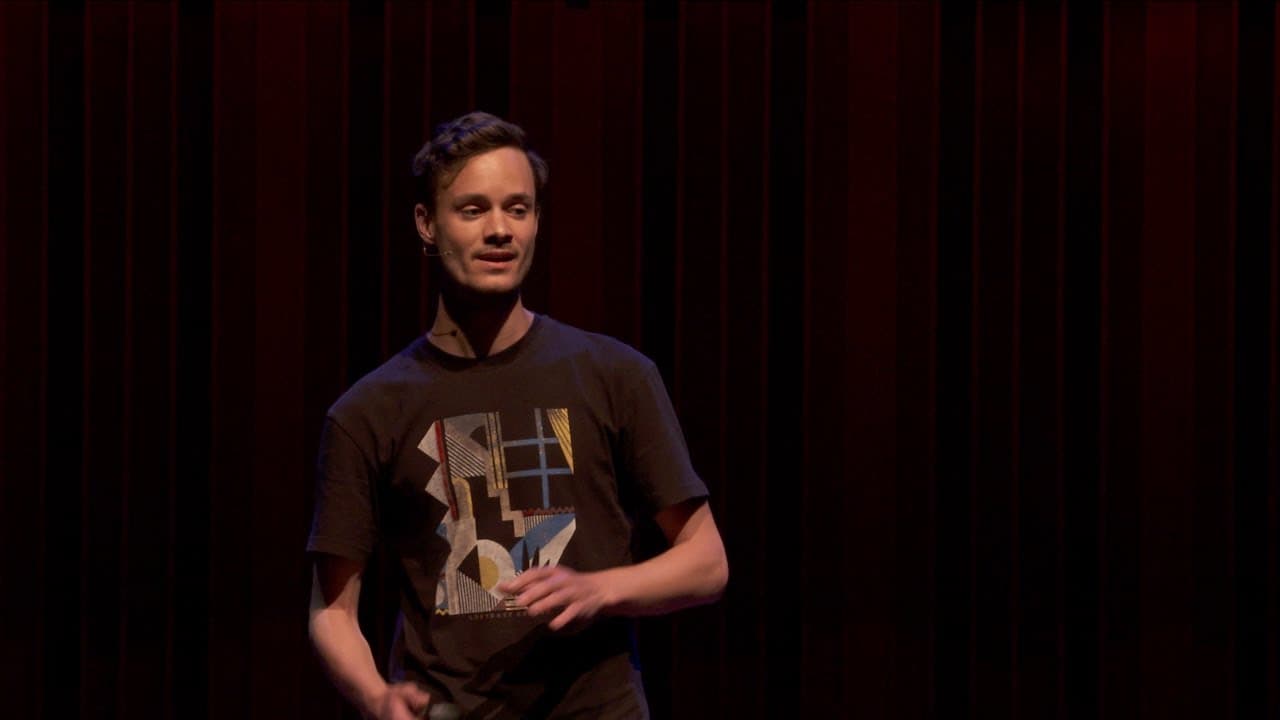
Are cities living organisms? | Robbe Nagel | TEDxEindhoven
TL;DR
Seeing cities as living entities through a micro and macro perspective, reflecting on human roles within urban ecosystems.
Transcript
foreign age of five or six I started playing a little game in my backyard I would lay down on the grass near a patch of plants flowers and strawberries eventually to find an ant and I would imagine what this world should look like suddenly now became a landscape just became magnificent structures hanging above in the sky small plants became unfamil... Read More
Key Insights
- 🌍 Childhood experiences can shape our perceptions of the world and foster imagination.
- 🏙️ Cities exhibit structural and functional similarities to living organisms, from city walls to regulatory mechanisms.
- 🏙️ Human roles within cities mirror the specialized functions of cells in biological organisms.
- 🫨 Cities thrive on interactions and connections among individuals, akin to the neural network of a brain.
- 🫵 Viewing cities as conscious entities with unique cultures can offer a deeper appreciation of urban environments.
- 👳 Urban environments constantly evolve, reflecting the dynamic nature of life and growth.
- 👾 Human actions within cities contribute to shaping the identity and consciousness of urban spaces.
Install to Summarize YouTube Videos and Get Transcripts
Explore YouTube Video Summarizer or Get YouTube Transcript Extractor
Questions & Answers
Q: How did the speaker's childhood game of seeing the world from an ant's perspective influence their perception of landscapes?
The childhood game allowed the speaker to escape the human perspective and appreciate the wonder in the ordinary, encouraging a shift in perception towards seeing things in a new light.
Q: What parallels were drawn between cities and living organisms in the speaker's analogy?
The speaker compared city walls to biological cell walls, main boulevards to blood vessels, and the regulation of city temperatures to the concept of homeostasis in living beings, showcasing fundamental similarities.
Q: How did the speaker relate human roles within cities to the idea of cells in biological organisms?
By highlighting the diverse functions individuals fulfill within cities, the speaker drew parallels to the specialized roles of cells in living organisms, suggesting that each person contributes to the city's functioning like cells in a body.
Q: In what way did the speaker compare the social network of people within a city to the structure of a brain?
The speaker likened the interconnectedness of individuals in a city to the network of neurons forming a brain, emphasizing the collective impact of human interactions in shaping a city's identity and culture.
Summary & Key Takeaways
-
Childhood game of seeing the world through an ant's perspective led to reimagining landscapes and structures, questioning our understanding of complexity.
-
Comparing a city to a living organism, observing similarities between city infrastructure and biological functions like city walls and blood flow.
-
Exploring the idea of cities as conscious entities shaped by human interactions, akin to neurons forming a city's identity and culture.
Read in Other Languages (beta)
Share This Summary 📚
Summarize YouTube Videos and Get Video Transcripts with 1-Click
Try YouTube Summary with ChatGPT & Claude or YouTube Transcript Generator
Explore More Summaries from TEDx Talks 📚

Summarize YouTube Videos and Get Video Transcripts with 1-Click
Try YouTube Summary with ChatGPT & Claude or YouTube Transcript Generator