Squash analysis - Where to stand on the T
TL;DR
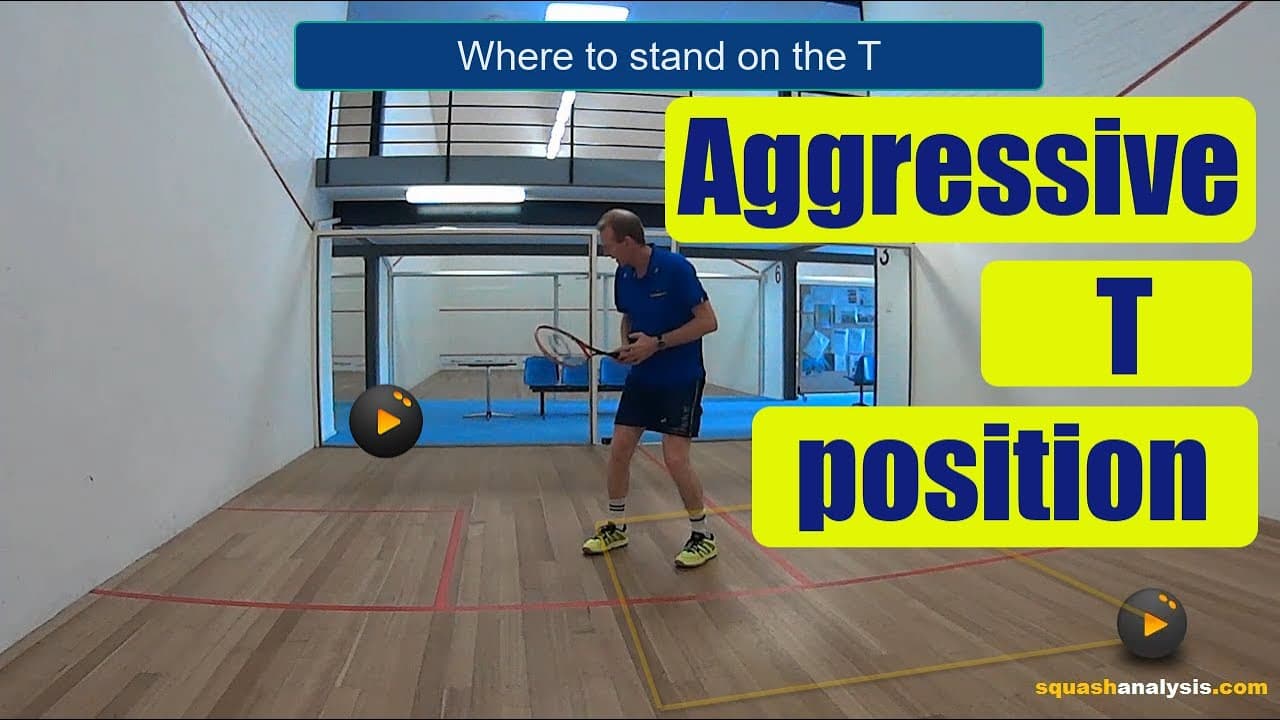
Optimal T-position enhances squash court coverage and shot retrieval.
Transcript
Gary peton here today I'm going to talk to you about where you should stand when you're actually waiting for your opponent to hit a shot let's say your opponent's in the back forehand Corner what I would generally do is what I teach people is I want you to stand at 45° now that's this is really interesting be... Read More
Key Insights
- Standing at a 45° angle improves your ability to quickly move side-to-side, enhancing your response to shots in squash.
- Positioning your feet towards the most likely shot directions maximizes your preparedness and defensive capabilities on the court.
- Anticipating the opponent's shot direction, such as a boast or crosscourt, allows for quicker and more efficient movement.
- The 45° stance is effective for both backhand and forehand corners, allowing for rapid directional changes.
- In the front forehand corner, a more frontal stance helps cover both sides and facilitates volley interceptions.
- Understanding the court's rectangular divisions helps in positioning yourself strategically to cover various shot options.
- Quick, sharp movements from the T-position are crucial for effective shot retrieval and maintaining an offensive edge.
- Utilizing your body's natural motion and angles optimizes your ability to respond to challenging shots and improve your game.
Install to Summarize YouTube Videos and Get Transcripts
Explore YouTube Video Summarizer or Get YouTube Transcript Extractor
Questions & Answers
Q: Why is standing at a 45° angle important in squash?
Standing at a 45° angle is crucial because it aligns your body for optimal side-to-side movement, which is essential for quickly responding to shots. This stance allows you to efficiently cover the most probable shot directions and enhances your ability to intercept volleys and boasts.
Q: How does the 45° stance benefit players in the back corners?
In the back corners, the 45° stance enables players to rapidly shift between defending against down-the-wall shots and intercepting crosscourts. This positioning leverages the player's natural speed and strength, allowing them to cover the court more effectively and maintain a defensive edge.
Q: What is the recommended stance for the front forehand corner?
For the front forehand corner, a more frontal stance is recommended to cover both sides of the court. This positioning helps players intercept volleys and respond to short shots quickly, ensuring they can maintain offensive pressure and capitalize on poor shots from the opponent.
Q: How does understanding court divisions aid in positioning?
Understanding the court's rectangular divisions helps players position themselves strategically to cover various shot options. By visualizing these divisions, players can anticipate shot directions and adjust their stance to optimize coverage and improve their response time to challenging shots.
Q: What role does body motion play in squash positioning?
Utilizing natural body motion is key to optimizing squash positioning. By aligning their stance with their body's natural movement patterns, players can enhance their agility and speed, allowing them to respond more effectively to shots and maintain an advantageous position on the court.
Q: How can players improve their response to boasts?
Players can improve their response to boasts by positioning themselves at a 45° angle, which facilitates quick forward movement towards the front corner. This stance allows them to anticipate and react to boasts more effectively, minimizing the opponent's advantage and improving shot retrieval.
Q: What is the significance of quick movements from the T-position?
Quick movements from the T-position are significant because they enable players to maintain an offensive edge and effectively cover the court. By starting from a strong position and moving sharply, players can intercept shots, apply pressure on the opponent, and capitalize on scoring opportunities.
Q: How does strategic positioning enhance squash performance?
Strategic positioning enhances squash performance by allowing players to anticipate shot directions, optimize court coverage, and improve shot retrieval. By using their body's natural motion and aligning their stance with probable shot paths, players can maintain control and increase their chances of winning points.
Summary & Key Takeaways
-
The video explains the importance of positioning at a 45° angle on the squash court to enhance movement speed and shot retrieval. This stance allows players to efficiently cover likely shot directions, especially when the opponent is in the back corners.
-
Gary Peton discusses how a strategic stance can improve defensive and offensive play in squash. By anticipating shot directions and positioning accordingly, players can enhance their ability to intercept volleys and respond to boasts and crosscourts.
-
The analysis focuses on using natural body motion and strategic positioning to optimize squash performance. Players are encouraged to use quick, sharp movements from the T-position to maintain an advantage and effectively cover the court.
Read in Other Languages (beta)
Share This Summary 📚
Summarize YouTube Videos and Get Video Transcripts with 1-Click
Try YouTube Summary with ChatGPT & Claude or YouTube Transcript Generator