DNA: Not Just for Life Anymore!
TL;DR
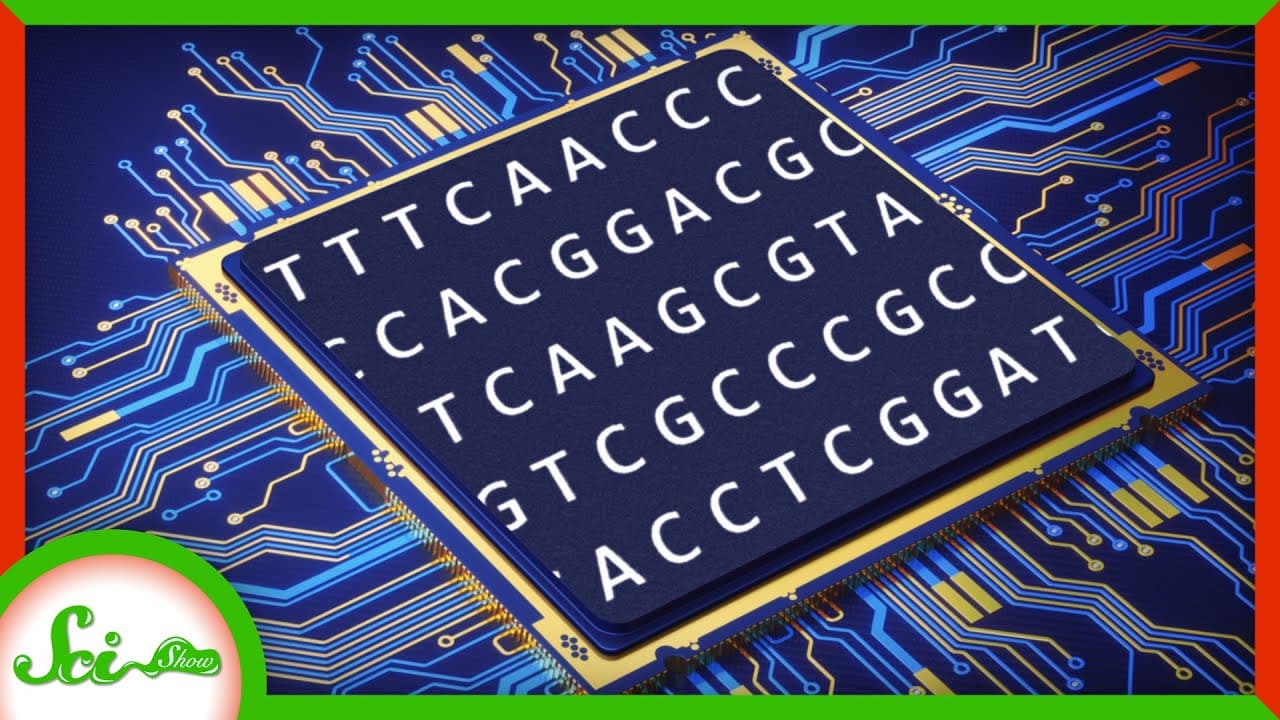
Scientists and engineers are exploring four ways to use DNA in new technology: biological computing, aptamers, DNA origami, and nanomanufacturing.
Transcript
[♪ INTRO] Good old deoxyribonucleic acid. You might hear ‘DNA’ and think, ‘the blueprint of life.’ And while, yes, our DNA stores the information that makes us who we are, that’s not the only thing it can do. A quick primer on DNA: If you think of DNA as a molecule, it’s this iconic twisted ladder made of two strands that join together down the mid... Read More
Key Insights
- 🧬 DNA has the potential to revolutionize data storage by overcoming the size limits of silicon and electricity.
- 🖱️ Biological computers that use genetic circuits are being developed to process inputs and create outputs.
- 😷 Aptamers, short strands of DNA or RNA, have the ability to bind to specific molecules and are being explored for medical applications.
- 🧬 DNA origami allows for the precise folding of DNA into specific shapes, which has applications in drug delivery systems.
- ⚖️ DNA can be combined with non-biological materials in nanomanufacturing to create nano-scale structures.
- 🏆 Carbon nanotubes and graphene are being tested as replacements for silicon transistors in next-generation technology.
- 🧬 DNA can be used as a template for the precise placement of carbon nanotubes in transistor manufacturing.
Install to Summarize YouTube Videos and Get Transcripts
Explore YouTube Video Summarizer or Get YouTube Transcript Extractor
Questions & Answers
Q: How does DNA storage compare to traditional data storage methods?
DNA storage has the potential to store information more efficiently than traditional methods, as one nucleotide can theoretically store two bits of data.
Q: How do biological computers process inputs?
Biological computers use genetic circuits to process inputs, similar to how computer circuits interpret and respond to electrical signals.
Q: What are aptamers and how are they used in medicine?
Aptamers are short strands of DNA or RNA that can bind to specific molecules. They are being explored as a way to target and block proteins involved in diseases, such as wet macular degeneration.
Q: How does DNA origami work in drug delivery systems?
DNA origami involves folding a long DNA strand into specific shapes, which can then be used to carry drugs. When the aptamer on the DNA structure binds to a specific molecule on cancer cells, it releases the drug to fight the tumor.
Summary & Key Takeaways
-
DNA can be used for data storage, as it has the potential to store information more efficiently than traditional methods using silicon and electricity.
-
Biological computers are being developed that use genetic circuits to process inputs and create outputs, mimicking computer circuits but with DNA.
-
Aptamers, short strands of DNA or RNA, can bind to specific molecules and are being explored for medical applications.
-
DNA origami allows for the folding of DNA into specific shapes, which has potential applications in drug delivery systems.
-
DNA can also be used in nanomanufacturing to combine non-biological materials, such as carbon nanotubes, into nano-scale structures.
Read in Other Languages (beta)
Share This Summary 📚
Summarize YouTube Videos and Get Video Transcripts with 1-Click
Try YouTube Summary with ChatGPT & Claude or YouTube Transcript Generator
Explore More Summaries from SciShow 📚


Summarize YouTube Videos and Get Video Transcripts with 1-Click
Try YouTube Summary with ChatGPT & Claude or YouTube Transcript Generator