Thomas Insel: Toward a new understanding of mental illness
TL;DR
This content discusses the advancements in biomedical research that have led to improved outcomes for diseases such as cancer, heart disease, and AIDS, but also highlights the prevalence and impact of mental disorders such as suicide.
Transcript
Translator: Joseph Geni Reviewer: Thu-Huong Ha So let's start with some good news, and the good news has to do with what do we know based on biomedical research that actually has changed the outcomes for many very serious diseases? Let's start with leukemia, acute lymphoblastic leukemia, ALL, the most common cancer of children. When I was a student... Read More
Key Insights
- 🔬 Biomedical research has led to significant reductions in mortality rates for diseases like leukemia, heart disease, and AIDS, saving thousands of lives each year.
- 🏥 Early detection and intervention have been crucial in improving outcomes for these diseases.
- 💔 Suicide is a major issue, with 38,000 suicides occurring in the US every year, making it more common than homicides and traffic fatalities.
- 🧠 90% of suicides are related to mental illnesses, highlighting the importance of addressing mental health concerns.
- 🌍 Mental disorders contribute to almost 30% of all disability from medical causes, surpassing cancer and heart disease.
- 🔌 Rethinking mental disorders as brain disorders can lead to a better understanding and improved treatment options.
- 🌐 The human connectome, or the brain's wiring diagram, can provide insights into the risk factors and variations associated with mental disorders.
- 🚀 Early detection of brain changes associated with mental disorders can lead to early intervention and better outcomes, just like in other medical conditions.
Install to Summarize YouTube Videos and Get Transcripts
Explore YouTube Video Summarizer or Get YouTube Transcript Extractor
Questions & Answers
Q: What is the mortality rate for acute lymphoblastic leukemia (ALL) today compared to 30 years ago?
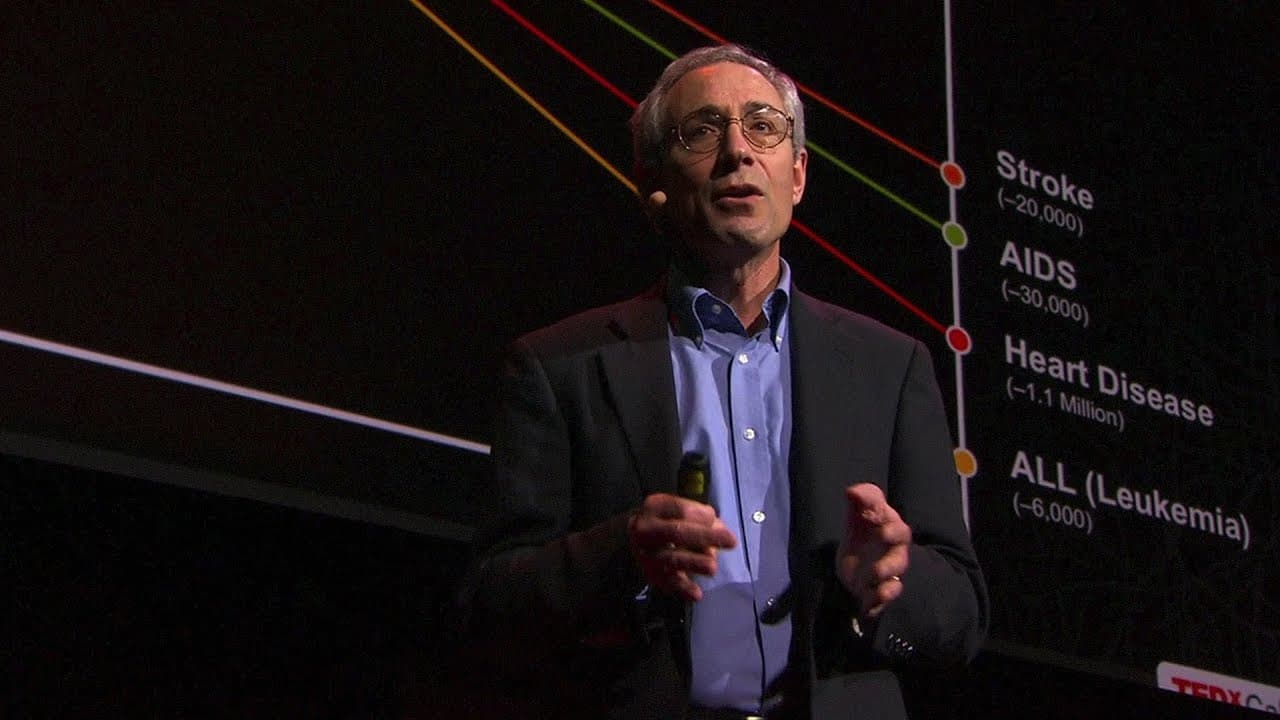
The mortality rate for acute lymphoblastic leukemia (ALL) has reduced by 85 percent in the past 30 years. Previously, the mortality rate was around 95 percent, but now it has been reduced significantly.
Q: How many children with ALL are cured each year due to biomedical research?
Around 6,000 children who would have previously died from acute lymphoblastic leukemia each year are now cured, thanks to biomedical research that has led to improved outcomes for this disease.
Q: What is the reduction in mortality rates for heart disease?
There has been a remarkable 63 percent reduction in mortality rates from heart disease. This means that 1.1 million deaths from heart disease are averted every year.
Q: What is the impact of early detection and early intervention on stroke patients?
If stroke patients can be brought to the emergency room within three hours of the onset, around 30 percent of them will be able to leave the hospital without any disability at all. This highlights the importance of early detection and intervention in improving outcomes for stroke patients.
Q: How prevalent is suicide and how does it compare to other causes of death?
There are 38,000 suicides each year in the United States, which means approximately one suicide occurs every 15 minutes. Suicide is the third most common cause of death among individuals aged 15 to 25. It is twice as common as homicide and even more common than traffic fatalities in the country.
Summary & Key Takeaways
-
Biomedical research has led to significant improvements in outcomes for diseases such as leukemia, heart disease, and AIDS, reducing mortality rates and increasing life expectancy.
-
Suicide is a prevalent and often overlooked cause of death, with 90% of suicides related to mental illnesses such as depression and bipolar disorder.
-
Rethinking mental disorders as brain disorders could lead to earlier detection and intervention, potentially changing the way these illnesses are understood and treated.
Read in Other Languages (beta)
Share This Summary 📚
Summarize YouTube Videos and Get Video Transcripts with 1-Click
Try YouTube Summary with ChatGPT & Claude or YouTube Transcript Generator
Explore More Summaries from TED 📚





Summarize YouTube Videos and Get Video Transcripts with 1-Click
Try YouTube Summary with ChatGPT & Claude or YouTube Transcript Generator