Paul Snelgrove: A census of the ocean
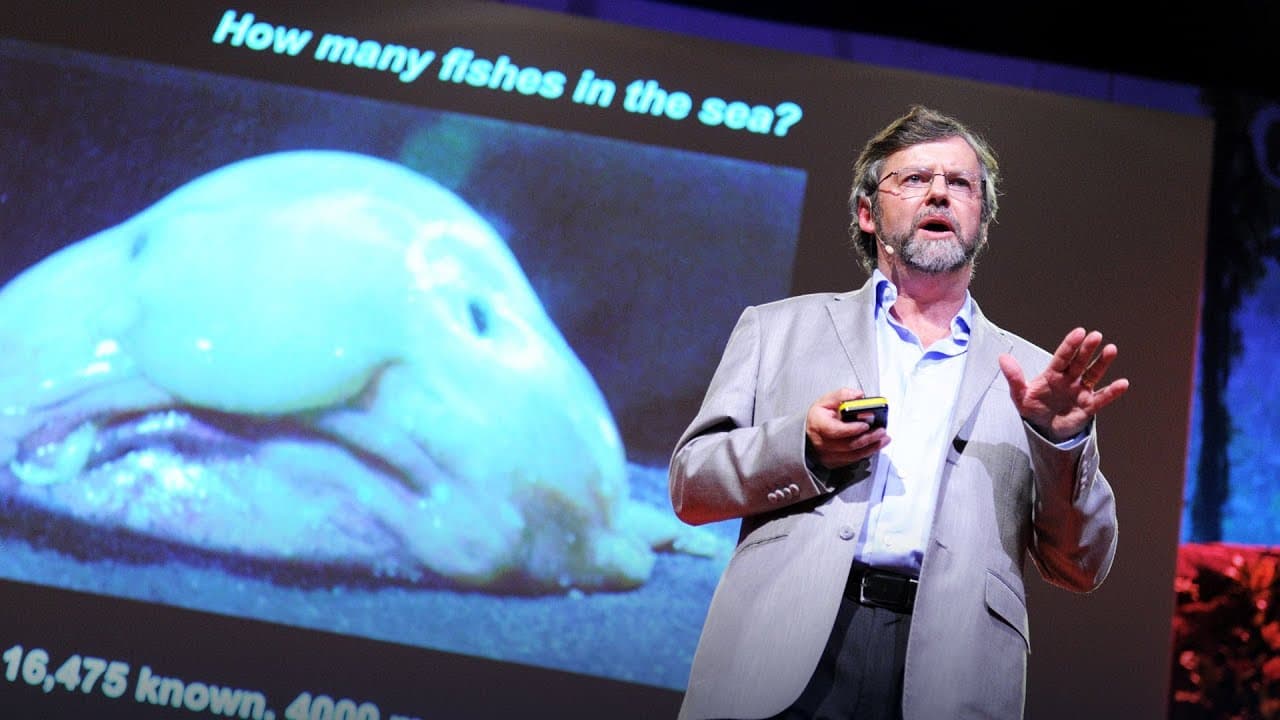
TL;DR
The oceans cover a significant portion of our planet and are incredibly productive, providing new life and vital resources for humans.
Transcript
The oceans cover some 70 percent of our planet. And I think Arthur C. Clarke probably had it right when he said that perhaps we ought to call our planet Planet Ocean. And the oceans are hugely productive, as you can see by the satellite image of photosynthesis, the production of new life. In fact, the oceans produce half of the new life every day o... Read More
Key Insights
- 🌊 The oceans cover 70 percent of our planet and are incredibly productive, producing half of the new life on Earth every day and half of the oxygen we breathe.
- 🐟 The oceans harbor a vast amount of biodiversity, with many species yet to be discovered and cataloged. However, taxonomic specialists who can identify and classify these species are becoming endangered themselves.
- 🕊️ Exploitation of the oceans has been happening since ancient times, with the Romans being one of the first to develop industrial fishing techniques. This has led to significant declines in marine species, ranging from 65 to 98 percent for major groups of organisms.
- 🎣 Commercial fishing has led to shifting baselines, where our expectations of ocean productivity have been lowered because we haven't seen the full potential in our lifetimes.
- 🔬 Advanced technology such as remotely operated vehicles and acoustics are allowing scientists to explore and study the deep ocean habitats and understand their ecosystems better.
- 🌍 The Census of Marine Life, a global program involving 2,700 scientists from over 80 countries, has made significant contributions to our understanding of marine life and biodiversity, with new species being discovered almost daily.
- 🌊 Satellite tags and genetic barcoding are tools used to track and identify marine species and monitor their movements and populations.
- 💡 Despite the vast amount of knowledge gained through the Census of Marine Life, there is still much we don't know about the oceans. An estimated 91 percent of marine species remain undiscovered, and the importance of global collaboration in ocean research and conservation cannot be overstated.
Install to Summarize YouTube Videos and Get Transcripts
Explore YouTube Video Summarizer or Get YouTube Transcript Extractor
Questions & Answers
Q: What percentage of the Earth's surface is covered by oceans?
The oceans cover about 70 percent of our planet.
Q: How much of the new life on Earth is produced by the oceans?
The oceans produce half of the new life every day on Earth.
Q: How much of the oxygen that we breathe is produced by the oceans?
The oceans produce about half of the oxygen that we breathe.
Q: What percentage of global protein needs does the ocean provide?
The ocean provides about 10 percent of global protein needs.
Q: How much of the deep ocean is currently unexplored?
Despite covering more of the Earth's surface than all other habitats combined, the deep ocean is still largely unexplored.
Q: When did the Census of Marine Life program begin and what was its goal?
The Census of Marine Life program began 10 years ago and aimed to improve our understanding of life in the global oceans through international collaboration.
Q: What evidence is there of human exploitation of the oceans throughout history?
Human exploitation of the oceans began heavily with the Romans, who developed salting as a method to store and transport fish. Exploitation has continued to the present day, leading to significant losses in biodiversity.
Q: How much do we currently know about the species in the ocean?
We currently know about 9 percent of the species in the ocean, with an estimated 91 percent remaining to be discovered.
Summary & Key Takeaways
-
The oceans cover 70% of the planet and are incredibly productive, producing half of the new life on Earth and half of the oxygen we breathe.
-
The deep ocean, which covers more of the Earth's surface than any other habitat, remains largely unexplored and unknown.
-
The Census of Marine Life program, involving thousands of scientists from around the world, discovered numerous new species and revealed the immense diversity and importance of the ocean ecosystem.
Read in Other Languages (beta)
Share This Summary 📚
Summarize YouTube Videos and Get Video Transcripts with 1-Click
Try YouTube Summary with ChatGPT & Claude or YouTube Transcript Generator
Explore More Summaries from TED 📚






Summarize YouTube Videos and Get Video Transcripts with 1-Click
Try YouTube Summary with ChatGPT & Claude or YouTube Transcript Generator