The World’s First-Ever Planetary Defense Test on This Week @NASA – September 30, 2022
TL;DR
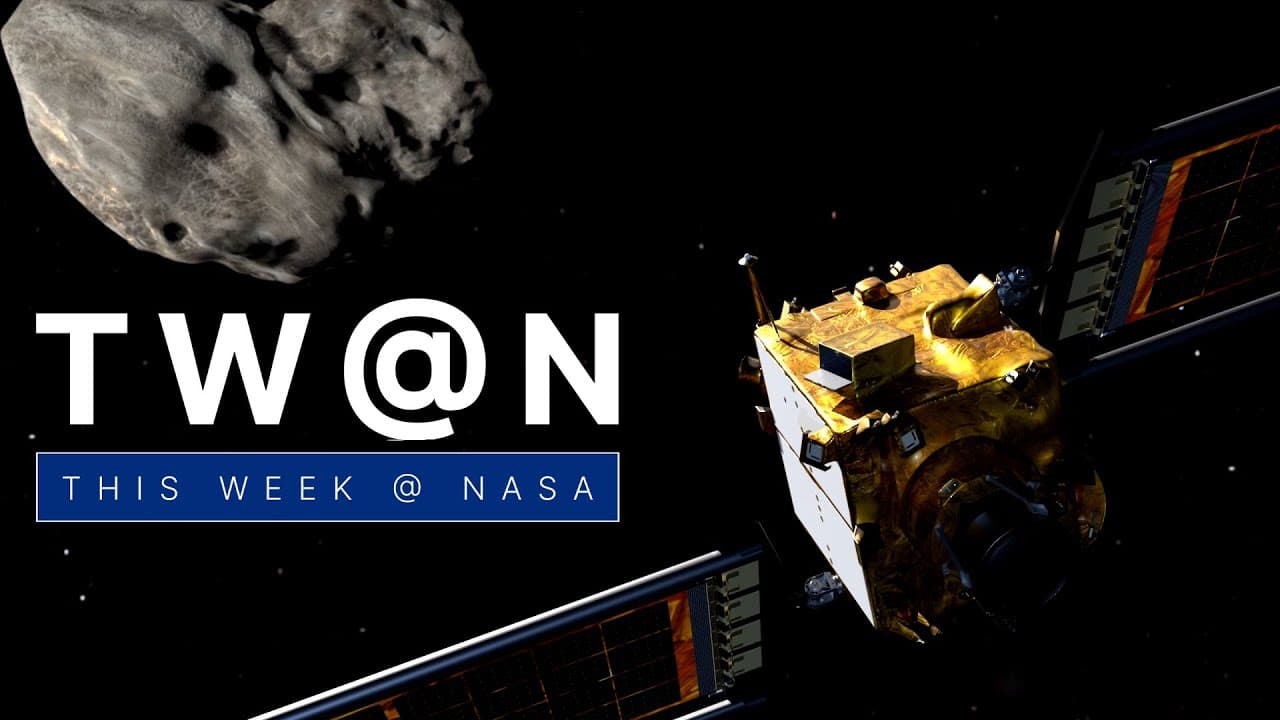
NASA's Double Asteroid Redirection Test (DART) successfully altered the orbit of an asteroid moonlet using kinetic impact, Hurricane Ian intensified as it approached Florida, the Artemis I Moon rocket was moved back to the Vehicle Assembly Building due to inclement weather, Juno mission captured high-resolution images of Europa's surface, and NASA conducts burst pressure tests on inflatable habitats for future space missions.
Transcript
The world’s first-ever planetary defense test is a big hit … A major hurricane spotted from space … And moving our mega Moon rocket back inside ahead of that storm … a few of the stories to tell you about – This Week at NASA! On Sept. 26, NASA’s Double Asteroid Redirection Test, or DART spacecraft successfully impacted Dimorphos – the asteroid the ... Read More
Key Insights
- 😒 NASA's DART mission successfully demonstrated the use of kinetic impact to alter the orbit of an asteroid moonlet, showcasing potential planetary defense capabilities.
- 💨 Hurricane Ian intensified as it approached Florida, posing significant threats with strong winds and potential storm surges.
- 🥺 NASA's prioritization of employee safety led them to move the Artemis I Moon rocket back to protect it from inclement weather.
- 🎟️ The Juno mission's high-resolution images provide valuable data for understanding Europa's surface and informing future missions.
- 👨🚀 Burst pressure tests on inflatable habitats are crucial for ensuring the safety of astronauts during future long-term space exploration missions.
- 👾 NASA's space telescopes captured the collision between DART and Dimorphos, marking a significant milestone in celestial observations.
- 👾 Hurricane Ian's impact serves as a reminder of the challenges involved in space missions and the importance of weather forecasting.
Install to Summarize YouTube Videos and Get Transcripts
Explore YouTube Video Summarizer or Get YouTube Transcript Extractor
Questions & Answers
Q: How did NASA's DART spacecraft alter the orbit of the asteroid moonlet Dimorphos?
NASA's DART spacecraft intentionally crashed into the moonlet Dimorphos using kinetic impact, successfully modifying its orbit. Ground-based telescopes will confirm the alteration and evaluate the effectiveness of this planetary defense technology demonstration.
Q: What were the observed effects of Hurricane Ian as captured by the International Space Station's cameras?
The International Space Station's cameras captured Hurricane Ian south of Cuba, moving north-northwest. The storm intensified and made landfall in southwest Florida as a Category 4 storm with winds over 155 mph and a potentially catastrophic storm surge.
Q: Why was the Artemis I Moon rocket moved back to the Vehicle Assembly Building?
The rocket was moved back to the Vehicle Assembly Building due to weather predictions related to Hurricane Ian. This decision aimed to protect the rocket and spacecraft and allow employees to address their families' needs before the storm.
Q: What did the Juno mission capture during its close flyby of Europa?
The Juno mission captured high-resolution images of Europa's surface from a distance of 220 miles. These images provide valuable data that can inform future missions, such as the Europa Clipper mission scheduled to launch in 2024.
Summary & Key Takeaways
-
NASA's DART spacecraft successfully impacted the asteroid moonlet Dimorphos to demonstrate the viability of kinetic impact for altering the course of potential Earth-threatening asteroids.
-
Hurricane Ian intensified as it approached Florida, resulting in a Category 4 storm with potentially catastrophic storm surges.
-
The Artemis I Moon rocket was moved back to the Vehicle Assembly Building to protect it from Hurricane Ian and allow employees to take care of their families.
-
The Juno mission captured high-resolution images of Europa's surface during a close flyby, providing valuable data for future missions to study the icy moon.
-
NASA conducts burst pressure tests on inflatable habitats to ensure their safety for housing astronauts during long-term surface exploration missions.
Read in Other Languages (beta)
Share This Summary 📚
Summarize YouTube Videos and Get Video Transcripts with 1-Click
Try YouTube Summary with ChatGPT & Claude or YouTube Transcript Generator
Explore More Summaries from NASA 📚
Summarize YouTube Videos and Get Video Transcripts with 1-Click
Try YouTube Summary with ChatGPT & Claude or YouTube Transcript Generator