What Role Did Physics Play in the 20th Century?
TL;DR
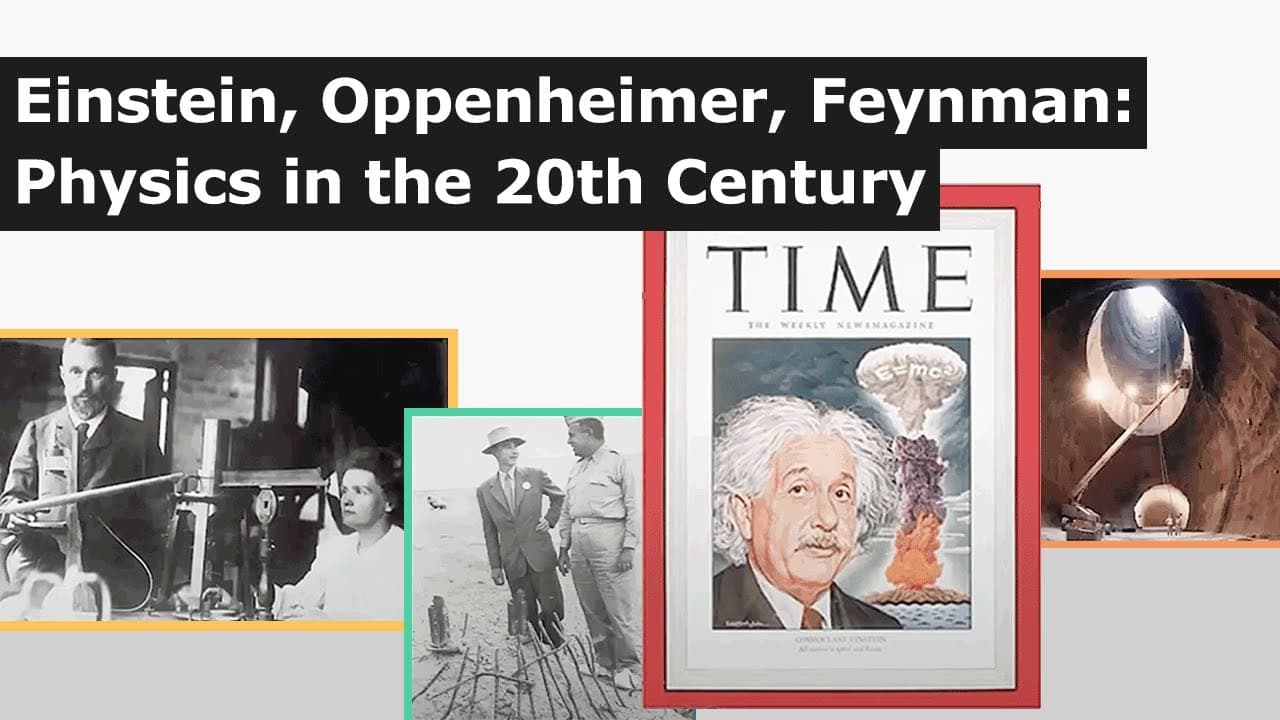
This course analyzes the transformative impact of physics and physicists from the 19th century onward, highlighting their evolving roles throughout historical and cultural contexts. Students will enhance their written communication skills while exploring key developments in modern physics, nuclear advancements during World War II, and contemporary high-energy physics and cosmology.
Transcript
[SQUEAKING] [RUSTLING] [CLICKING] DAVID KAISER: We'll go ahead and get started. Hello, everyone. Welcome to 8225, which is also STS.042-- Physics in the 20th century. My name is David Kaiser. Today's class is going to be a little shorter than average. I just wanted to go over a kind of quick introduction for the course, an overview, some logistics,... Read More
Key Insights
- 🛄 The course aims to explore the changing roles of physics and physicists over the 20th century and beyond, emphasizing written communication skills.
- 👨🏫 The instructor, David Kaiser, is a professor and researcher in the history of science and physics, with a particular interest in early universe cosmology and quantum theory.
- 🧡 The course will cover a range of topics, from the 19th-century legacy to the emergence of modern physics, nuclear physics during World War II, and developments in high-energy physics, cosmology, and astrophysics.
Install to Summarize YouTube Videos and Get Transcripts
Explore YouTube Video Summarizer or Get YouTube Transcript Extractor
Questions & Answers
Q: What topics will be covered in the course on Physics in the 20th century?
The course will cover the 19th-century legacy, emergence of modern physics, nuclear physics during World War II, and developments in high-energy physics, cosmology, and astrophysics.
Q: What is the focus of the course?
The course focuses on the changing roles of physics and physicists, emphasizing written communication skills and exploring historical, cultural, and social contexts of physics.
Q: What are the prerequisites for the course?
There are no prerequisites for the course. It is open to all students, including those who are not physics majors.
Q: How will the course be assessed?
The course assessment will primarily be based on a series of written assignments, which will build in length and complexity throughout the semester. There will be no exams or problem sets.
Summary & Key Takeaways
-
The course aims to explore the changing roles of physics and physicists over the 20th century and beyond, from the 19th-century legacy to the emergence of modern physics, nuclear physics during World War II, and developments in high-energy physics, cosmology, and astrophysics.
-
The course will emphasize written communication skills and the exploration of historical, cultural, and social contexts of physics.
-
The instructor, David Kaiser, is a professor and researcher in the history of science and physics, with a particular interest in early universe cosmology and quantum theory.
Read in Other Languages (beta)
Share This Summary 📚
Summarize YouTube Videos and Get Video Transcripts with 1-Click
Try YouTube Summary with ChatGPT & Claude or YouTube Transcript Generator
Explore More Summaries from MIT OpenCourseWare 📚


Summarize YouTube Videos and Get Video Transcripts with 1-Click
Try YouTube Summary with ChatGPT & Claude or YouTube Transcript Generator