Could a Single Currency Work Globally?
TL;DR
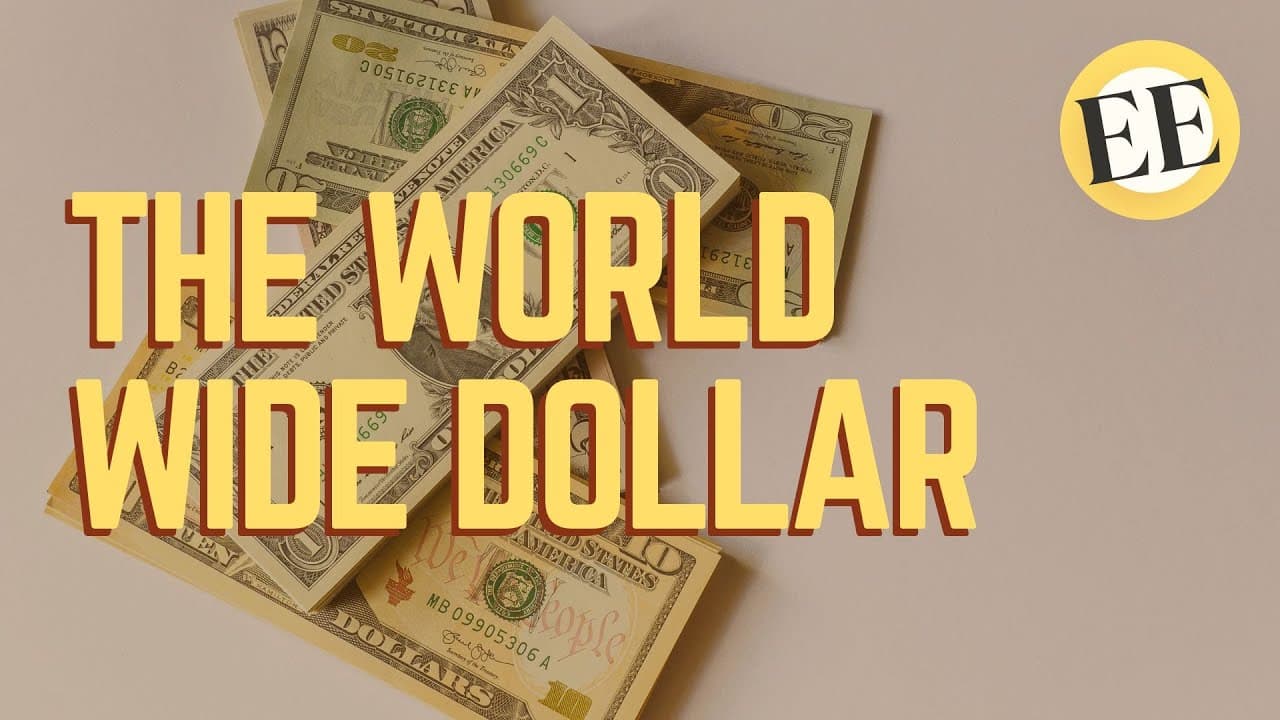
A universal currency could simplify global trade but poses challenges. While reducing foreign exchange risks and fostering economic collaboration, it risks economic instability due to lack of monetary control and political disagreements. The European Union's Euro offers a case study, highlighting both benefits and drawbacks, suggesting a global currency might not be feasible given current geopolitical climates.
Transcript
the world today is home to over 190 countries using 180 currencies to trade invest and collect taxes this is to say nothing of the up-and-comers like crypto currencies and age-old reserves like gold and silver the global economy is complex at the best of times and the foreign exchange or forex market only looks to add an additional layer of confusi... Read More
Key Insights
- A universal currency could eliminate foreign exchange risks, simplifying international trade and investment.
- The Euro serves as a case study, showing both the benefits of reduced trade friction and the risks of shared financial instability.
- Monetary control is a significant concern; countries might lose economic sovereignty and face difficulties in responding to local economic crises.
- A global central bank would be needed to manage such a currency, raising questions about governance and impartiality.
- Countries using a shared currency might face economic challenges if member countries have divergent economic policies or crises.
- Cryptocurrencies offer a decentralized alternative but face issues like limited supply and potential financial complexity.
- Financial systems evolve from barter to digital transactions, each step aimed at reducing trade friction and boosting economic growth.
- Despite potential benefits, geopolitical tensions and national interests make a single global currency unlikely.
Install to Summarize YouTube Videos and Get Transcripts
Explore YouTube Video Summarizer or Get YouTube Transcript Extractor
Questions & Answers
Q: How would a global currency affect international trade?
A global currency could streamline international trade by eliminating foreign exchange risks, making transactions simpler and more predictable. This could encourage cross-border commerce, as businesses would no longer need to hedge against currency fluctuations. However, it could also lead to challenges in monetary policy and economic sovereignty for individual countries, potentially causing economic instability if not managed carefully.
Q: What are the potential drawbacks of a single global currency?
The main drawbacks include loss of monetary control for individual countries, as they would no longer have the ability to adjust their own currency to respond to economic crises. Additionally, geopolitical tensions could arise over the management of the currency, and countries might face economic instability if member states have divergent fiscal policies or experience economic crises.
Q: How does the Euro illustrate the challenges of a shared currency?
The Euro shows that while a shared currency can reduce trade friction and foster economic collaboration, it also ties member countries' economies together. This can lead to shared financial instability, as seen in the European debt crisis, where economically stronger countries were affected by the financial troubles of weaker member states. It highlights the need for coordinated economic policies and the risks of economic divergence.
Q: Who would control a global currency?
A global currency would likely require a global central bank to manage it, which raises questions about governance, impartiality, and political influence. This entity would need to balance the economic interests of all participating countries, which could be challenging given differing national priorities and geopolitical tensions.
Q: Could cryptocurrencies serve as a global currency?
Cryptocurrencies offer a decentralized alternative to traditional currencies, potentially serving as a global medium of exchange. However, they face challenges such as limited supply, potential financial complexity, and the need for widespread adoption and infrastructure. Additionally, their volatility and current regulatory uncertainties make them less suitable as a stable global currency.
Q: What are the benefits of a universal currency?
A universal currency could simplify global trade by eliminating exchange rate risks, reducing transaction costs, and fostering economic collaboration. It could make international business more efficient and potentially increase global economic integration. However, these benefits must be weighed against the potential loss of economic sovereignty and the challenges of managing such a currency.
Q: Why might a global currency not be feasible?
A global currency might not be feasible due to geopolitical tensions, differing national interests, and the challenge of creating a fair and impartial governance structure. Countries may be reluctant to cede monetary control and risk economic instability, especially if member states have divergent fiscal policies or experience economic crises.
Q: How do financial systems evolve to reduce trade friction?
Financial systems have evolved from barter to digital transactions, each step aimed at reducing trade friction and boosting economic growth. Innovations like gold-backed currencies, fiat money, and electronic payment systems have made transactions easier and more efficient, facilitating trade and improving quality of life. Each evolution seeks to minimize barriers to exchange and enhance economic collaboration.
Summary & Key Takeaways
-
A global currency could ease trade by removing exchange rate risks, but it presents challenges like loss of monetary control and geopolitical tensions. The Euro's mixed success highlights potential advantages and drawbacks, questioning the feasibility of a worldwide currency.
-
Monetary control concerns arise with a global currency, as countries might struggle to manage local economic crises without independent currency policies, risking economic instability.
-
Cryptocurrencies, though decentralized, face challenges such as limited supply and potential financial complexity, suggesting they may not be the ideal solution for a universal currency system.
Read in Other Languages (beta)
Share This Summary 📚
Summarize YouTube Videos and Get Video Transcripts with 1-Click
Try YouTube Summary with ChatGPT & Claude or YouTube Transcript Generator
Explore More Summaries from Economics Explained 📚



Summarize YouTube Videos and Get Video Transcripts with 1-Click
Try YouTube Summary with ChatGPT & Claude or YouTube Transcript Generator