European Portuguese: The Secret to Understanding FAST Portuguese
TL;DR
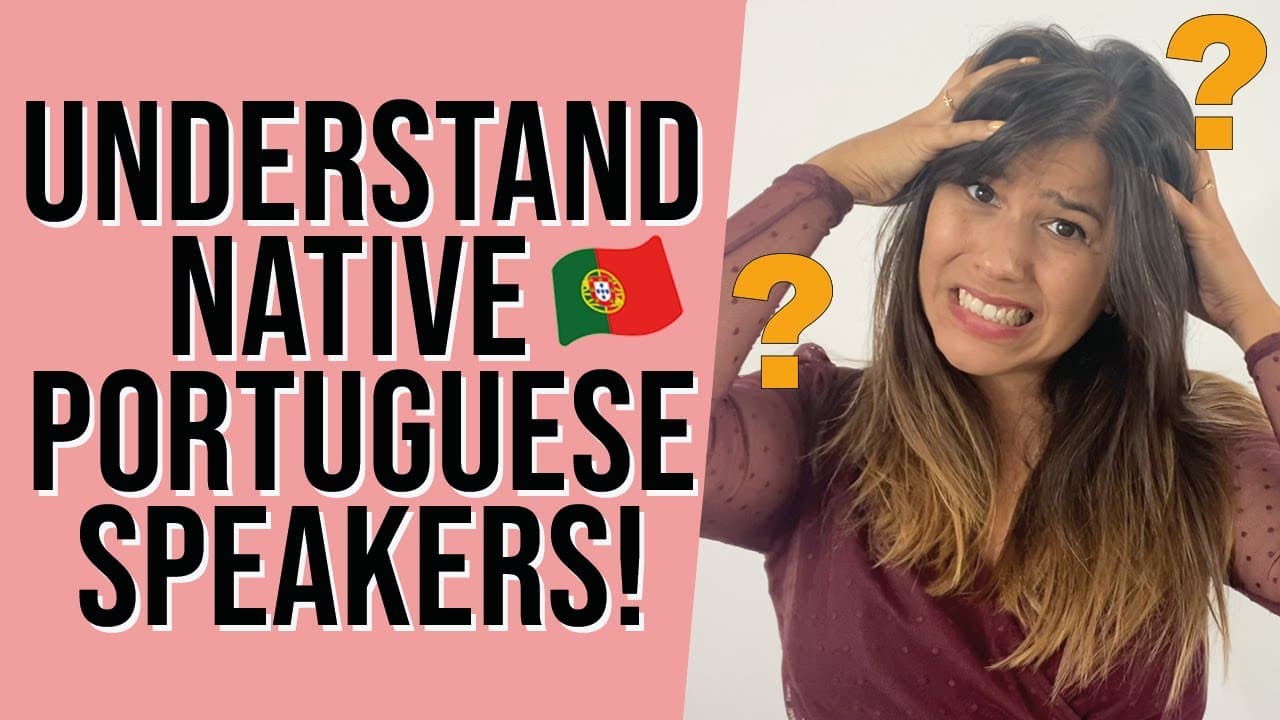
European Portuguese is stress-timed, making it hard to understand.
Transcript
Have you ever wondered why European Portuguese when spoken is so difficult to understand? The Portuguese drop and swallow sounds and words all over the place which makes it really difficult for people like you to be able to understand what's being said In this video I'm going to talk about why that is and some of the most common examples of wher... Read More
Key Insights
- European Portuguese is a stress-timed language, which means that certain syllables are stressed at regular intervals, causing other sounds to be reduced or swallowed.
- In contrast to Portuguese, Spanish is a syllable-timed language where all syllables are more evenly stressed, making it easier to hear each one clearly.
- Brazilian Portuguese is closer to a syllable-timed language, which is why many learners find it easier to understand compared to European Portuguese.
- Common phrases in European Portuguese often have reduced sounds, such as 'está' becoming 'tá' in casual speech, which can confuse learners expecting the full pronunciation.
- Native English speakers might find some similarities in the reduction of unstressed sounds, as English also reduces unstressed syllables.
- Training your ear to recognize these reduced sounds in Portuguese is crucial for improving listening comprehension and emulating native speech patterns.
- Understanding the nature of stress-timed languages can help learners anticipate which words might be reduced in spoken Portuguese.
- Additional learning resources, such as pronunciation guides and listening strategies, can further aid in mastering the nuances of European Portuguese.
Install to Summarize YouTube Videos and Get Transcripts
Explore YouTube Video Summarizer or Get YouTube Transcript Extractor
Questions & Answers
Q: Why is European Portuguese difficult to understand when spoken?
European Portuguese is difficult to understand because it is a stress-timed language. This means that certain syllables are stressed at regular intervals, while others are reduced or swallowed, making it challenging for learners to hear and understand all the words in fast conversations.
Q: How does European Portuguese differ from Spanish in terms of pronunciation?
European Portuguese differs from Spanish in that Portuguese is a stress-timed language, whereas Spanish is syllable-timed. In Spanish, all syllables are more evenly stressed, making them easier to hear. In contrast, Portuguese reduces unstressed syllables, which can make it sound faster and more difficult to understand.
Q: Why might Brazilian Portuguese be easier to understand than European Portuguese?
Brazilian Portuguese might be easier to understand because it is closer to a syllable-timed language compared to European Portuguese. This means that Brazilian Portuguese speakers tend to stress syllables more evenly, similar to Spanish, making it easier for learners to hear and comprehend each word in a sentence.
Q: What are some common phrases in Portuguese where sounds are reduced?
Common phrases in Portuguese where sounds are reduced include those with the word 'está,' which often becomes 'tá' in casual speech. This reduction occurs because the stress is placed on other syllables, leading to the unstressed sounds being swallowed or minimized, which can confuse learners expecting the full pronunciation.
Q: How can understanding stress-timed languages help learners of Portuguese?
Understanding stress-timed languages can help learners of Portuguese by allowing them to anticipate which words might be reduced in spoken language. This knowledge aids in recognizing patterns of speech where certain syllables are emphasized, and others are minimized, improving listening comprehension and the ability to mimic native speech patterns.
Q: What strategies can help improve listening skills in European Portuguese?
To improve listening skills in European Portuguese, learners should focus on training their ear to recognize reduced sounds and practice identifying stressed syllables. Utilizing additional resources like pronunciation guides, listening exercises, and language immersion can further enhance comprehension and the ability to understand native speakers.
Q: How does the video suggest learners can practice recognizing reduced sounds in Portuguese?
The video suggests that learners can practice recognizing reduced sounds in Portuguese by listening to native speakers and paying attention to which syllables are stressed and which are reduced. Engaging with spoken language resources, such as videos and audio exercises, can help learners become more familiar with the rhythm and patterns of stress-timed speech.
Q: What resources does the video offer for further learning in Portuguese?
The video offers several resources for further learning in Portuguese, including a free guide to improve pronunciation, online training for beginners, and additional videos on understanding native speakers. These resources provide practical tips and strategies to help learners enhance their listening skills and overall proficiency in European Portuguese.
Summary & Key Takeaways
-
European Portuguese is challenging to understand due to its stress-timed nature, where certain syllables are stressed, and others are reduced or swallowed. This video explains these linguistic features and provides examples to help learners recognize and adapt to these patterns in spoken Portuguese.
-
The video highlights differences between European Portuguese and Spanish, noting that Spanish is syllable-timed, making it easier to hear each syllable. This comparison helps learners understand why Portuguese might seem faster and more difficult to comprehend.
-
To improve listening skills in Portuguese, the video suggests focusing on recognizing reduced sounds and offers additional resources, such as pronunciation guides and listening strategies, to support learners in becoming more proficient in understanding native speakers.
Read in Other Languages (beta)
Share This Summary 📚
Summarize YouTube Videos and Get Video Transcripts with 1-Click
Try YouTube Summary with ChatGPT & Claude or YouTube Transcript Generator
Explore More Summaries from Talk the Streets 📚

![Practice Portuguese with Mixologist Fábio Guerreiro! [English & Portuguese Subtitles] thumbnail](/_next/image?url=https%3A%2F%2Fi.ytimg.com%2Fvi%2F1-T2PNWuiWY%2Fhqdefault.jpg&w=750&q=75)

Summarize YouTube Videos and Get Video Transcripts with 1-Click
Try YouTube Summary with ChatGPT & Claude or YouTube Transcript Generator