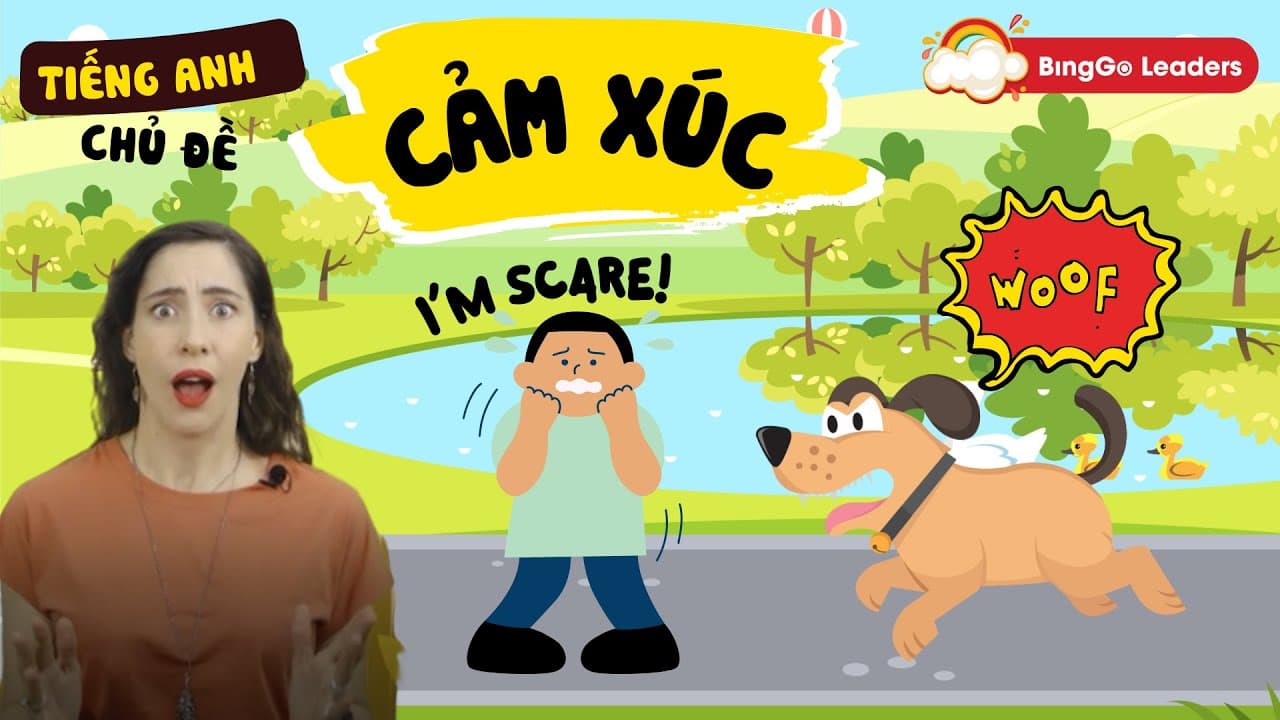
Nói về cảm xúc bằng tiếng Anh | Tiếng Anh cho trẻ em | Học tiếng Anh cho bé
TL;DR
Lisa teaches children how to express emotions in English.
Transcript
hello my beloved students i'm lisa from bingo leaders today i'm going to visit my friend lisa we always play together look at me how am i that's right h a p p y i'm happy guys when i ask how are you let's do a happy face and say i'm happy how are you i'm happy how are you i'm happy well done oh i think it's time to go do you want to play with us ye... Read More
Key Insights
- The video is designed to help children learn how to express various emotions in English through interactive play and repetition.
- Lisa, the host, uses simple and engaging scenarios to teach words like happy, sick, cold, tired, sad, hot, angry, and scared.
- The teaching method involves asking questions and encouraging children to respond with the correct emotional expression and spelling.
- Repetition is a key teaching tool in the video, helping children remember the emotions and their corresponding English words.
- The video emphasizes the importance of facial expressions in communicating emotions effectively in English.
- Lisa uses a narrative involving her friends and a dog to create a relatable context for learning emotions.
- The video encourages children to practice regularly by watching more lessons to improve their English skills.
- The content is part of a broader educational program offered by BingGo Leaders, focusing on English for young children.
Install to Summarize YouTube Videos and Get Transcripts
Explore YouTube Video Summarizer or Get YouTube Transcript Extractor
Questions & Answers
Q: What is the main objective of the video?
The main objective of the video is to teach children how to express and understand various emotions in English. Through interactive scenarios and repetition, the video aims to help young learners grasp the vocabulary associated with emotions, such as happy, sad, and scared, and use them in everyday conversations.
Q: How does Lisa engage children in learning emotions?
Lisa engages children by creating relatable scenarios where characters express different emotions. She uses interactive questions, encouraging children to respond with the correct emotion and spelling. This method, combined with repetition and facial expressions, makes learning engaging and helps children remember the vocabulary more effectively.
Q: What teaching methods are used in the video?
The video employs several teaching methods, including interactive questioning, repetition, and storytelling. Lisa encourages children to repeat after her and use facial expressions to convey emotions, reinforcing the learning process. These methods are designed to make the learning experience enjoyable and effective for young children.
Q: Why is repetition important in this video?
Repetition is crucial in this video because it helps reinforce the learning of new vocabulary. By repeatedly hearing and saying the words, children are more likely to remember them. This approach is particularly effective for young learners, as it aids in retention and encourages active participation in the learning process.
Q: What role does storytelling play in the video?
Storytelling plays a significant role in the video by providing a context for learning emotions. Lisa uses a narrative involving her friends and a dog to make the lesson relatable and engaging. This approach helps children understand how emotions are expressed in real-life situations, making the vocabulary more meaningful and easier to remember.
Q: How does the video encourage continuous learning?
The video encourages continuous learning by inviting children to watch more lessons and practice regularly. Lisa emphasizes that consistent practice will help them become proficient in English. This message is reinforced by the engaging format and the promise of more fun and educational content in future videos.
Q: What emotions are covered in the video?
The video covers a range of emotions, including happy, sick, cold, tired, sad, hot, angry, and scared. Each emotion is introduced through a scenario where a character expresses it, and children are encouraged to repeat the words and practice the corresponding facial expressions, reinforcing their understanding.
Q: What is the broader educational context of the video?
The video is part of BingGo Leaders' broader educational program aimed at teaching English to young children. It focuses on building foundational language skills through interactive and engaging content. The program offers various courses tailored to different age groups, promoting language development through fun and effective learning methods.
Summary & Key Takeaways
-
In this educational video, Lisa from BingGo Leaders teaches children how to express emotions in English. Through engaging scenarios, children learn words like happy, sick, and tired. Repetition and interactive questions help reinforce learning, making it easier for young learners to remember and use these words in daily life.
-
Lisa uses a mix of storytelling and interactive exercises to teach children how to identify and express emotions in English. The video emphasizes the importance of facial expressions and provides a fun way for kids to practice their English skills. It's part of a comprehensive program aimed at young learners.
-
The video is part of BingGo Leaders' initiative to teach English to young children. It uses simple scenarios to introduce emotional vocabulary, encouraging children to practice regularly. The engaging format and repetition help make learning effective and enjoyable, supporting children's language development.
Read in Other Languages (beta)
Share This Summary 📚
Summarize YouTube Videos and Get Video Transcripts with 1-Click
Try YouTube Summary with ChatGPT & Claude or YouTube Transcript Generator
Explore More Summaries from BingGo Leaders 📚




Summarize YouTube Videos and Get Video Transcripts with 1-Click
Try YouTube Summary with ChatGPT & Claude or YouTube Transcript Generator