Colonial Transportation Part 2
TL;DR
Spain's restrictive transport policies hindered trade in colonial Mexico.
Transcript
in part one we talked about spanish inattention to infrastructure and transportation in the new world in part two we're going to talk about mexico more specifically spain introduced an extremely restricted road system in mexico trade between mexico and spain was limited to two ports veracruz in mexico and sevilla spain in theory a convoy came once ... Read More
Key Insights
- Spain's restricted road system in Mexico limited trade to two ports: Veracruz and Sevilla, with convoys traveling annually.
- The discovery of rich silver mining areas north of Mexico City increased Spain's interest in developing transportation infrastructure.
- To facilitate silver transportation, Mexico developed large carts called 'cattle,' pulled by up to 16 mules, for heavy or bulky supplies.
- El Camino Real, or the King's Highway, linked Mexico City to northern mining towns, stretching to present-day northern New Mexico.
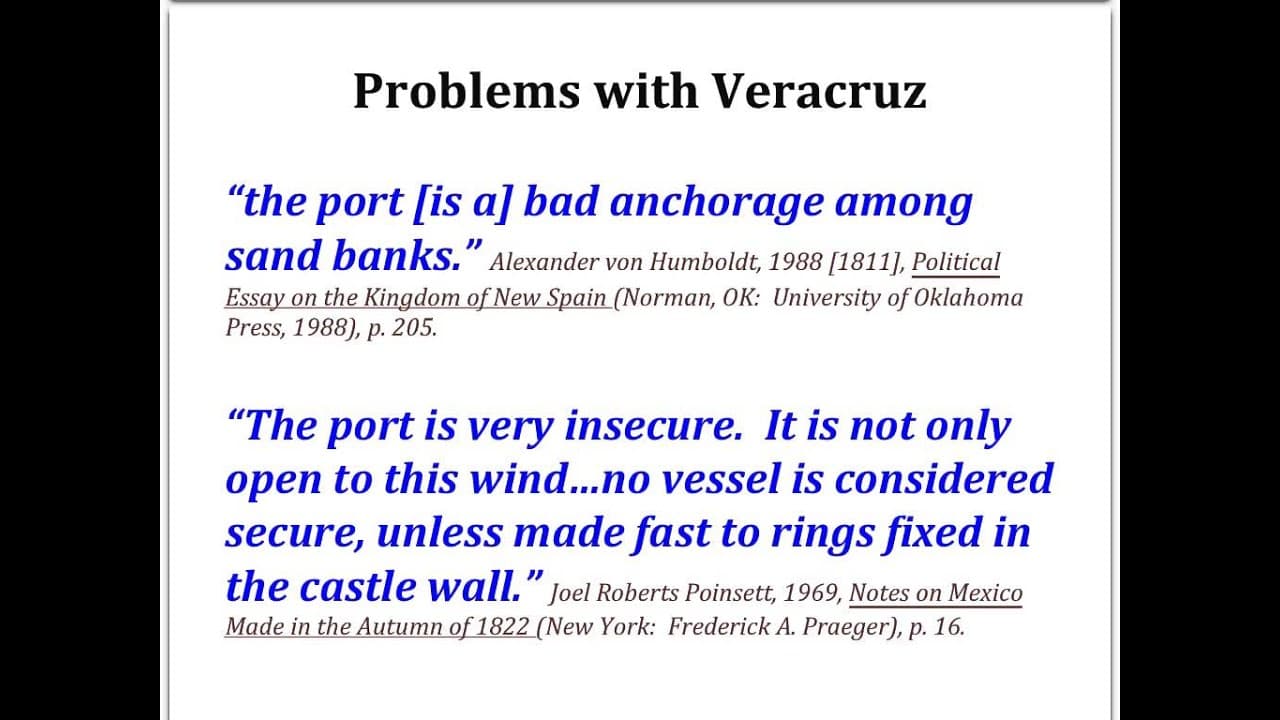
- Veracruz, the only legal Atlantic port for international trade, and its road to Mexico City were poorly maintained, impacting trade efficiency.
- Acapulco was considered one of the finest ports, but its road to Mexico City was perilous, taking up to a month to travel.
- Spain's restrictive transport policies aimed to prevent silver smuggling and maintain control over trade routes and taxation.
- Despite restrictions, smuggling persisted, with unminted silver flowing from South America through Mexico to Asia for trade.
Install to Summarize YouTube Videos and Get Transcripts
Explore YouTube Video Summarizer or Get YouTube Transcript Extractor
Questions & Answers
Q: Why was Spain interested in developing transportation infrastructure in Mexico?
Spain's interest in developing transportation infrastructure in Mexico was primarily driven by the discovery of rich silver mining areas north of Mexico City. These discoveries necessitated efficient transport of silver from mines to be minted in Mexico City, prompting the development of roads and large carts to facilitate this process.
Q: What were the main transportation routes in colonial Mexico?
The main transportation routes in colonial Mexico included El Camino Real, which connected Mexico City to northern mining towns, and roads linking Mexico City to the ports of Veracruz and Acapulco. These routes were crucial for transporting silver and other goods, despite the challenges posed by terrain and maintenance.
Q: How did Mexico address the transportation of silver from mines?
To address the transportation of silver from mines, Mexico developed large carts called 'cattle,' pulled by up to 16 mules, to carry heavy or bulky supplies. This system facilitated the movement of silver and other goods from mining areas to Mexico City, despite the challenging terrain and infrastructure limitations.
Q: What challenges did the port of Veracruz face?
The port of Veracruz faced several challenges, including poor anchorage and maintenance. The road linking Veracruz to Mexico City was also problematic, having to traverse two mountain ranges with steep and narrow paths, making it difficult for efficient trade and transport between the port and the capital.
Q: Why was Acapulco considered a significant port?
Acapulco was considered a significant port due to its favorable location and natural harbor, which Alexander von Humboldt described as one of the finest in the known world. Although the road to Mexico City was perilous, Acapulco's proximity to the capital made it a key point for trade, especially with Asia.
Q: What were Spain's reasons for restrictive transportation policies?
Spain's restrictive transportation policies were motivated by a desire to control trade routes and prevent silver smuggling. By limiting routes and ports, Spain aimed to ensure that silver and other goods were taxed and transported through official channels, maintaining economic and political control over the region.
Q: How did smuggling affect Spain's transportation policies?
Despite Spain's restrictive transportation policies, smuggling persisted, undermining official trade routes. Unminted silver from South America often flowed through Mexico to Asia, bypassing Spanish taxation and control. This ongoing smuggling highlighted the limitations and inefficacy of Spain's attempts to regulate trade in the region.
Q: What impact did transportation infrastructure have on colonial Mexico's economy?
Transportation infrastructure had a significant impact on colonial Mexico's economy by facilitating the movement of silver and other goods, despite its limitations. Poorly maintained roads and restricted routes hindered efficient trade, but the development of key routes like El Camino Real and ports like Acapulco played crucial roles in economic activities.
Summary & Key Takeaways
-
Spain introduced a restrictive road system in colonial Mexico, limiting trade to two ports, Veracruz and Sevilla, with annual convoys. The discovery of rich silver mining areas north of Mexico City prompted the development of transportation infrastructure, including large carts and roads, to facilitate silver transport.
-
El Camino Real connected Mexico City to northern mining towns, while Veracruz and Acapulco served as key ports. However, poor maintenance and challenging terrain hindered efficient trade. Spain's restrictive transport policies aimed to prevent smuggling and maintain control over trade routes and taxation.
-
Despite Spain's efforts, smuggling persisted, with unminted silver flowing from South America through Mexico to Asia. These challenges highlight the complexities of colonial transportation and trade in Mexico, shaped by Spain's policies and infrastructure limitations.
Read in Other Languages (beta)
Share This Summary 📚
Summarize YouTube Videos and Get Video Transcripts with 1-Click
Try YouTube Summary with ChatGPT & Claude or YouTube Transcript Generator
Explore More Summaries from Marginal Revolution University 📚

Summarize YouTube Videos and Get Video Transcripts with 1-Click
Try YouTube Summary with ChatGPT & Claude or YouTube Transcript Generator