The Fruit That Could Treat Parkinson's Disease?
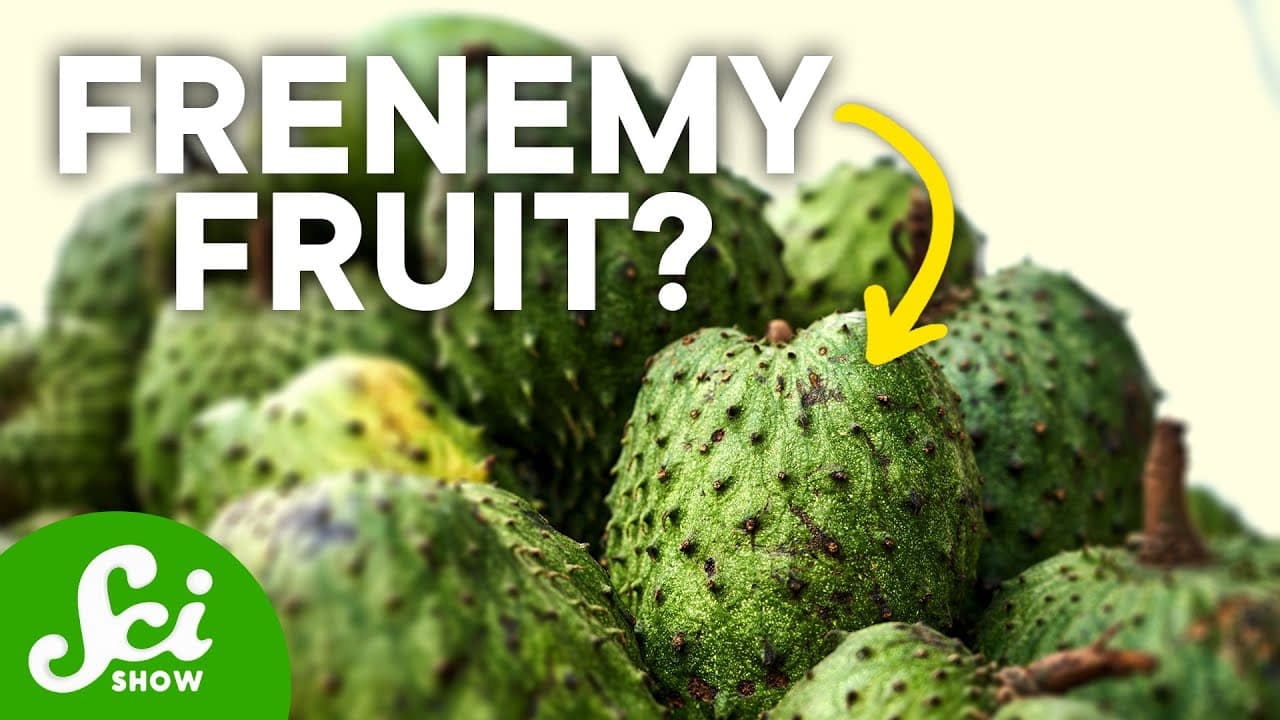
TL;DR
Soursop fruit, also known as graviola, may contain a neurotoxin called annonacin, which can induce cell death in dopamine neurons, potentially leading to Parkinson's disease. However, other chemicals found in soursop, called tryptamine-derived alkaloids, show promise in protecting dopamine neurons and could be used in the treatment of Parkinson's.
Transcript
Thanks to Brilliant for supporting this episode of SciShow. Go to Brilliant.org/SciShow to check out their course on Cryptocurrency. [♪♪♪Intro♪♪♪] In the 1990s, doctors noticed something unusual happening in the islands of Guadeloupe, Guam and New Caledonia, as well as in Caribbean communities in the UK. Patients were presenting with stiffness, dif... Read More
Key Insights
- 🤙 Soursop fruit, when consumed, may contain a neurotoxin called annonacin, which can harm dopamine-producing neurons.
- 🤙 However, other chemicals in soursop called tryptamine-derived alkaloids have shown protective effects on dopamine neurons and may be used in Parkinson's treatment.
- 🥳 Studies involving rats have shown brain lesions after injections of annonacin, but the effects of consuming soursop fruit in humans may differ.
- 🛀 PPQ, a molecule synthesized from soursop compounds, has shown promise in counteracting the loss of dopamine cells in a mouse model of Parkinson's.
Install to Summarize YouTube Videos and Get Transcripts
Explore YouTube Video Summarizer or Get YouTube Transcript Extractor
Questions & Answers
Q: What symptoms were observed in patients who consumed soursop fruit?
Patients presented with stiffness, difficulty with movement, dementia, as well as tremors and hallucinations, similar to Parkinson's disease.
Q: What is the neurotoxin found in soursop responsible for harming dopamine neurons?
The neurotoxin is called annonacin, which has been found in both the root bark and the fruit of soursop.
Q: Do studies involving rats confirm the neurotoxic effects of soursop?
While studies on rats have shown brain lesions after injections of annonacin, it is worth noting that rats may not respond to toxins in the same way humans do.
Q: Are there any potential treatments for Parkinson's disease derived from soursop?
Yes, tryptamine-derived alkaloids found in soursop have shown promise in protecting dopamine neurons. A molecule called PPQ, synthesized from soursop compounds, has shown potential in counteracting the loss of dopamine cells in a mouse model of Parkinson's.
Summary & Key Takeaways
-
Doctors observed patients in certain communities presenting with symptoms similar to Parkinson's disease, which were linked to their consumption of soursop fruit.
-
A neurotoxin called annonacin found in soursop has been shown to induce cell death in dopamine neurons.
-
However, other chemicals in soursop, called tryptamine-derived alkaloids, have protective effects on dopamine neurons and could potentially be used in Parkinson's treatment.
Read in Other Languages (beta)
Share This Summary 📚
Summarize YouTube Videos and Get Video Transcripts with 1-Click
Try YouTube Summary with ChatGPT & Claude or YouTube Transcript Generator
Explore More Summaries from SciShow 📚


Summarize YouTube Videos and Get Video Transcripts with 1-Click
Try YouTube Summary with ChatGPT & Claude or YouTube Transcript Generator