Mark Sievers Penalty Phase - Jury Instructions, Charge & Alternates Reliesed, Plus 1st Question
TL;DR
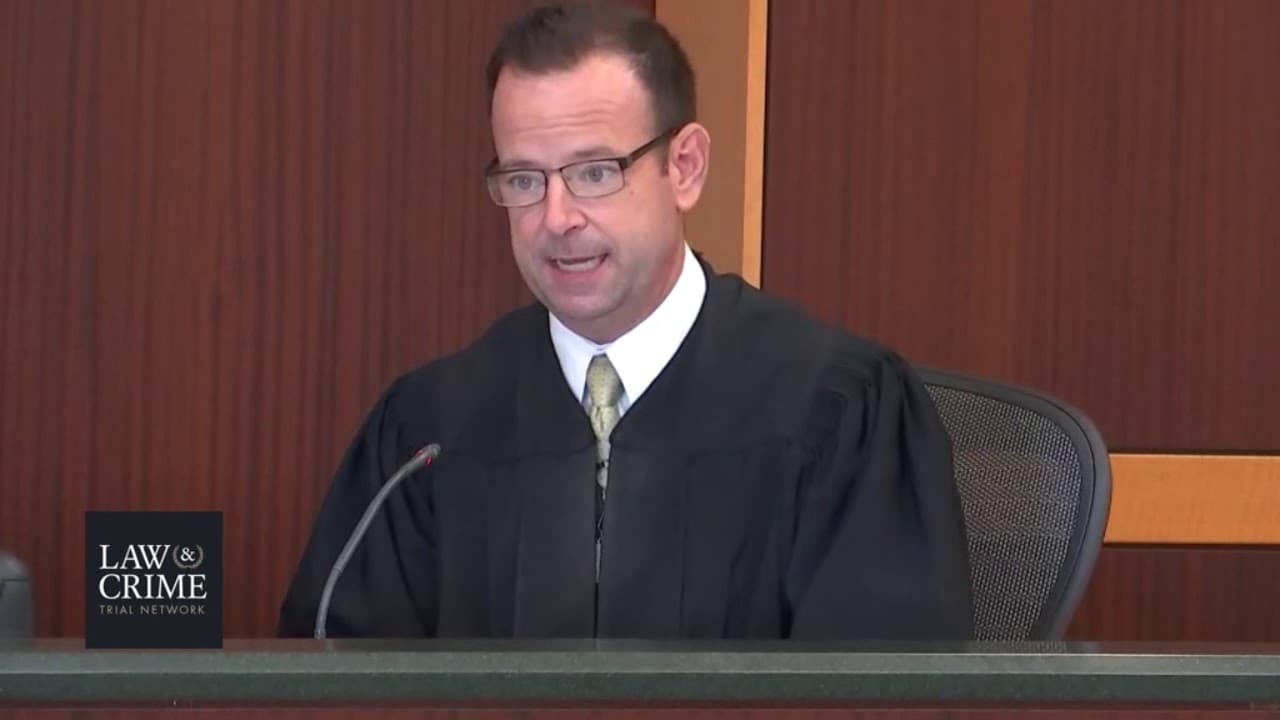
Jury receives detailed instructions for determining sentence in a first-degree murder case.
Transcript
members of the jury you have heard all the evidence in the argument of counsel it is now your duty to make a decision as to the appropriate sentence that should be imposed upon the defendant for the crime of first-degree murder I'm gonna send these instructions back with you so you don't have to take notes on these as well there are two possible pu... Read More
Key Insights
- 🧑🏭 Jury must carefully consider aggravating factors and mitigating circumstances in determining the sentence.
- 😌 The burden of proof lies with the state to establish aggravating factors beyond a reasonable doubt.
- 🛟 Mitigating circumstances can include aspects of the defendant's character, background, or life.
- 😒 Jurors should rely on reliable evidence and use common sense in evaluating witness testimony.
- 🎁 The jury's decisions should be based solely on the evidence presented in court, following the instructions provided.
- ❓ Jury must avoid being influenced by personal feelings, prejudice, or bias in reaching their verdict.
- 🤵 Communication rules are strict and jurors must only discuss the case with each other in the jury room.
Install to Summarize YouTube Videos and Get Transcripts
Explore YouTube Video Summarizer or Get YouTube Transcript Extractor
Questions & Answers
Q: What factors must the jury consider before deciding on the appropriate sentence in a first-degree murder case?
The jury must first unanimously determine if aggravating factors have been proven beyond a reasonable doubt, such as financial gain or premeditation. They must also weigh any mitigating circumstances that may support a sentence of life imprisonment.
Q: How does the jury evaluate the impact of the murder on the victim's family and friends during sentencing?
While the impact of the murder on the victim's loved ones may be presented as evidence, the jury cannot consider it as an aggravating factor. The focus is on the proven aggravating factors and mitigating circumstances.
Q: What level of reflection is required to demonstrate premeditation in a first-degree murder case?
The premeditated intent to kill must be formed before the killing, with a substantial period of reflection demonstrating a level of premeditation that goes beyond a mere decision to kill.
Q: How does the jury determine whether the aggravating factors outweigh the mitigating circumstances during sentencing?
Each juror must individually assign weight to the aggravating factors and mitigating circumstances, as the process is not a mechanical or mathematical one. A unanimous decision is required if death penalty is to be imposed.
Summary & Key Takeaways
-
Jury must decide between life imprisonment without parole or death penalty for first-degree murder.
-
Aggravating factors must be proven beyond a reasonable doubt for the death penalty.
-
Mitigating circumstances can be considered to support life imprisonment.
Read in Other Languages (beta)
Share This Summary 📚
Summarize YouTube Videos and Get Video Transcripts with 1-Click
Try YouTube Summary with ChatGPT & Claude or YouTube Transcript Generator
Explore More Summaries from Law&Crime Network 📚





Summarize YouTube Videos and Get Video Transcripts with 1-Click
Try YouTube Summary with ChatGPT & Claude or YouTube Transcript Generator