12. Machine Learning for Pathology
TL;DR
Machine learning is revolutionizing pathology by improving diagnosis accuracy, predicting treatment response, and enabling personalized medicine.
Transcript
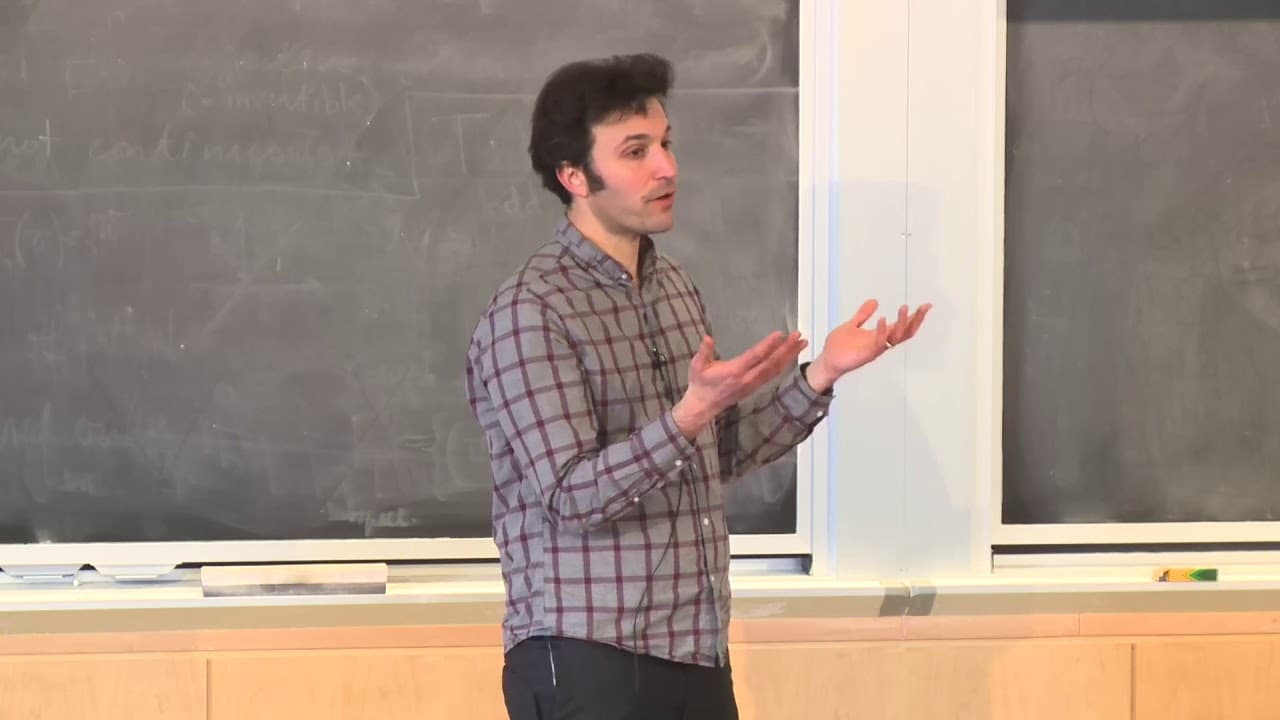
PROFESSOR: All right, everyone, so we are very happy to have Andy Beck as our invited speaker today. Andy has a very unique background. He's trained both as a computer scientist and as a clinician. His specialty is in pathology. When he was a student at Stanford, his thesis was on how one could use machine learning algorithms to really understand a... Read More
Key Insights
- 😨 Machine learning is being used in pathology to augment the role of pathologists and improve patient care.
- 💁 Pathology data, including images and genomic information, can be leveraged to develop models that predict treatment response and guide personalized medicine.
- 🥹 The integration of machine learning with pathology holds great promise for improving diagnostic accuracy and patient outcomes.
- ✋ Challenges remain in obtaining high-quality data, validating models, and ensuring interpretability, but research and development efforts continue to advance the field.
Install to Summarize YouTube Videos and Get Transcripts
Explore YouTube Video Summarizer or Get YouTube Transcript Extractor
Questions & Answers
Q: What is the role of machine learning in pathology?
Machine learning is being used in pathology to improve diagnostic accuracy, predict treatment response, and assist pathologists in complex tasks like cancer detection and evaluation of immune response.
Q: How are machine learning models trained in pathology?
Machine learning models in pathology are trained using large datasets, including pathology images, genomic information, and clinical outcomes. These models learn patterns and associations within the data to make predictions and aid in decision-making.
Q: What are the challenges in applying machine learning to pathology?
Some challenges in applying machine learning to pathology include the need for large, well-curated datasets, validation of the models, and integration of complex data sources like images and genomic information. Additionally, the interpretability of the models is a key concern in the medical field.
Q: How can machine learning benefit patient care in pathology?
Machine learning in pathology can improve the accuracy of diagnosis, aid in patient stratification, guide treatment decisions, and enable personalized medicine. It has the potential to reduce errors, standardize practices, and improve patient outcomes.
Summary & Key Takeaways
-
Machine learning is being applied in pathology to improve diagnostic accuracy, especially in challenging tasks like cancer detection and evaluation of immune response.
-
Pathology data, including images and genomic information, is being used to develop models that can predict treatment response and guide personalized medicine.
-
Integration of machine learning with pathology is still in the early stages, but it holds great promise for improving patient outcomes.
Read in Other Languages (beta)
Share This Summary 📚
Summarize YouTube Videos and Get Video Transcripts with 1-Click
Try YouTube Summary with ChatGPT & Claude or YouTube Transcript Generator
Explore More Summaries from MIT OpenCourseWare 📚



Summarize YouTube Videos and Get Video Transcripts with 1-Click
Try YouTube Summary with ChatGPT & Claude or YouTube Transcript Generator