How To Combine LEADING & LAGGING Indicators (Best Trading Indicators for Beginners)
TL;DR
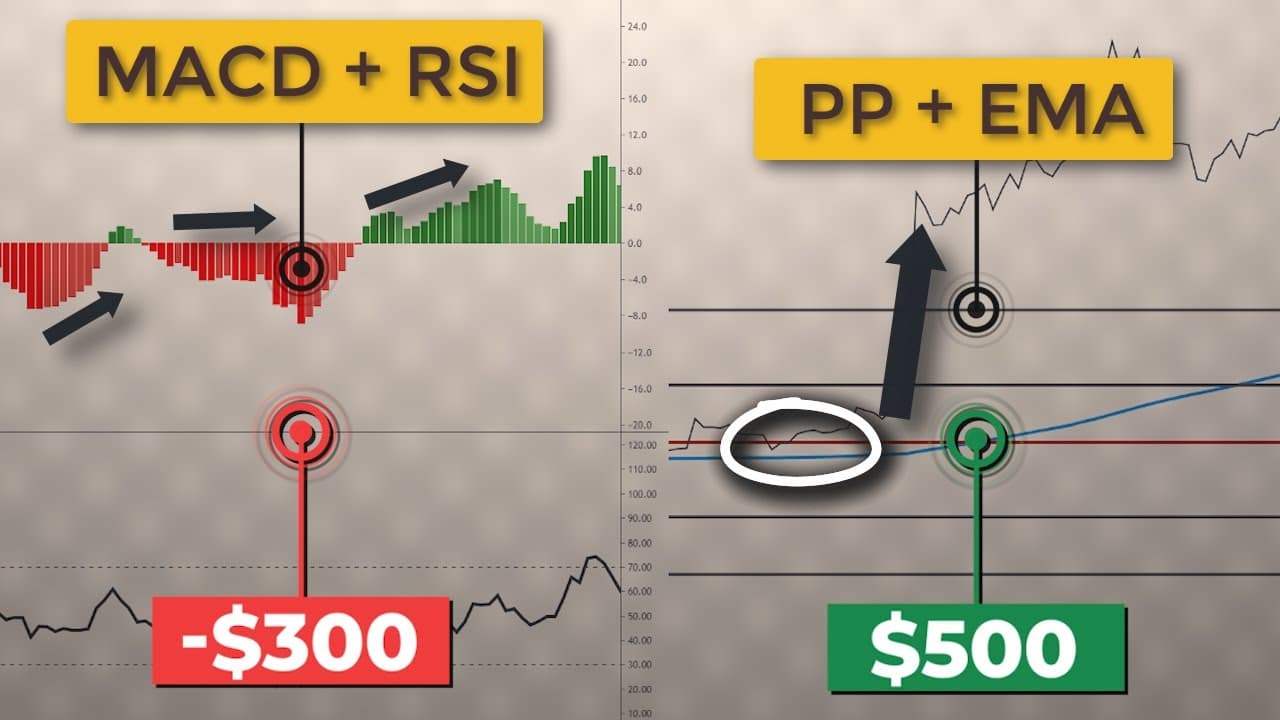
Leading indicators predict future market movements, while lagging indicators confirm trends that are already happening.
Transcript
Many traders and investors use indicators to spot market patterns and trends and most of these indicators fall into two types: leading and lagging. A leading indicator is a tool designed to anticipate the future direction of a market, in order to enable traders to predict market movements ahead of time. In theory, if a leading indicator gives the c... Read More
Key Insights
- 🥺 Leading indicators predict future market movements, while lagging indicators confirm trends that are already happening.
- 🥺 Leading indicators can be useful for short-term traders, but they are prone to giving out false signals.
- ™️ Lagging indicators provide traders with more confidence by validating their trade decisions.
- 🐢 Lagging indicators are slower to react, which means traders might enter the market later.
- 🎏 Almost every technical indicator is a lagging indicator, as they give signals after the price has already moved.
- 🥺 Leading indicators, such as pivot points and Fibonacci retracements, allow traders to anticipate future price moves.
- 🥺 It is best to develop a trading strategy that combines both leading and lagging indicators for a more balanced approach.
Install to Summarize YouTube Videos and Get Transcripts
Explore YouTube Video Summarizer or Get YouTube Transcript Extractor
Questions & Answers
Q: What is the main difference between leading and lagging indicators?
The main difference is that leading indicators predict future market movements, while lagging indicators confirm trends that are already happening.
Q: Why are leading indicators prone to giving out false signals?
Leading indicators react to prices quickly, which can be great for short-term traders. However, this also makes them prone to giving out false signals.
Q: How do lagging indicators confirm price trends?
Lagging indicators analyze previous price action data and provide delayed feedback. They don't predict future price moves, but confirm that a trend is already underway.
Q: Are lagging indicators considered more accurate than leading indicators?
Lagging indicators are slower to react, which means they can provide more accuracy in confirming price trends. However, traders using lagging indicators might enter the market later.
Summary & Key Takeaways
-
Traders and investors use indicators to spot market patterns and trends, which can be categorized into leading and lagging indicators.
-
Leading indicators are designed to anticipate future market movements, allowing traders to potentially enter trades at the start of a move.
-
Lagging indicators provide delayed feedback and confirm price trends that are already taking place.
Read in Other Languages (beta)
Share This Summary 📚
Summarize YouTube Videos and Get Video Transcripts with 1-Click
Try YouTube Summary with ChatGPT & Claude or YouTube Transcript Generator
Explore More Summaries from The Secret Mindset 📚



Summarize YouTube Videos and Get Video Transcripts with 1-Click
Try YouTube Summary with ChatGPT & Claude or YouTube Transcript Generator