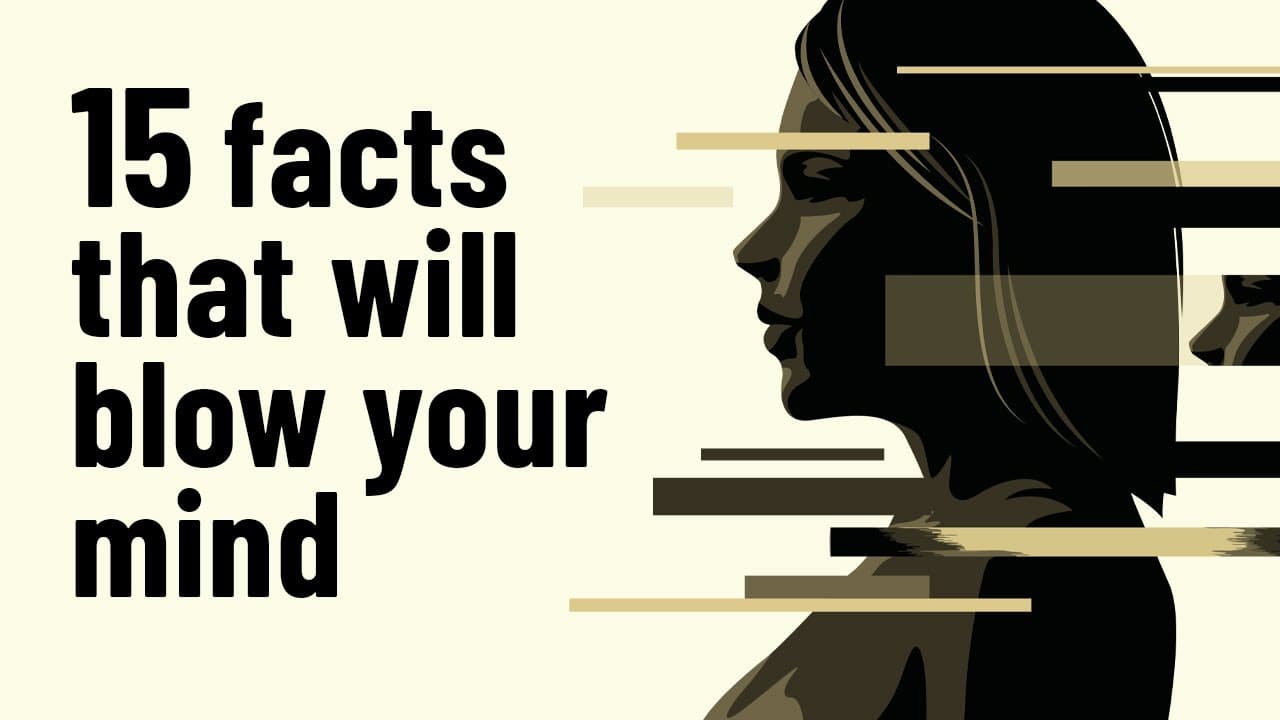
15 Psychological Facts That Will Blow Your Mind
TL;DR
Learn fascinating psychological facts that explain human behavior, including the impact of backup plans, contagious yawns, and our preference for single-person tragedies.
Transcript
Brainy Dose Presents: 15 Psychological Facts That Will Blow Your Mind! The field of psychology looks at the science of the mind and behavior. Studies trying to understand why we are the way we are have been going on for decades and will continue into the future. We're learning more and more each day, but there's still so much we don't know. Some st... Read More
Key Insights
- 🌱 Backup plans can hinder success and motivation.
- 🥱 Yawning is contagious and demonstrates empathy.
- 🌥️ People are more likely to donate to individual causes rather than large-scale problems.
- ❤️🩹 We remember the beginnings and ends of events better than the middle.
- ❓ Focusing on positive things can counteract the negativity bias.
- 😋 Food tastes better when someone else prepares it.
- 🧠 Certainty is preferred over uncertainty in the human brain.
- 🥺 Reactance can lead to rule-breaking behavior.
- ⚖️ Cute aggression balances overwhelming positive feelings.
- ❓ Confirmation bias influences what we believe.
- 🎼 Music we connect with during adolescence has a lasting impact.
- 🕰️ Our memories are not always accurate and can be pieced together.
- 😀 Pareidolia causes us to see faces in random patterns.
- 🥺 High expectations can lead to improved performance.
Install to Summarize YouTube Videos and Get Transcripts
Explore YouTube Video Summarizer or Get YouTube Transcript Extractor
Questions & Answers
Q: How does having a backup plan affect motivation and success?
Having a backup plan can decrease motivation and success by creating a mindset that failure is expected, leading to less effort and dedication.
Q: Why do we yawn when someone else yawns?
Yawning is contagious and demonstrates empathy. It is a subconscious response triggered by seeing others yawn, which activates mirror neurons in the brain.
Q: Why are people more likely to donate when presented with an individual's suffering rather than statistics?
People feel more compelled to help when faced with the plight of a single person because it feels more attainable and impactful than attempting to solve a larger problem.
Q: Why do we remember the beginning and end of events better than the middle?
This phenomenon, known as the serial-position effect, occurs because we pay more attention to information at the beginning and end, which leads to better recall.
Q: How can we counteract the negativity bias?
By focusing on five positive things for every negative thing, we can counteract the tendency to ruminate on negativity and cultivate a more balanced perspective.
Q: Why does food taste better when someone else prepares it?
Food tastes better when someone else makes it because there is an element of surprise and anticipation, making the experience more enjoyable.
Q: Why do our brains prefer knowing something bad is coming rather than feeling uncertain?
The brain prefers certainty as it allows for the prediction of future outcomes. Uncertainty triggers anxiety and cognitive overload as the brain tries to anticipate all possible consequences.
Q: How does reactance affect rule-breaking behavior?
Reactance occurs when individuals feel their freedom is being limited. This can lead to a desire to regain perceived freedoms by breaking rules or engaging in rebellious behavior.
Key Insights:
- Backup plans can hinder success and motivation.
- Yawning is contagious and demonstrates empathy.
- People are more likely to donate to individual causes rather than large-scale problems.
- We remember the beginnings and ends of events better than the middle.
- Focusing on positive things can counteract the negativity bias.
- Food tastes better when someone else prepares it.
- Certainty is preferred over uncertainty in the human brain.
- Reactance can lead to rule-breaking behavior.
- Cute aggression balances overwhelming positive feelings.
- Confirmation bias influences what we believe.
- Music we connect with during adolescence has a lasting impact.
- Our memories are not always accurate and can be pieced together.
- Pareidolia causes us to see faces in random patterns.
- High expectations can lead to improved performance.
- Short-term deadlines are prioritized by the brain over long-term ones.
Summary & Key Takeaways
-
Having a backup plan can decrease motivation and hinder success.
-
Yawning is contagious and demonstrates empathy.
-
People are more likely to donate when presented with an individual's suffering rather than statistics about a larger problem.
-
We remember the beginnings and ends of events better than the middle.
-
Focusing on five positive things can counteract the negativity bias.
-
Food tastes better when someone else prepares it.
-
We prefer to know something bad is coming rather than facing uncertainty.
-
Reactance causes people to break rules as a way to reclaim perceived freedoms.
-
The response to wanting to squeeze cute things is known as cute aggression.
-
Confirmation bias leads us to believe what we want to believe.
-
We form stronger connections with music we listened to during our teenage years.
-
Our memories are not always accurate, as our brain may fill in gaps.
-
Pareidolia causes us to see faces in inanimate objects.
-
High expectations can lead to improved performance, known as the Pygmalion Effect.
-
Our brains prioritize short-term deadlines over long-term ones.
Read in Other Languages (beta)
Share This Summary 📚
Summarize YouTube Videos and Get Video Transcripts with 1-Click
Try YouTube Summary with ChatGPT & Claude or YouTube Transcript Generator
Explore More Summaries from BRAINY DOSE 📚



Summarize YouTube Videos and Get Video Transcripts with 1-Click
Try YouTube Summary with ChatGPT & Claude or YouTube Transcript Generator