Why Did It Take Us So Long?
TL;DR
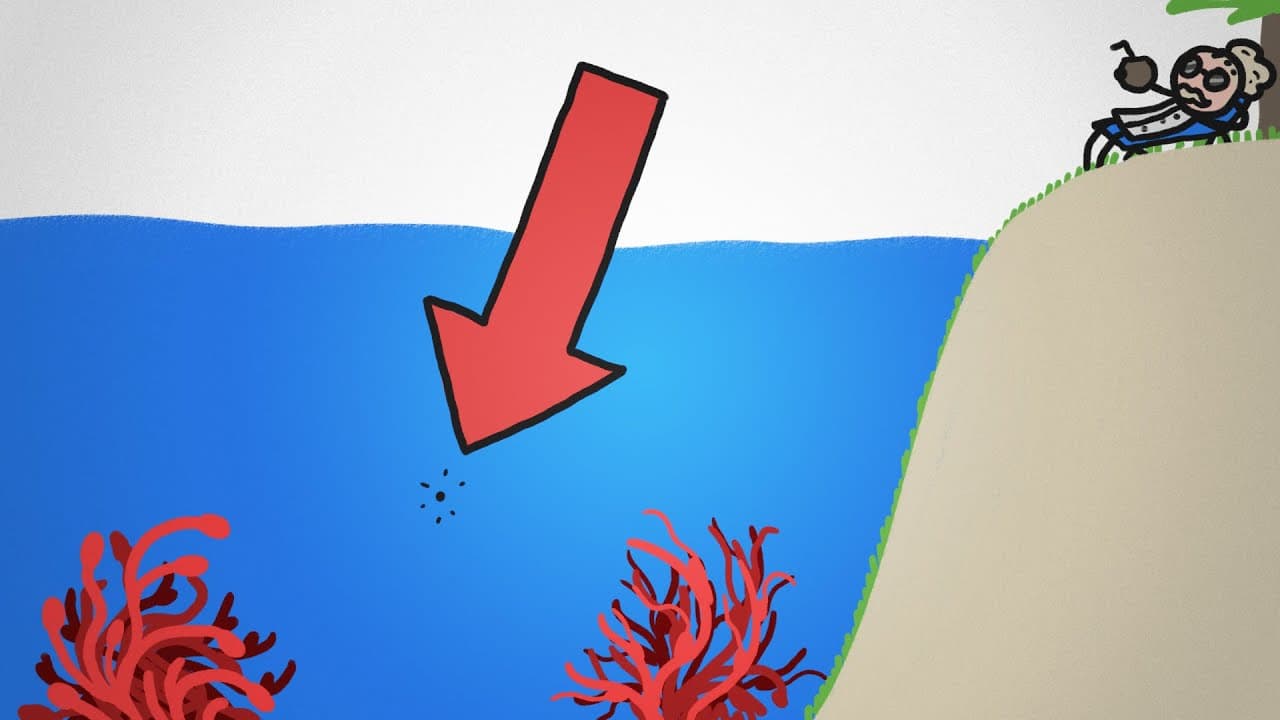
Animal pollination, previously thought to only occur above water, has been discovered to also happen underwater with the help of tiny crustaceans and worms.
Transcript
We thought we had a pretty good grasp on plant sex… and then these little critters came along. Hi, I’m Kate and this is MinuteEarth. We’ve known for… well, for a long time that animals often move pollen from flower to flower, fertilizing plants. All sorts of critters pollinate all sorts of plants, but as far as scientists knew, this process only ha... Read More
Key Insights
- 🤔 Animal pollination, previously thought to only occur on land, has been discovered to happen underwater.
- 🧑🏭 Itty-bitty crustaceans and worms act as pollinators for certain seagrasses and seaweeds.
- ❓ The physics and timeline of underwater animal pollination posed challenges for researchers.
- 💦 Most underwater pollination is still believed to occur through water motion, making animal pollination a relatively minor phenomenon.
- 🤗 The discovery challenges scientific assumptions and emphasizes the need for open-mindedness in scientific research.
- 😮 Nature continues to surprise us, reminding us that scientific understanding is shaped by human perspectives.
- ❓ The discovery expands our knowledge of pollination and highlights the intricacies of underwater ecosystems.
Install to Summarize YouTube Videos and Get Transcripts
Explore YouTube Video Summarizer or Get YouTube Transcript Extractor
Questions & Answers
Q: How did scientists discover that animal pollination occurs underwater?
Scientists made the discovery in 2016 by observing that certain seagrasses and seaweeds were being pollinated by tiny crustaceans and worms.
Q: What are these tiny underwater pollinators?
The tiny pollinators are itty-bitty crustaceans and worms that transfer sticky, mucus-y pollen, known as spermatia, between the reproductive organs of seagrasses and seaweeds.
Q: Why was there a gap in our knowledge about underwater animal pollination?
The physics of pollination underwater seemed unlikely, and it was assumed that pollen moved primarily through water motion. Additionally, the small size of the underwater flowers made it difficult to observe the process.
Q: How significant is underwater animal pollination ecologically?
While most underwater pollination likely occurs through the motion of water, the existence of animal pollination underwater challenges scientific dogma and forces researchers to reconsider their assumptions.
Summary & Key Takeaways
-
Animals are known to transfer pollen from flower to flower, but until recently, it was believed to only happen on land.
-
In 2016, researchers found that certain seagrasses and seaweeds are also pollinated by underwater animals.
-
The discovery challenges previous assumptions, highlighting the need for scientists to reevaluate their understanding of pollination.
Read in Other Languages (beta)
Share This Summary 📚
Summarize YouTube Videos and Get Video Transcripts with 1-Click
Try YouTube Summary with ChatGPT & Claude or YouTube Transcript Generator
Explore More Summaries from MinuteEarth 📚





Summarize YouTube Videos and Get Video Transcripts with 1-Click
Try YouTube Summary with ChatGPT & Claude or YouTube Transcript Generator