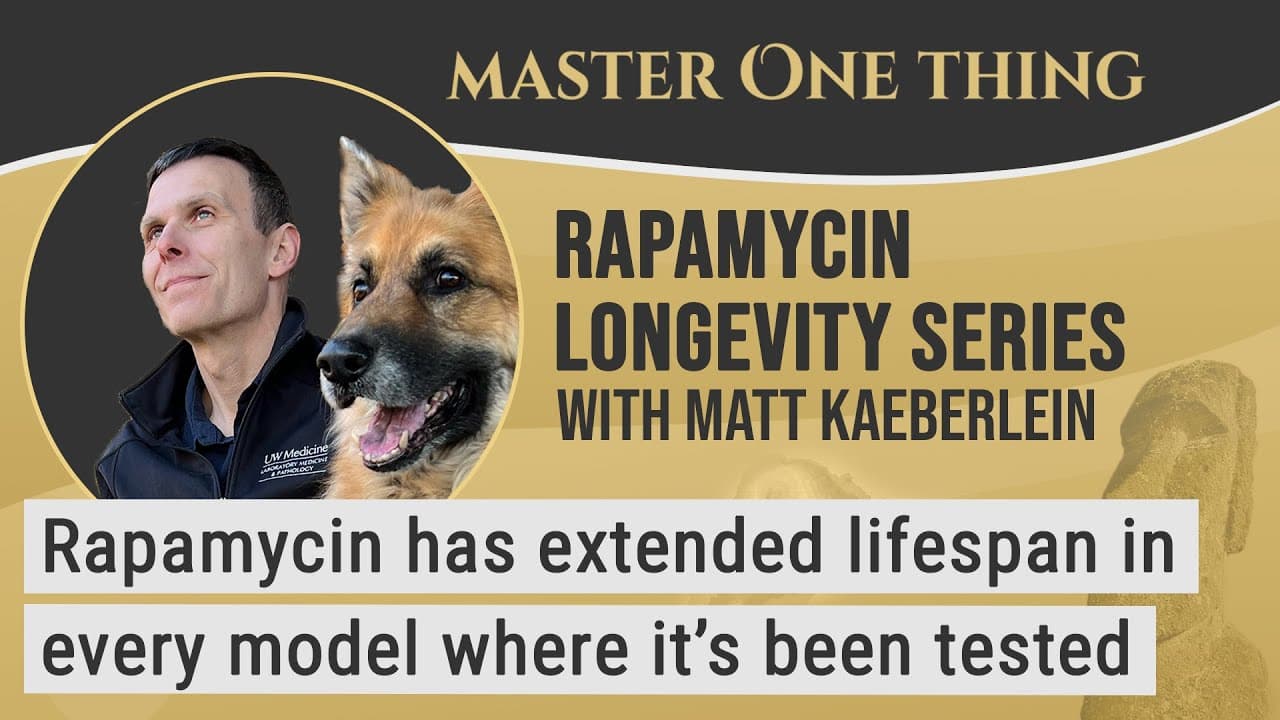
Matt Kaeberlein on Rapamycin Longevity Series | Lessons learned from 2 decades of Rapamycin research
TL;DR
Rapamycin, a potent inhibitor of mTOR, has been found to influence lifespan and healthspan across various species, including yeast, worms, flies, mice, and potentially dogs. Its effects on aging include delaying age-related changes, reversing some aspects of aging in tissues and organs, modulating the immune system, and potentially increasing lifespan and healthspan.
Transcript
foreign thing today we have the honor to have Dr Matt cable and from the University of Washington as our guest in the podcast Matt is one of the words leading researchers in the rapamycin field and has done rapamycin research for two decades on multiple species everything from yeast warms mice and also dogs and humans so Matt they have done a big c... Read More
Key Insights
- 🤕 Rapamycin was discovered through an unbiased genetic screen in yeast as a potential longevity regulator and subsequent research demonstrated its effects on mTOR and aging across different species.
- 🤵 Rapamycin extends lifespan and healthspan in yeast, worms, flies, mice, and potentially dogs, both genetically and pharmacologically.
- 🤕 Variations in mTOR and its pathway components may be associated with age-related diseases, extreme longevity, and variations in lifespan in humans.
Install to Summarize YouTube Videos and Get Transcripts
Explore YouTube Video Summarizer or Get YouTube Transcript Extractor
Questions & Answers
Q: How did the discovery of rapamycin's effects on mTOR and aging come about?
The discovery was made through an unbiased genetic screen in yeast, which identified the mTOR pathway as a potential longevity regulator. Further research showed that rapamycin, an inhibitor of mTOR, could extend lifespan in yeast, worms, flies, mice, and potentially other species.
Q: Are there any known variations in the mTOR pathway in humans that affect lifespan?
While there aren't many known mutations in human mTOR, variations in other components of the mTOR pathway have been associated with age-related diseases, extreme longevity, and variations in mTOR signaling. Strong mutations in mTOR itself are likely to be inviable, leading to severe growth and developmental issues.
Q: Can rapamycin reverse aging or only delay its progression?
Rapamycin has been shown to both delay and reverse aspects of aging, depending on the tissue and context. In studies with mice, rapamycin has reversed age-related changes in tissues such as the immune system, heart, brain, and oral health. There is ongoing research to determine the full extent of its rejuvenating effects.
Q: How does rapamycin affect the immune system during aging?
Rapamycin can modulate the immune system, particularly affecting T-cell maturation, differentiation, and response. It has been observed to reduce sterile inflammation, which may contribute to improved immune function in aging individuals. Studies have shown that rapamycin can enhance vaccine response and potentially confer protection against viral challenges.
Key Insights:
- Rapamycin was discovered through an unbiased genetic screen in yeast as a potential longevity regulator and subsequent research demonstrated its effects on mTOR and aging across different species.
- Rapamycin extends lifespan and healthspan in yeast, worms, flies, mice, and potentially dogs, both genetically and pharmacologically.
- Variations in mTOR and its pathway components may be associated with age-related diseases, extreme longevity, and variations in lifespan in humans.
- Rapamycin affects multiple hallmarks of aging, such as mitochondrial dysfunction, cellular senescence, inflammation, and immune function, making it a potent modulator of aging processes.
Summary & Key Takeaways
-
Rapamycin was discovered as a potential longevity regulator through an unbiased genetic screen in yeast, leading to further research on its effects on mTOR and aging in various species.
-
Rapamycin has been shown to extend lifespan and healthspan in multiple model organisms, including yeast, worms, flies, and mice, both genetically and pharmacologically.
-
Age-related diseases and conditions associated with mTOR dysregulation, such as cancer, dementia, and immune dysfunction, highlight the importance of mTOR signaling in human aging.
-
Rapamycin's impact on aging involves modulation of multiple hallmarks of aging, including mitochondrial dysfunction, cellular senescence, inflammation, and immune function.
Read in Other Languages (beta)
Share This Summary 📚
Summarize YouTube Videos and Get Video Transcripts with 1-Click
Try YouTube Summary with ChatGPT & Claude or YouTube Transcript Generator
Explore More Summaries from Master One Thing - Rapamycin Longevity Series 📚
Summarize YouTube Videos and Get Video Transcripts with 1-Click
Try YouTube Summary with ChatGPT & Claude or YouTube Transcript Generator